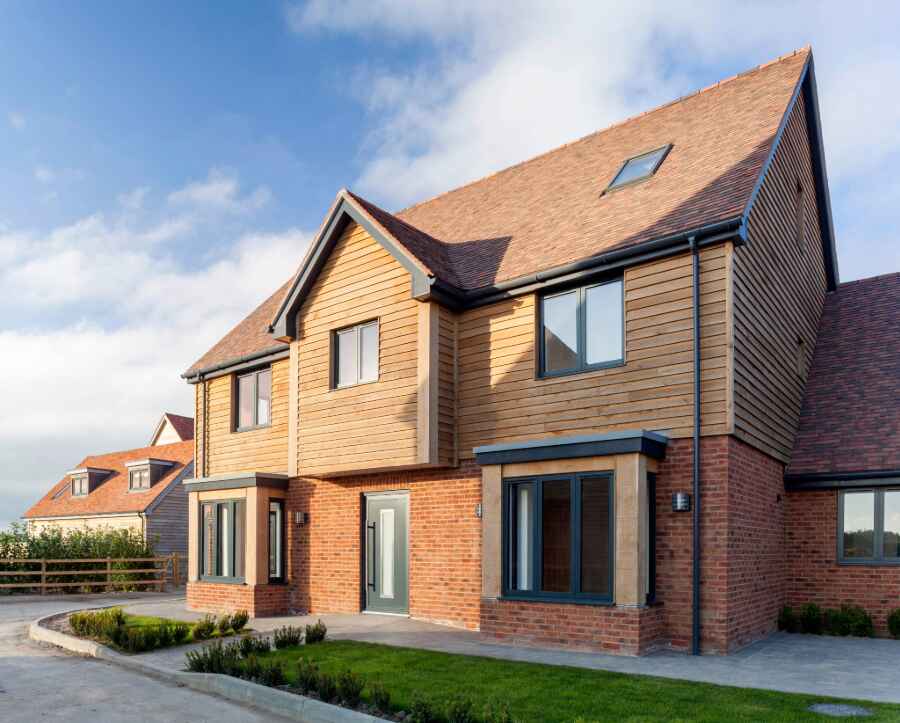
Are you going through the process of planning a home extension? No matter if you want a rear kitchen extension, side return, orangery, conservatory or roof-lantern build, one thing is true: the glazing you choose will have a huge impact on the final result.
This is because your extension windows affect how light the space feels. They also impact how your indoor space flows into your garden. And, more practically, they influence how efficient your home is to heat and how well your designs will age over time.
At Atlas Aluminium, we’ve designed and supplied many types of extension windows for a huge range of projects. In our extension window ideas below, you’ll find everything from contemporary to period, outdoor living to indoor cosiness – all to help you find home design inspiration.
Why Aluminium Glazing Works for Extensions
First of all, why are aluminium windows increasingly popular for extensions nowadays? It comes down to a few key factors:
- Aluminium’s natural strength allows for slimmer, more elegant frames. For you as the homeowner, this means more glass and maximum daylight.
- Its structural rigidity supports large spans and bespoke designs that simply are not possible with bulkier materials.
- Aluminium also performs well over time. It resists warping, fading and corrosion, making it an excellent choice for homeowners who want minimal maintenance.
- From a design point of view, aluminium brings a clean, contemporary appearance. You can integrate it easily with other premium elements, such as aluminium bi-fold doors, sliding doors, roof lanterns and flat glass rooflights.
For these key reasons, we often design and supply aluminium windows in extension projects where light, views and performance matter most.
8 Extension Window Ideas
Each of the ideas below shows how we’ve used aluminium glazing in a slightly different way – with exciting and interesting results.
1. Garden-facing full-width sliding or folding aluminium windows
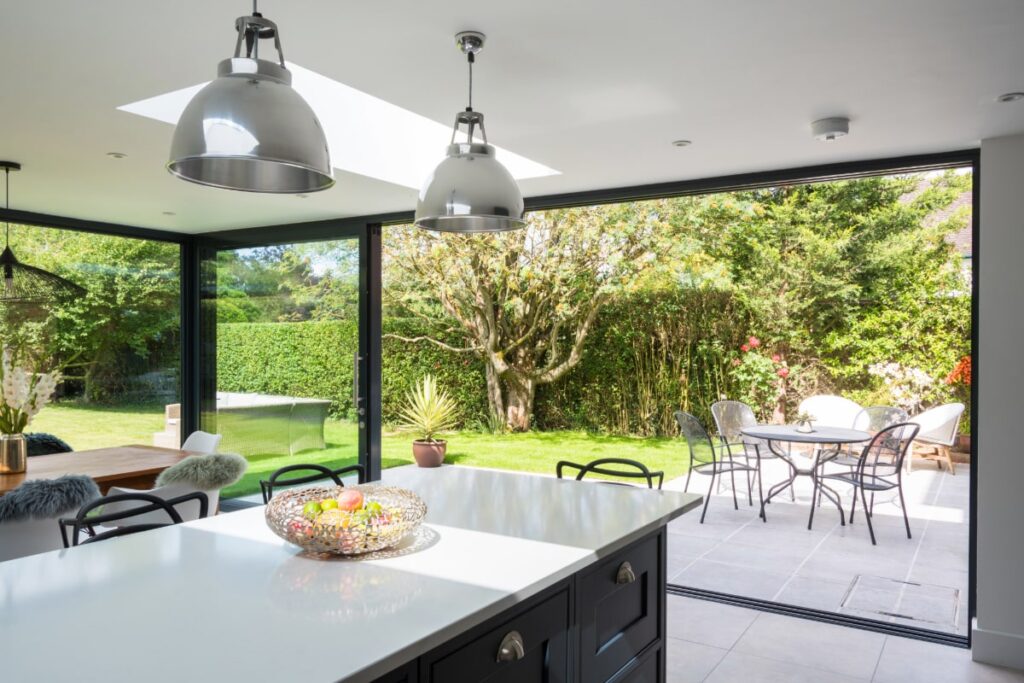
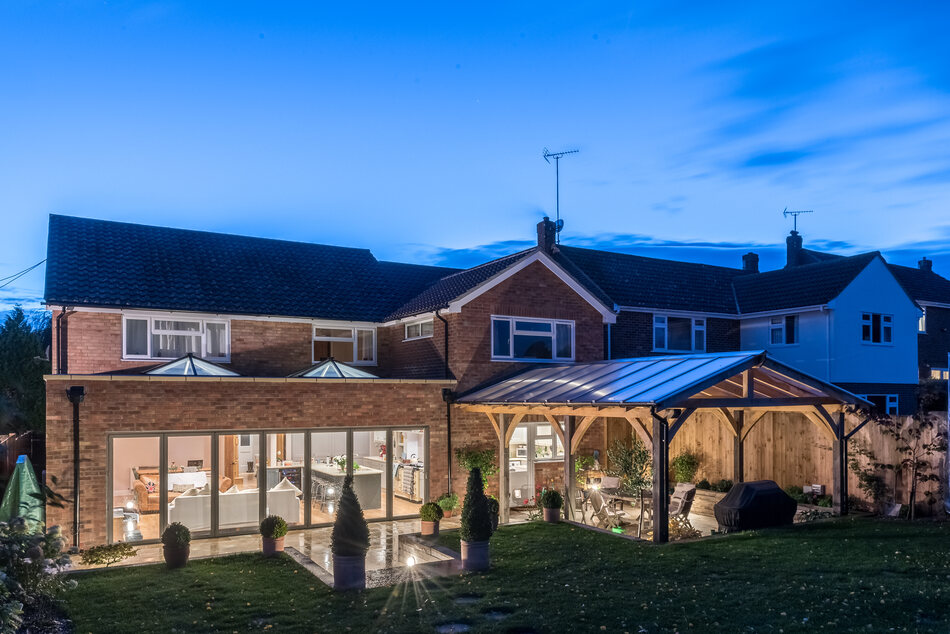
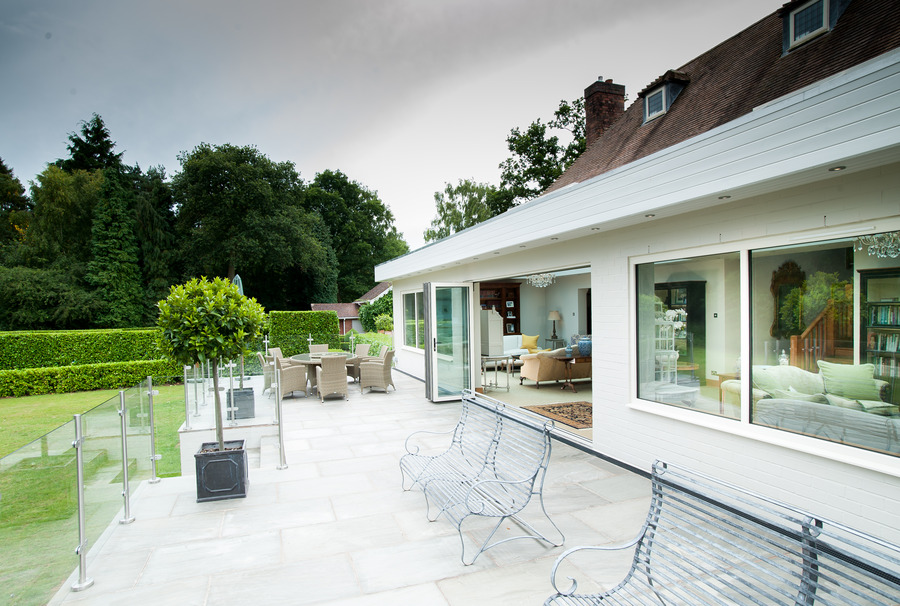
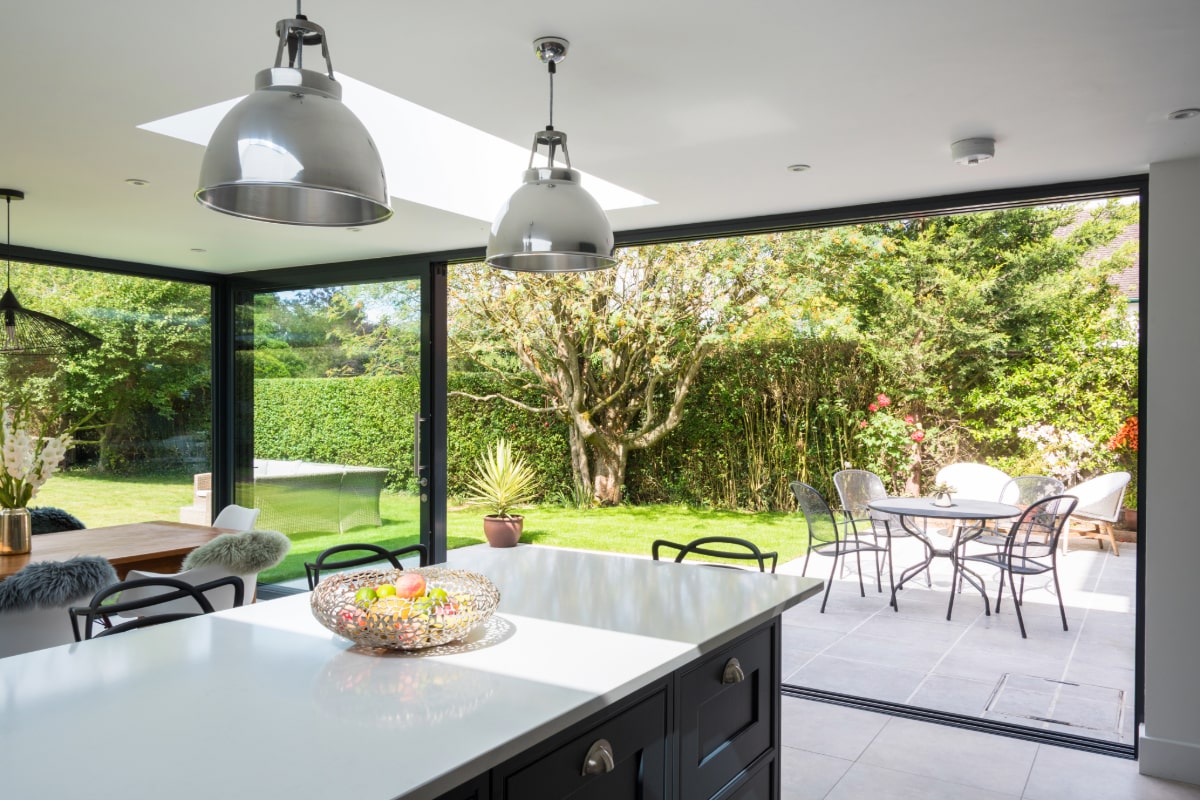
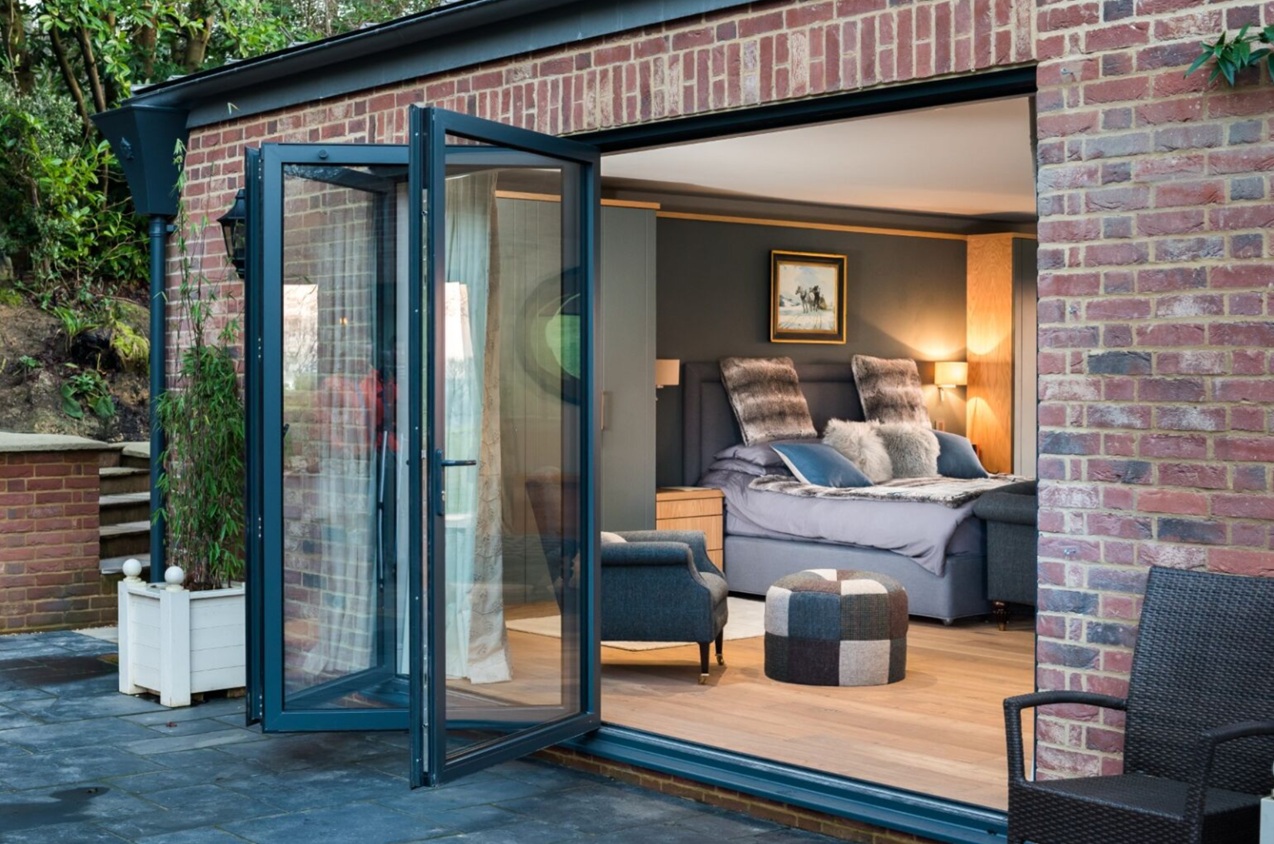
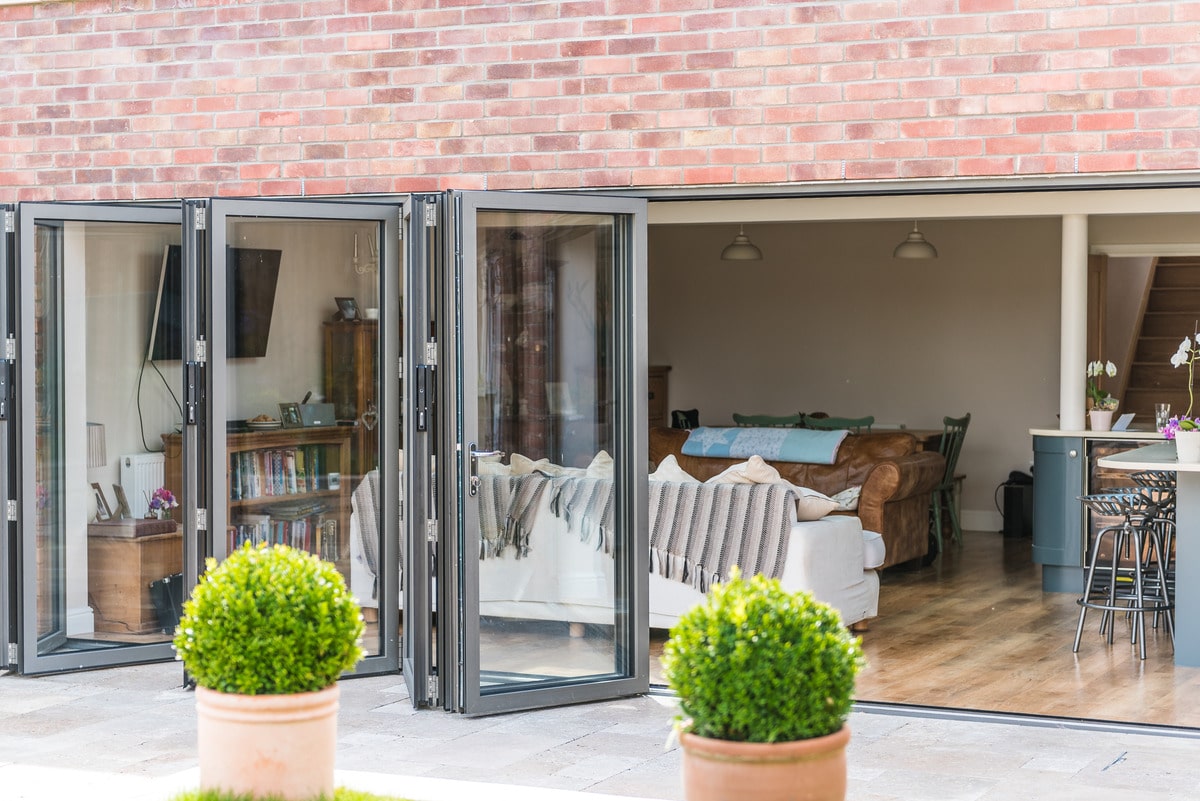
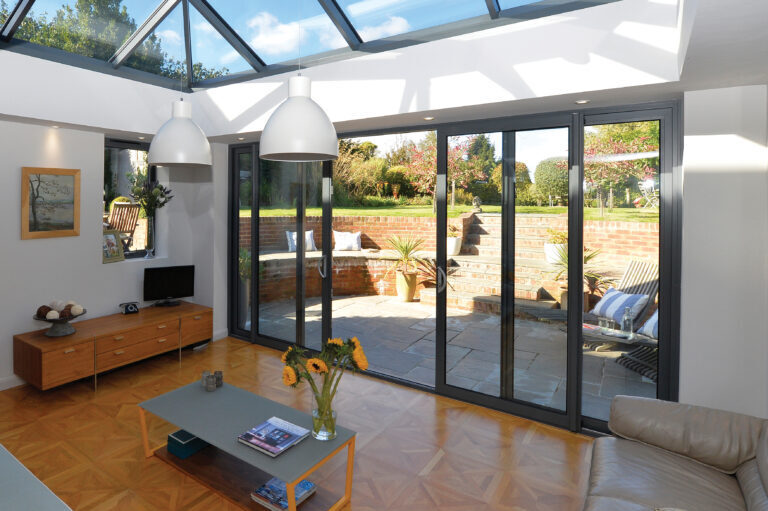
Looking to bring the outside in? Then full width sliding or folding aluminium windows across the back of an extension create an uninterrupted connection to your garden. These systems allow entire walls to open up and invite maximum daylight inside.
Aluminium frames are strong enough to support wide panels while keeping sightlines slim. This means expansive views even when the windows are closed. And when they’re open, the space feels larger and more connected to the outdoors.
This approach would work especially well in kitchen-diner extensions. It’s also a good choice for garden rooms where entertaining, family meals and summer living are your aims.
2. Corner windows with seamless aluminium framing
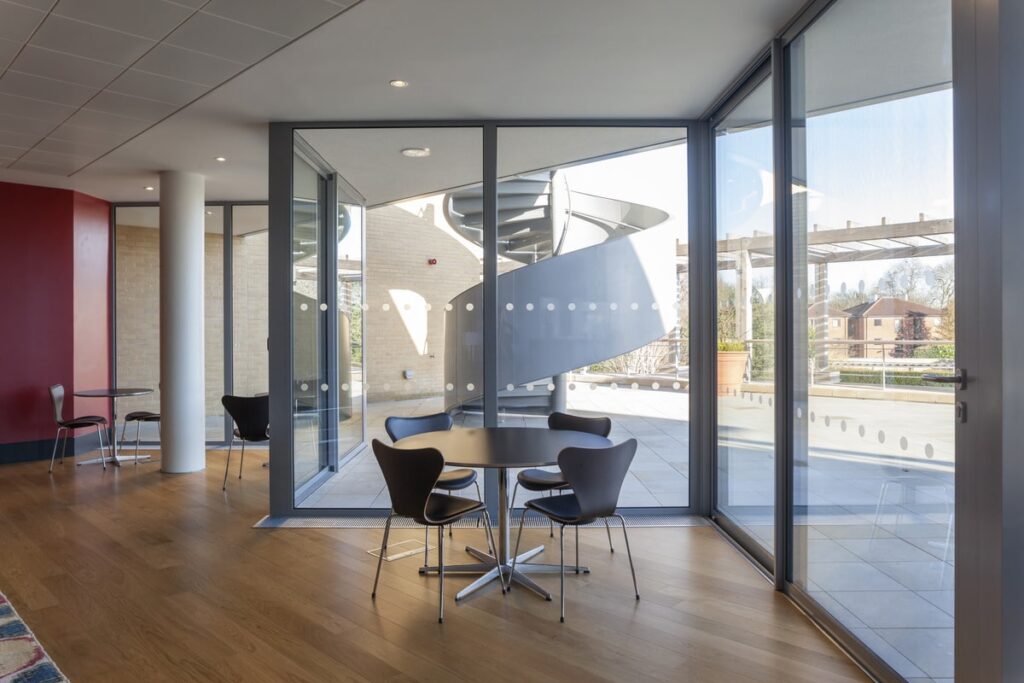
Our next idea takes the corner of your room and turns it into a feature in its own right. In fact, with aluminium framing, you can create near-frameless glazed corners that open up views in two directions.
Structurally, corner glazing demands a lot from the frame material. Traditional materials might struggle to support it. But instead, aluminium’s strength makes this type of design feasible without introducing chunky supports and interrupting your views.
If you want extra daylight, wider sightlines and a highly modern feel in open-plan extensions, consider a corner window.
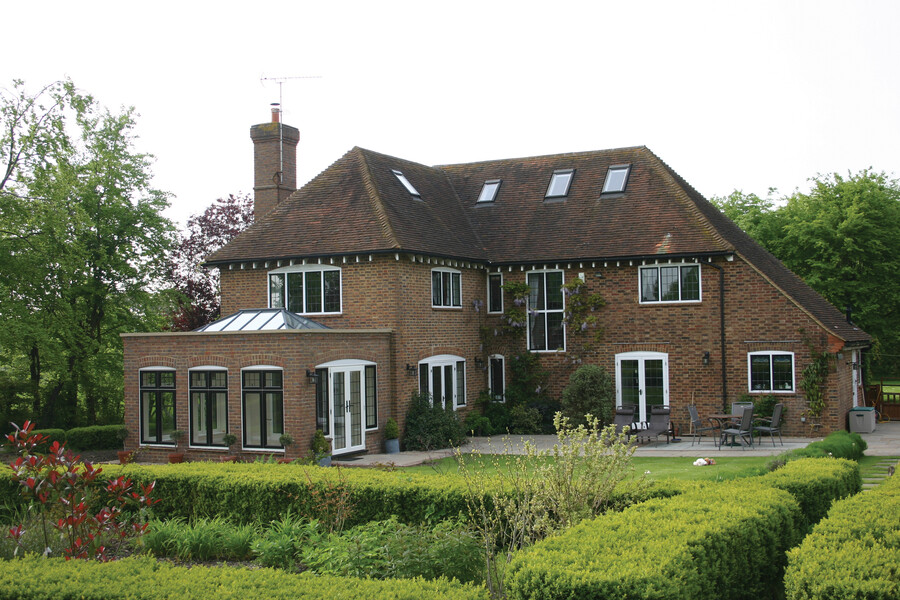
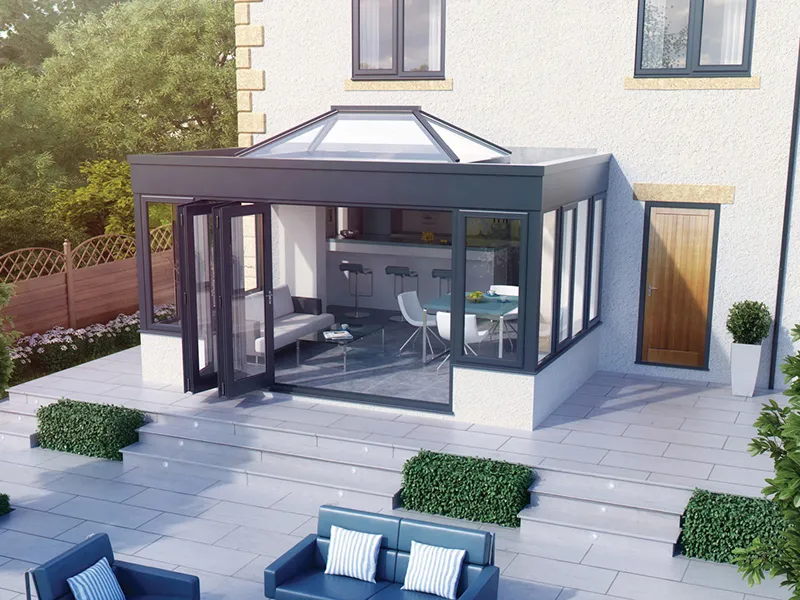
3. Roof-to-ceiling aluminium windows in an orangery or flat-roof extension

Planning an orangery or similar extension? Tall, roof-to-ceiling aluminium windows are a great combination. That’s because strong vertical glazed elements draw the eye upward, creating a sense of height and space within the room.
As a bonus, because aluminium frames remain slim even at full height, these windows can help you maximise light without feeling bulky or overpowering. They work particularly well in orangeries. Rear extensions where ceiling height is part of the architectural impact are also a good fit, flooding the entire room with sunlight.
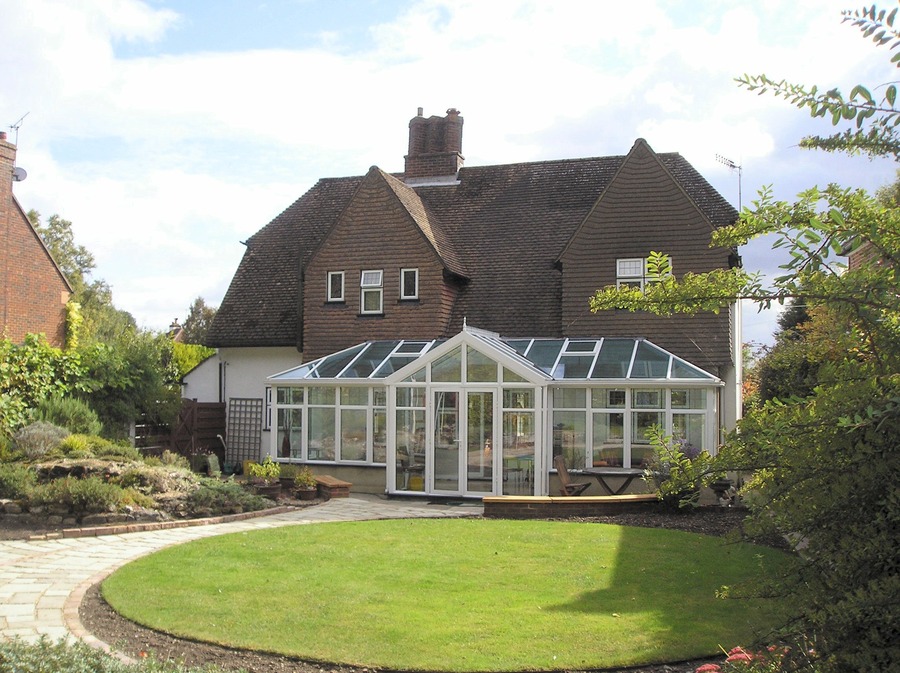
4. Aluminium frame windows paired with a glass roof light
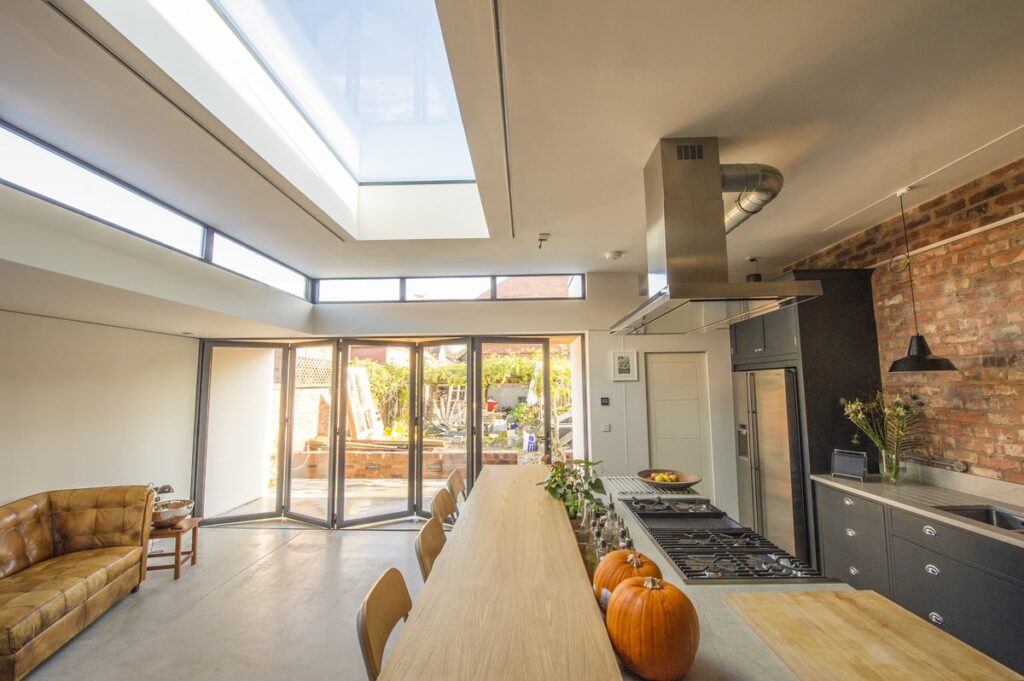
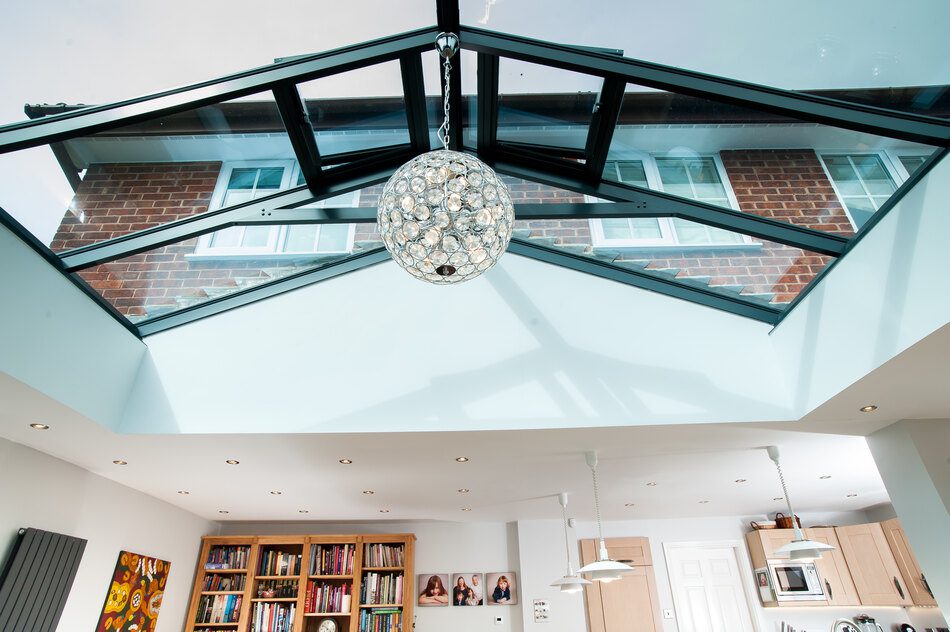
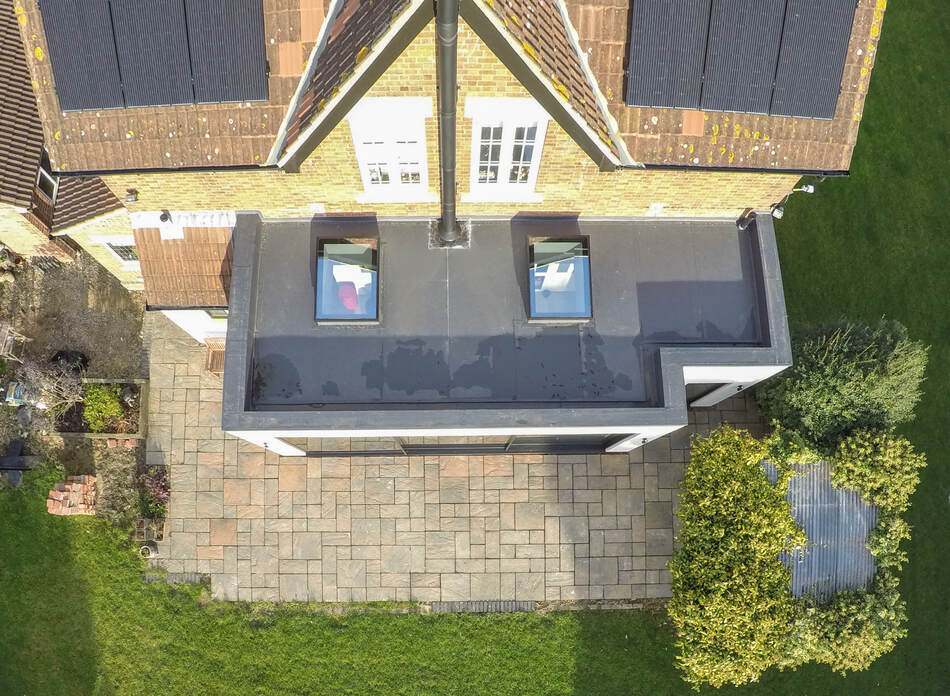
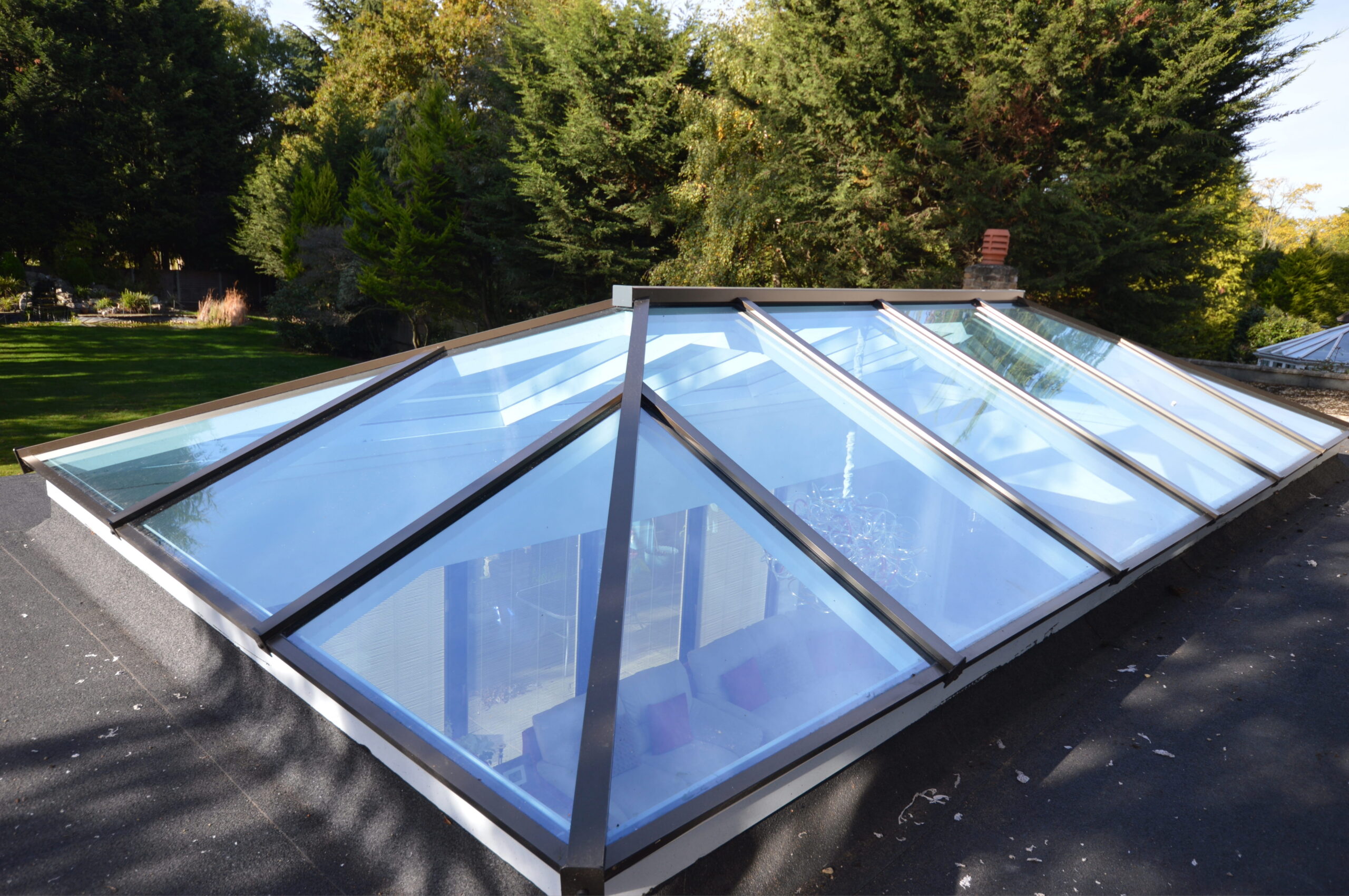
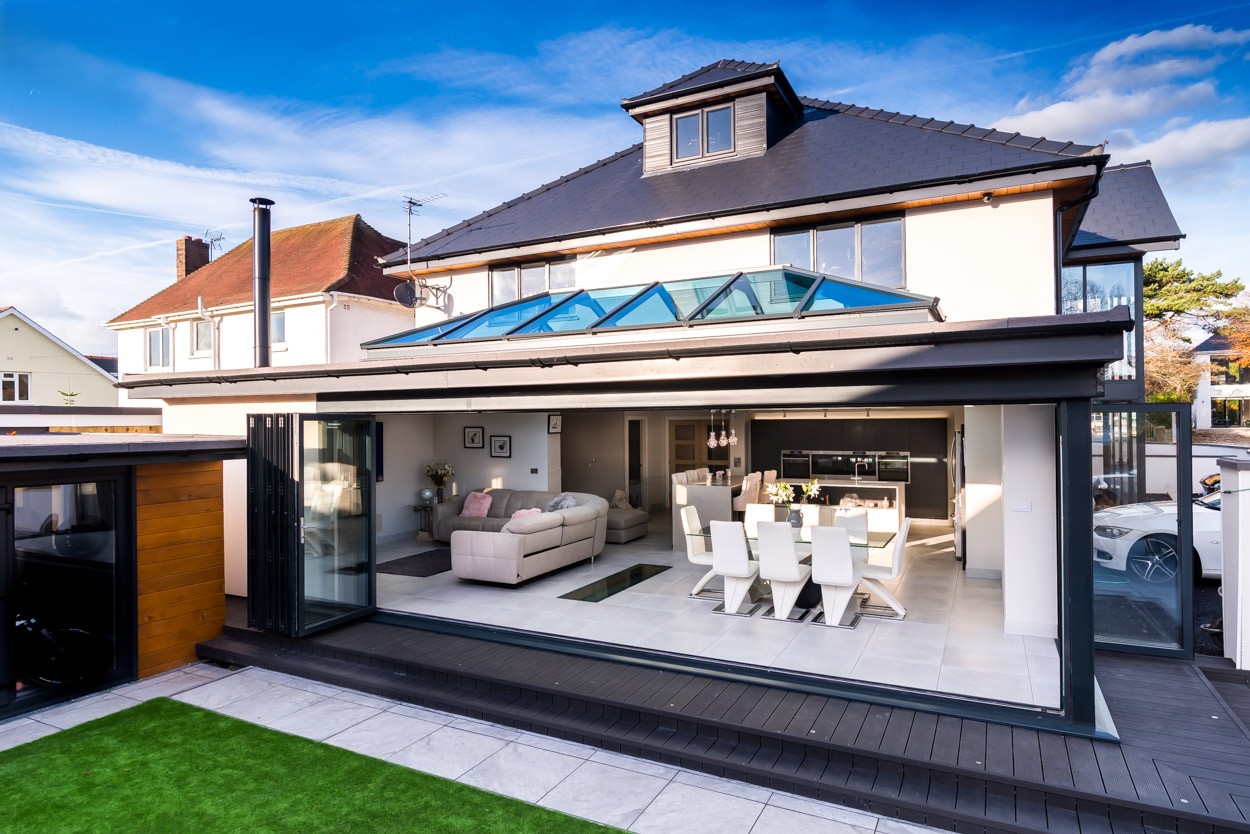
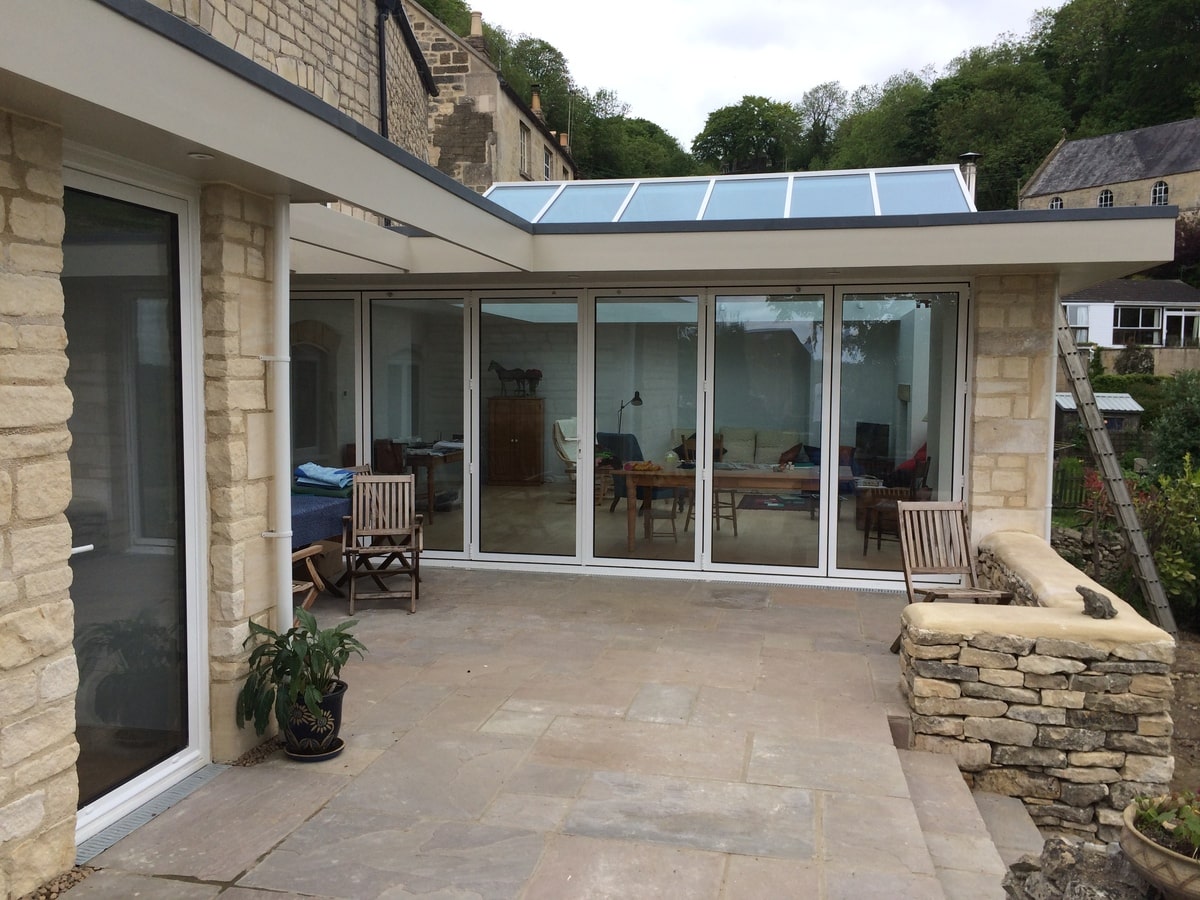
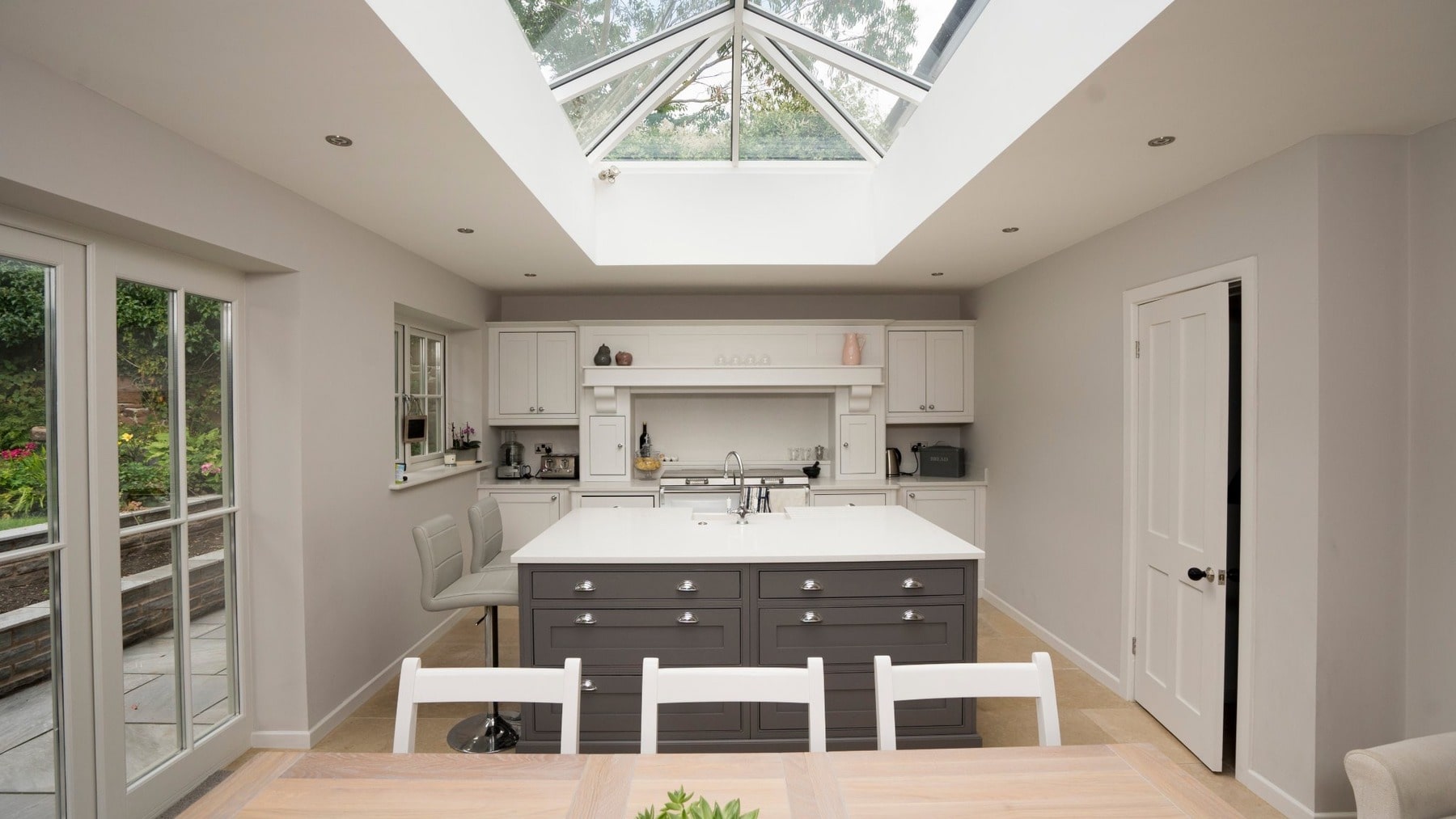
Staying on the glass roof light theme, another good option is to combine wall-mounted aluminium windows with a roof lantern, for example.
In this setup, high-level aluminium windows bring in light from the side, while the roof glazing delivers it from above. This lets light enter your home from multiple directions for a bright, evenly lit space. It can be really effective when used for side-return extensions and properties with limited external wall space.
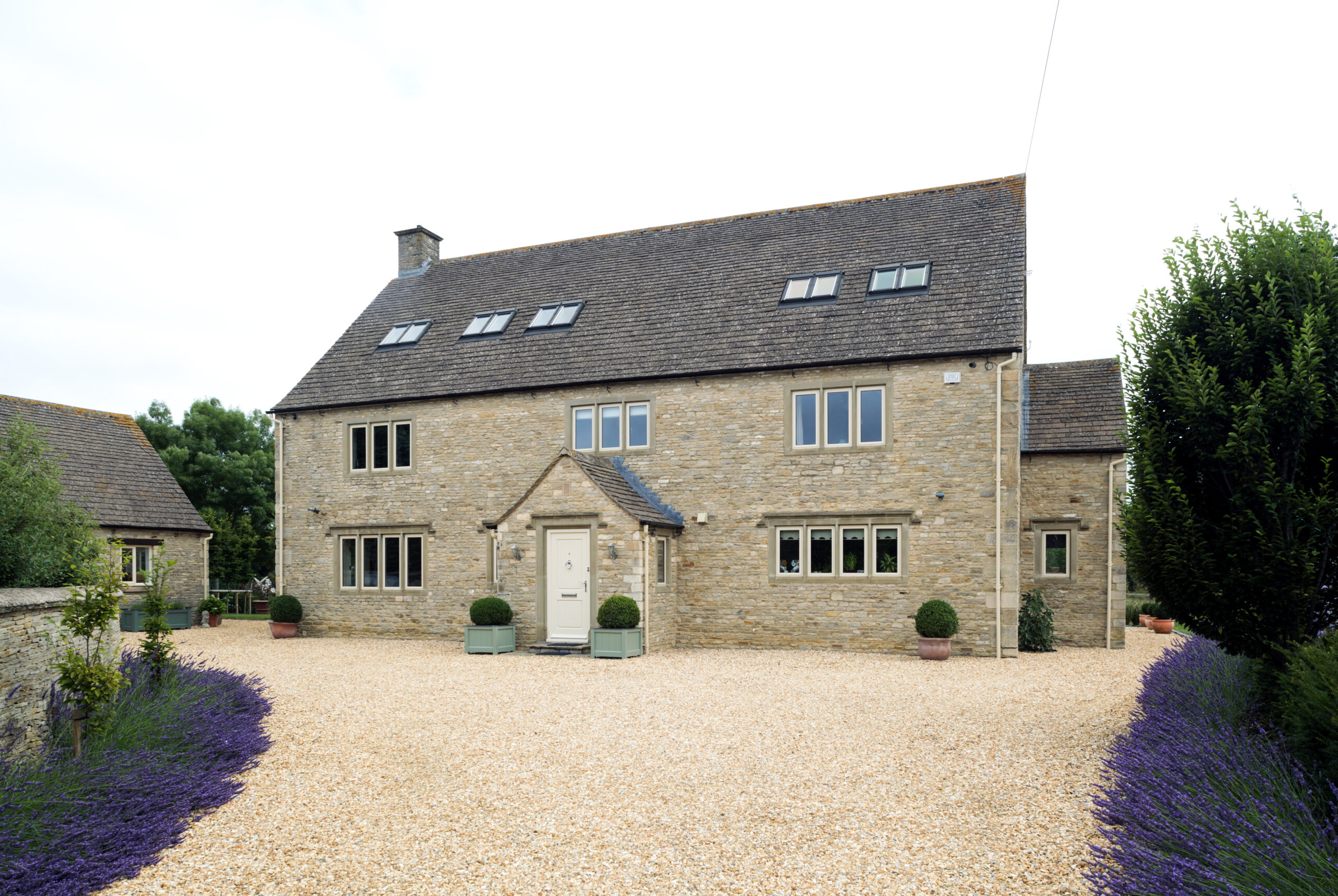
5. Slim aluminium heritage-look windows
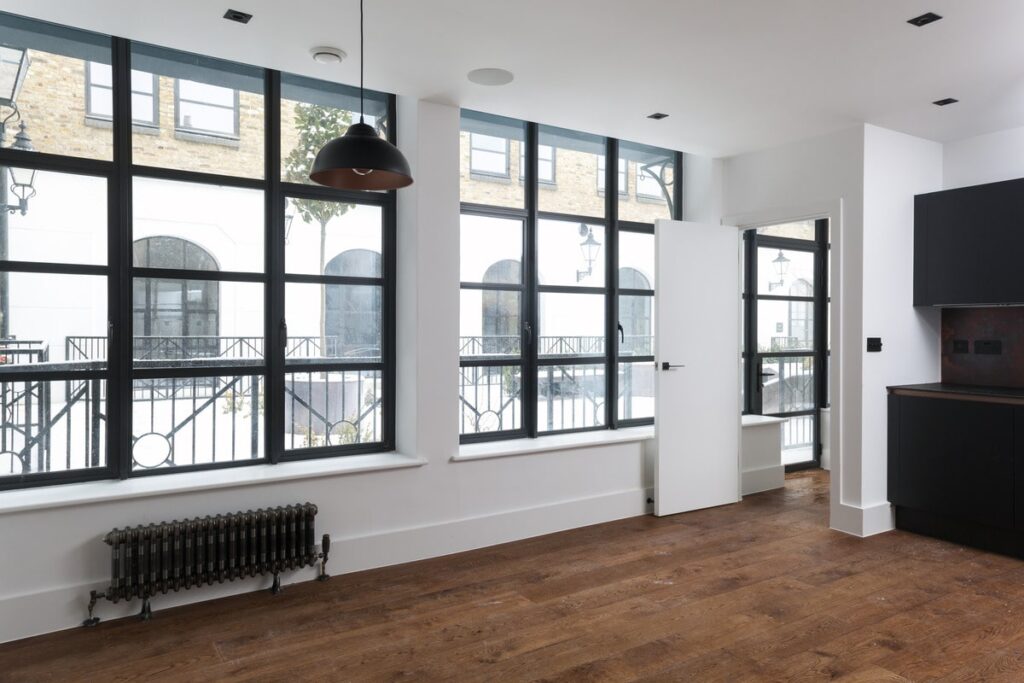
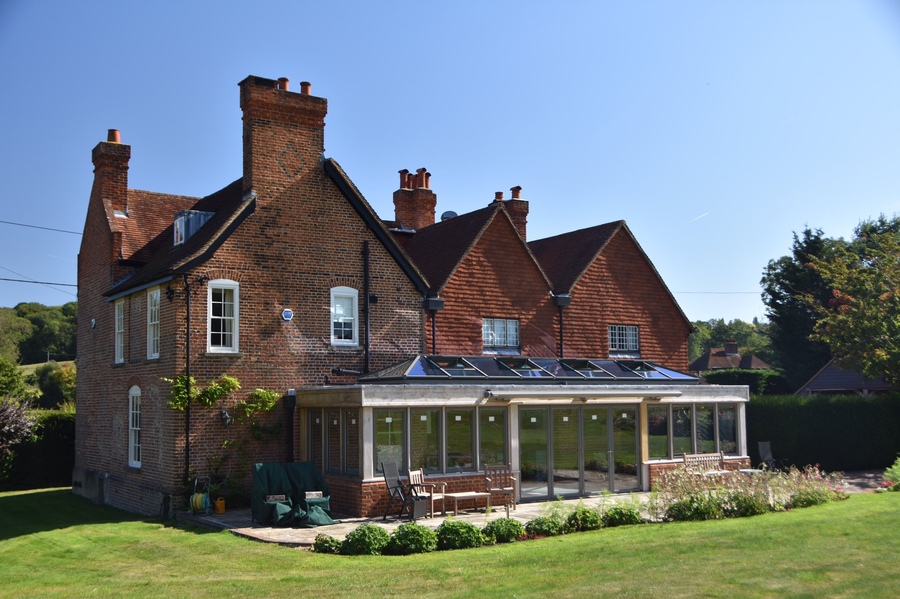
Of course, not all extensions have to be ultra-modern. If you’re extending a period property, you’ll probably want glazing that respects and retains the original character of your home.
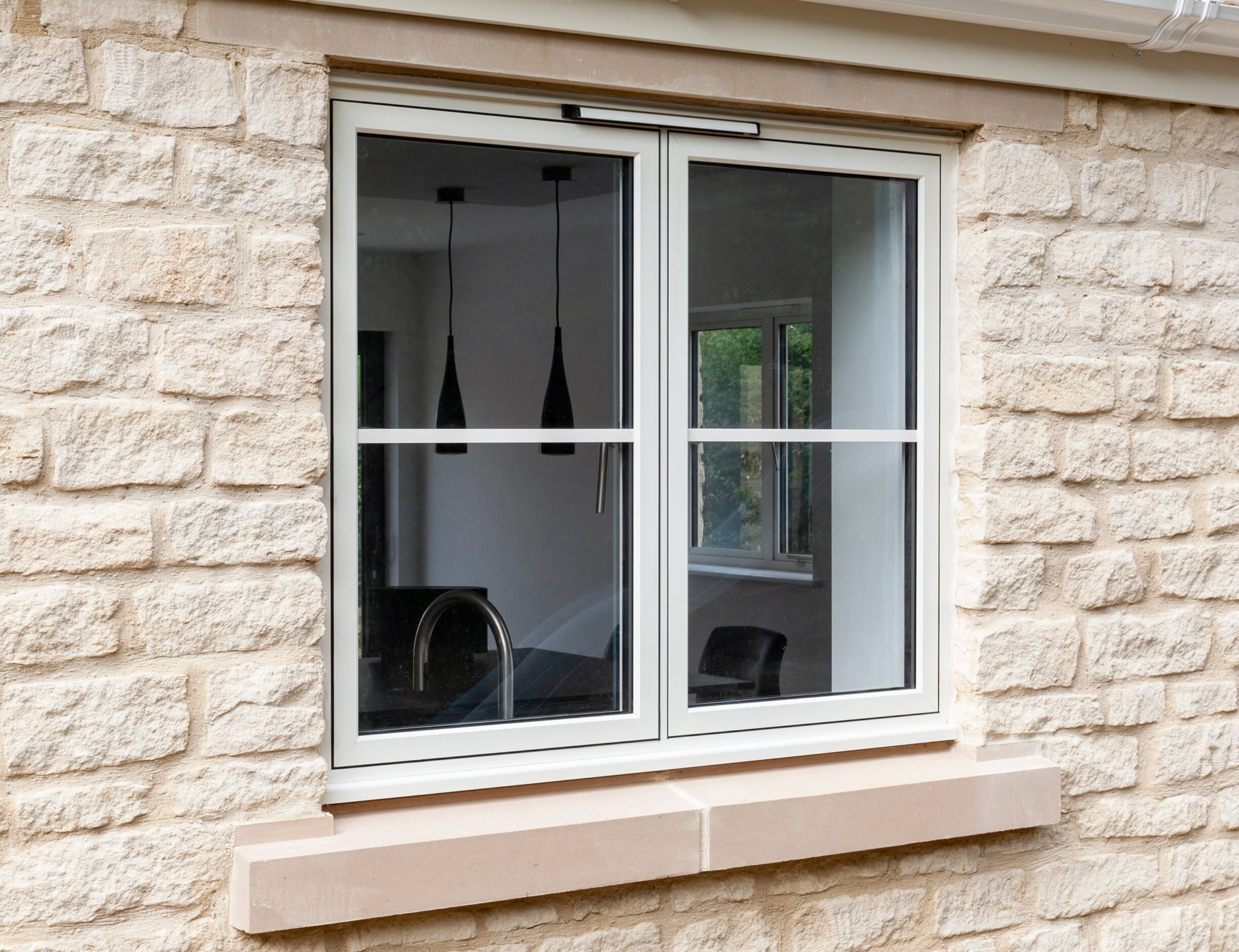
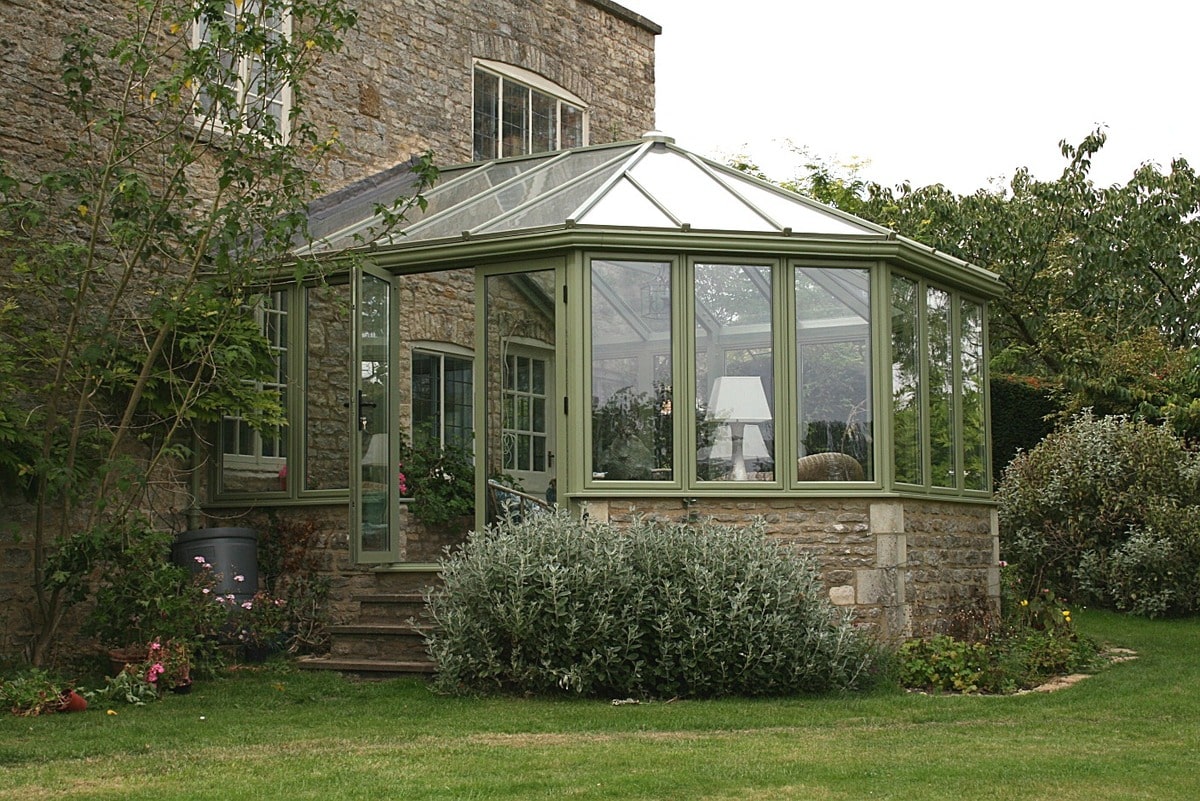
Thankfully, aluminium windows are still a solid option here. Slim aluminium heritage windows, for instance, can replicate the proportions of traditional steel or timber frames with modern performance.
With narrow sightlines and classic detailing, but without the maintenance demands of traditional materials, they are a good option for Victorian terraces. Cottages and conservation-style extensions can also benefit from this mix of classic style and modern functionality.
6. Aluminium glass box with minimal solid wall
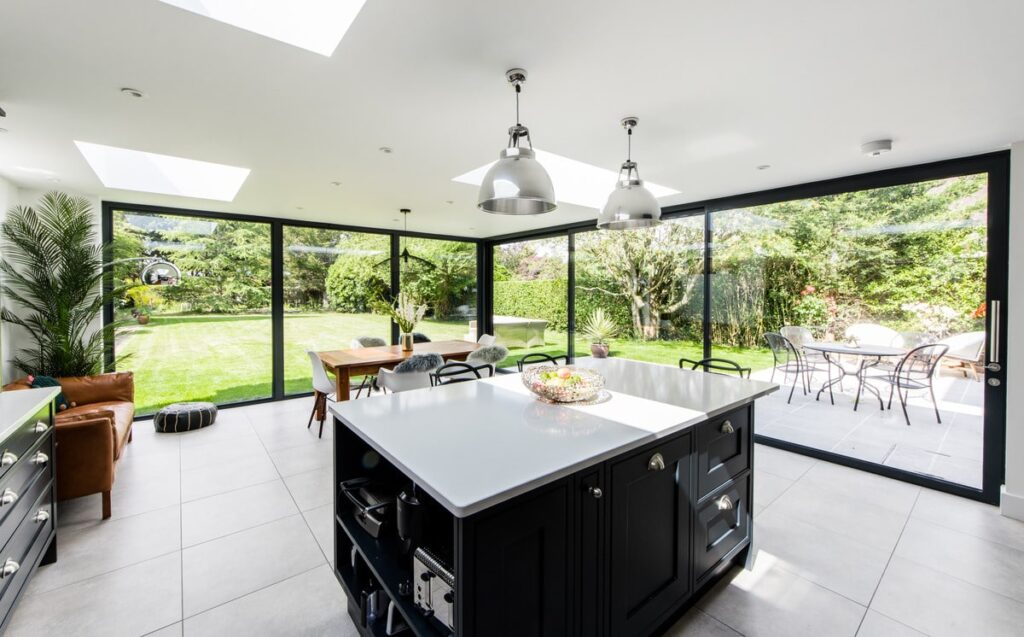
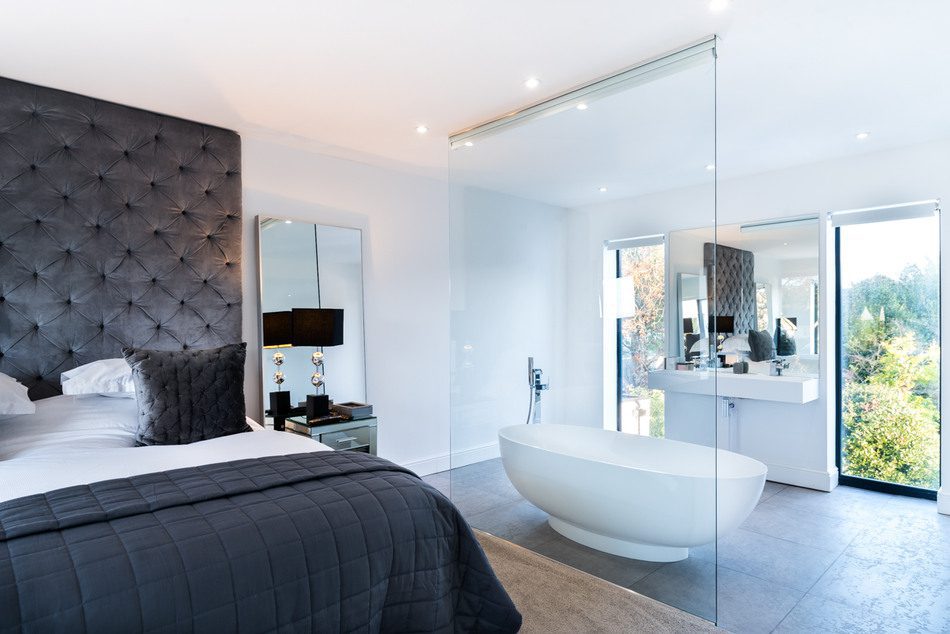
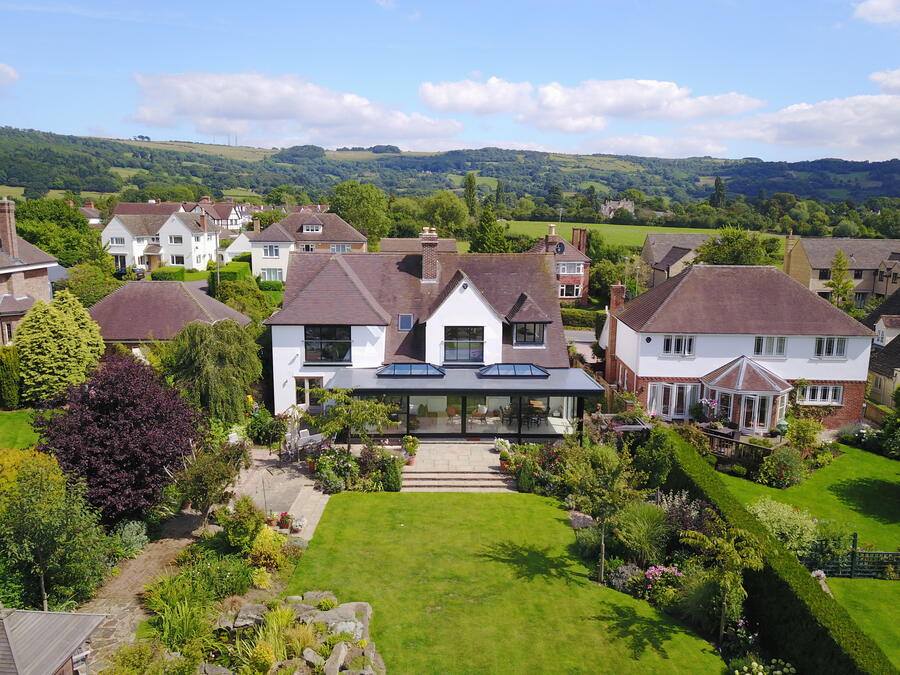
A glass-wrapped extension – sometimes called a glass box – uses aluminium framing to support glazing across most of the rear elevation. It means lots of daylight and solid walls kept to a minimum.
We’ve seen many homeowners use this to dramatic effect. If maximum daylight is your aim, this is one to consider. The secret again lies in aluminium’s strength – allowing for multiple glazed elevations without the thick frames.
This style works very well on contemporary properties and modern renovations looking to make an architectural statement.
7. Combine fixed aluminium glazed panels with bi-fold or sliding doors
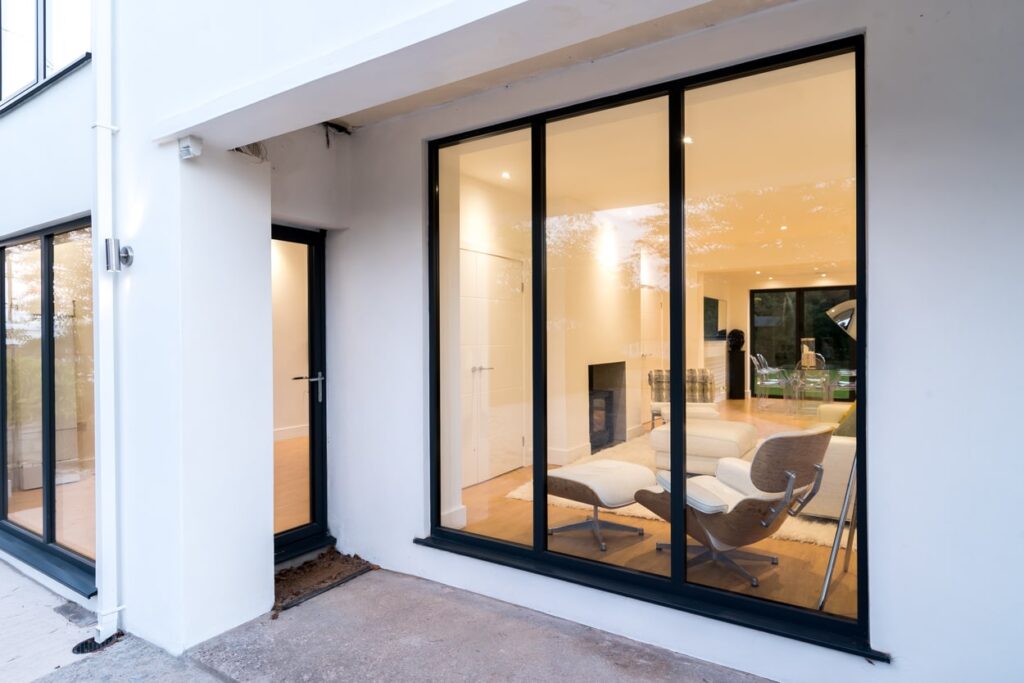
Many homeowners prefer an extension that doesn’t open up. If that’s you, then a popular approach is to combine fixed aluminium picture panels with opening bi-folding or sliding doors.
This is often seen as the best of both worlds. Fixed glazing gives you uninterrupted views and consistent daylight. Meanwhile, the opening doors allow for access and ventilation when you want them. This helps control costs, improve thermal performance and still achieve a striking glazed wall.
As you’d imagine, this is a common choice for extensions in high-end family homes.
8. Wide aluminium picture windows for a garden-facing wall
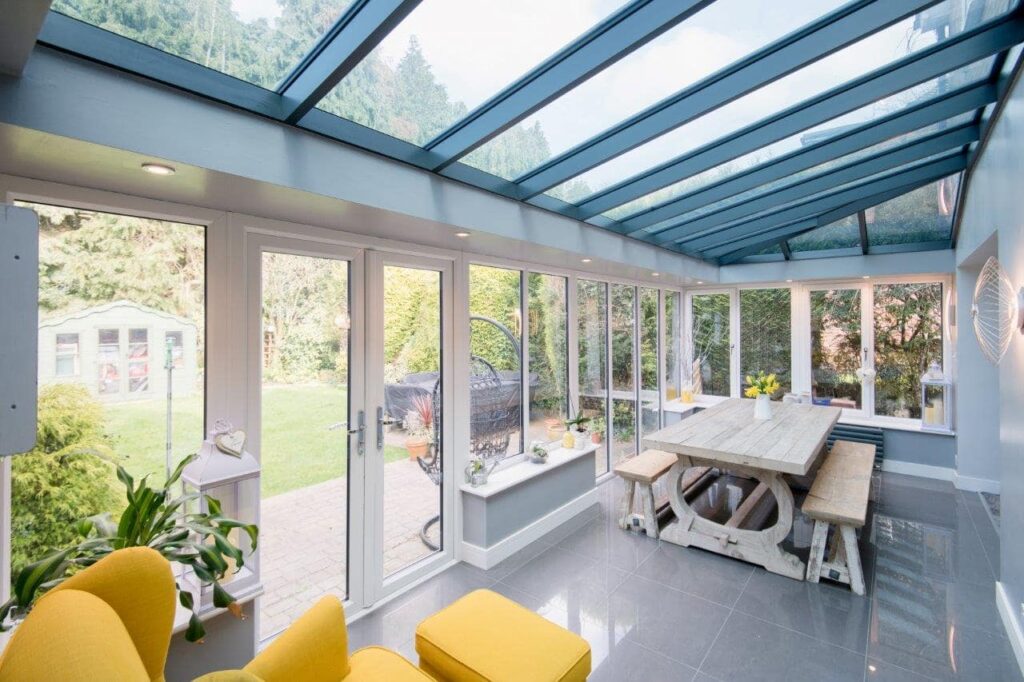
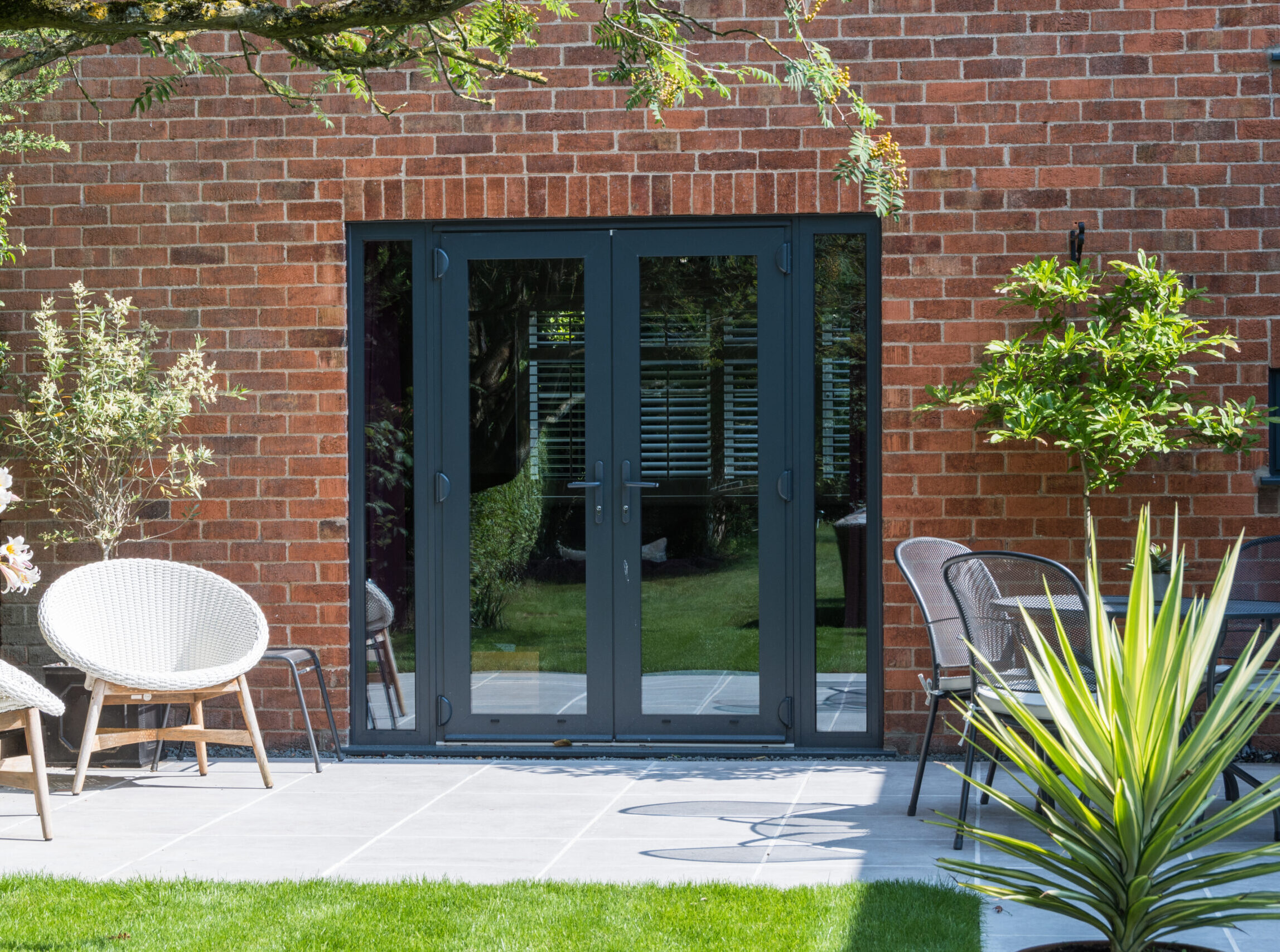
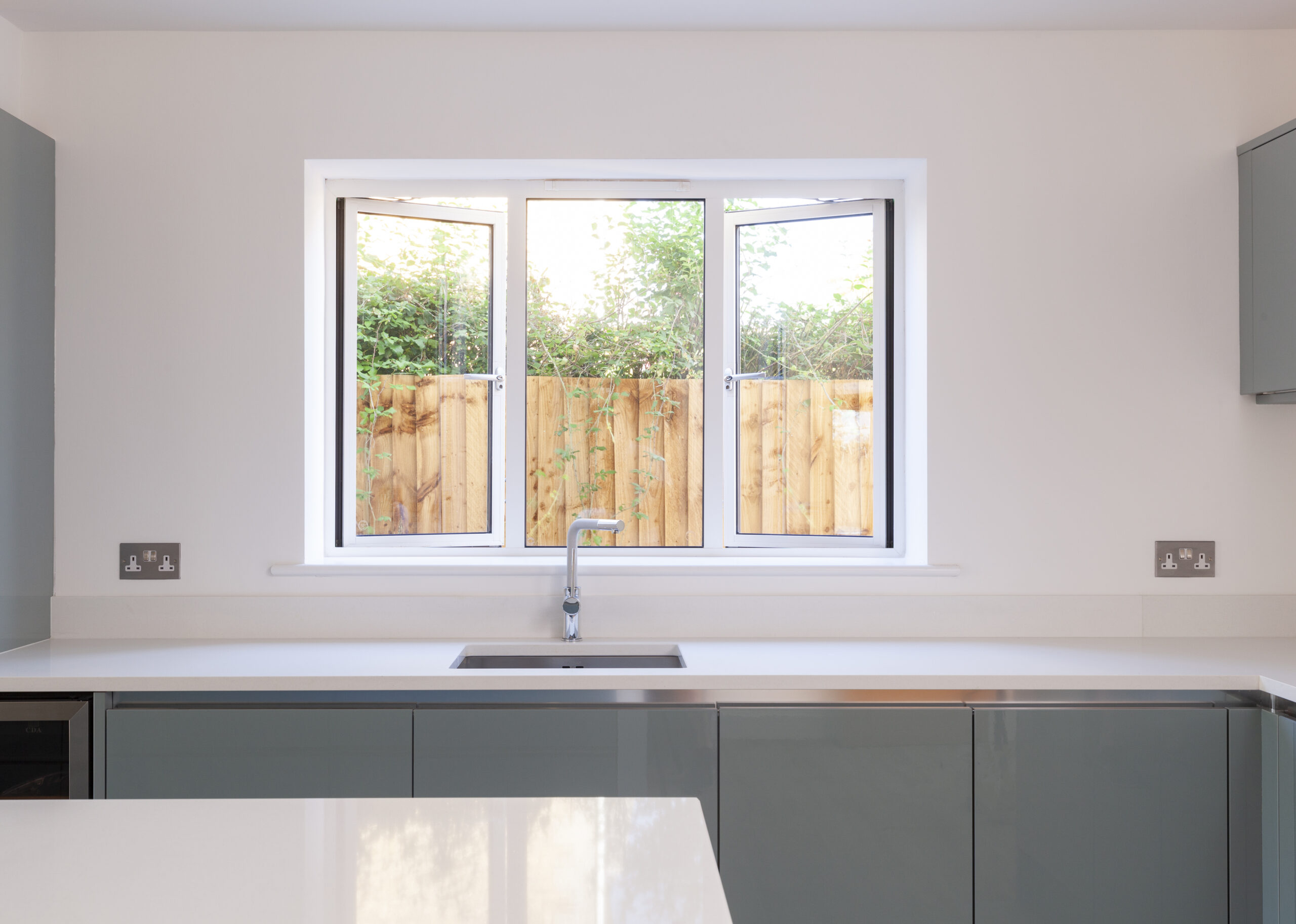
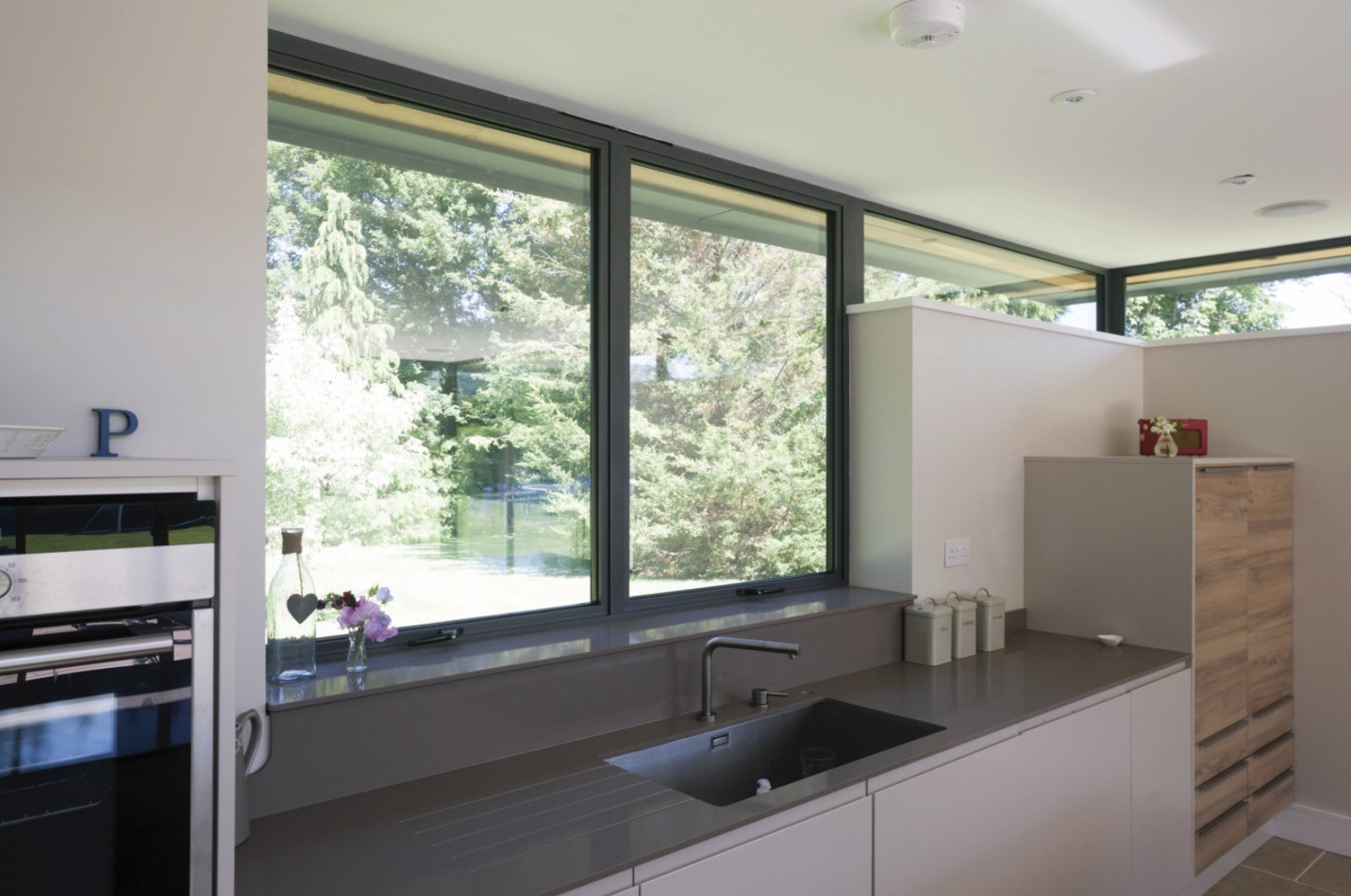
Finally, some homeowners prefer to create a single strong focal point with their garden. Wide aluminium picture windows are a great way to achieve this, framing your views without any visual interruptions.
Plus, because aluminium frames are so slim, the glazing and views are allowed to shine. It works well in dining areas, seating zones and quiet corners – basically anywhere you want serenity and tranquil views.
Key Design Considerations for Extensions
Before you decide on any specific designs, it’s a good idea to make sure of the following:
- Planning and building rules – check permitted development limits, privacy concerns and boundary distances, especially when designing large glazed areas.
- Orientation and natural light – rear extensions work best with strong afternoon light. Meanwhile, side returns benefit from high-level glazing and rooflights.
- Structural support – wide openings often need steel beams, which pairs well with the strength benefits of aluminium windows.
- Thermal performance – Thermally broken aluminium frames and quality glazing can help you meet insulation standards and keep bills down.
- Ventilation and airflow – Features like opening windows or roof vents can keep things fresh and prevent overheating.
- Material consistency – working to a theme? Matching your windows with doors and roof glazing gives a cleaner result.
- Maintenance and lifespan – Remember that this is a long-term investment. Aluminium resists fading and corrosion, making it well-suited to standing the test of time.
When Aluminium Windows Might Not Be the Right Choice
It’s also just as important to recognise when aluminium windows might not suit your home. Yes, aluminium delivers high performance and style. But it’s not the right fit for every project.
In particular, you might consider alternatives, such as uPVC vs aluminium windows, if you:
- Are working to tight budgets where cheaper materials will help lower your upfront costs (but may require replacing sooner).
- Have a small extension with limited glazing needs.
- Want a timber theme, in which case traditional wood may work better.
However, in many cases, aluminium offers an excellent balance of design freedom, durability and long-term value, even if the initial cost is higher. It all comes down to your budget and preferences.
Choose the Right Extension Windows for Your Home
When looking at extension window ideas, you have a choice of materials. Aluminium is a good option if you’re looking for maximum daylight, modern designs, strong design themes and materials built to last.
A good first step is to take the ideas in this guide and adapt them to match your property style. You can also explore our aluminium windows and aluminium doors to see how they could suit your design. Contact us for any other expert advice.