Are you looking for a glass roof system that adds daylight and style to your home? Then a roof lantern is a fantastic choice.
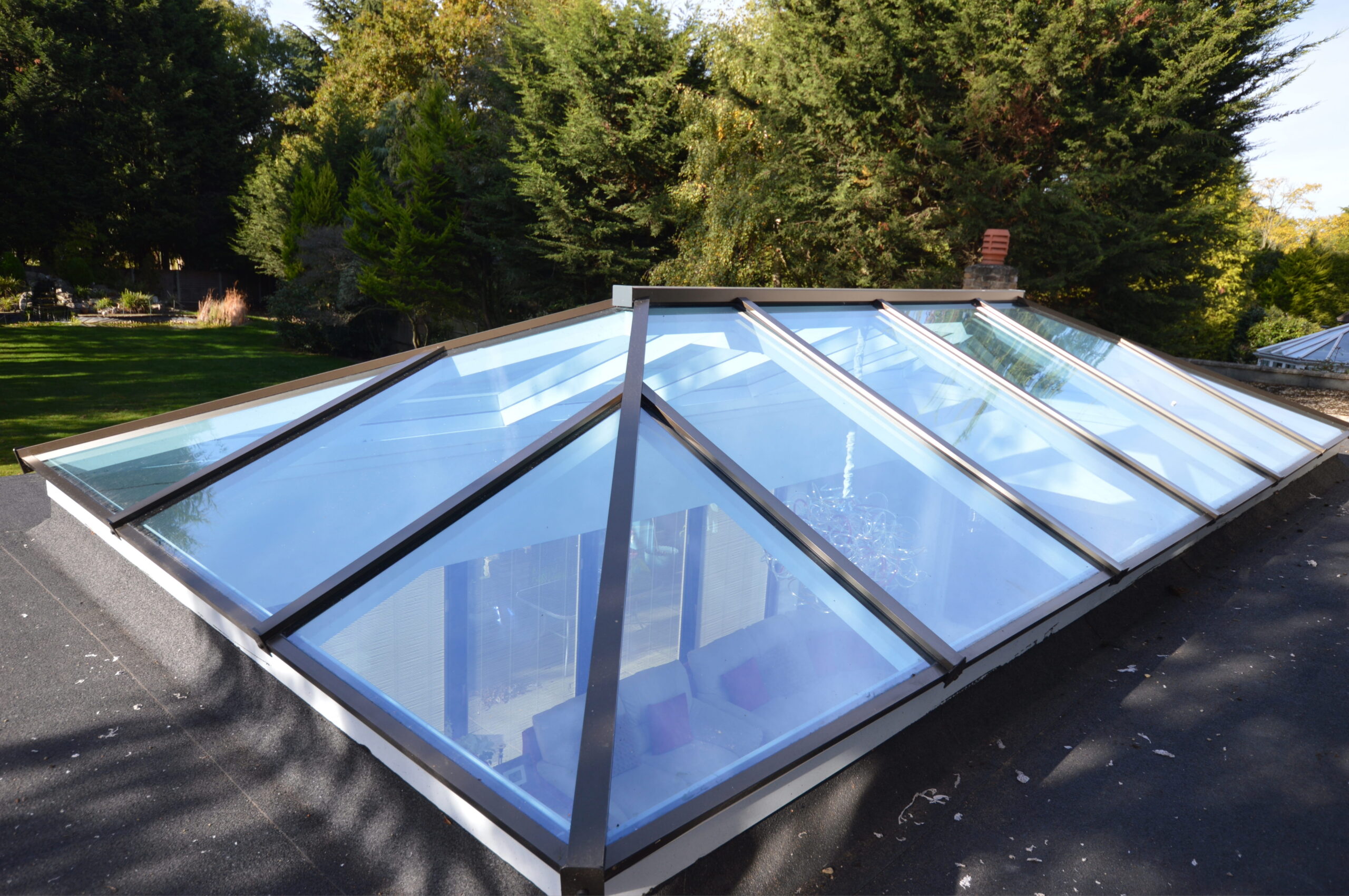
Combining a raised structure with glass panels, you can find many different roof lantern designs. From classical to contemporary, understated to statement piece, a roof lantern can draw focus to different aspects of your home.
At Atlas Aluminium, we design and manufacture high-quality roof lantern systems. In this guide, we’ll give you nine different roof lantern extension ideas for your design inspiration.
Why Roof Lanterns Are a Key Feature in Modern Extensions
You might think that roof lanterns simply add more light. And they do this very well. But in addition to adding daylight, roof lanterns also influence how an extension is designed and how it feels. Here are just some of the benefits they can bring to your home:
- The main impact is on light levels inside your home. Because a lantern sits above the roofline, daylight can enter from multiple angles. This helps you design your roof lantern to spread light evenly across the space below.
- The second benefit is adding the perception of height to your room, creating the feeling of a taller ceiling. The eye is naturally drawn upward toward the glazed structure which can make the space feel larger.
- Thirdly, roof lanterns can also become the visual centre of your room. If you want to focus on a particular area, you can use their daylight to define areas like dining tables or seating zones.
The impact of glass roof systems can be even greater if you use high-quality materials, such as aluminium frames. Their strength allows for slim structures with larger glazing panels, bringing more daylight inside without any extra visible framework.
Lantern Roof Extension Ideas
Now we’ve seen why roof lanterns are so popular with UK homeowners, let’s look at some ideas for styling your lantern roof extension. These have both practicality and aesthetics in mind – with added inspiration from some of our previous designs.
1. Central Lantern Feature in a Kitchen-Diner Extension
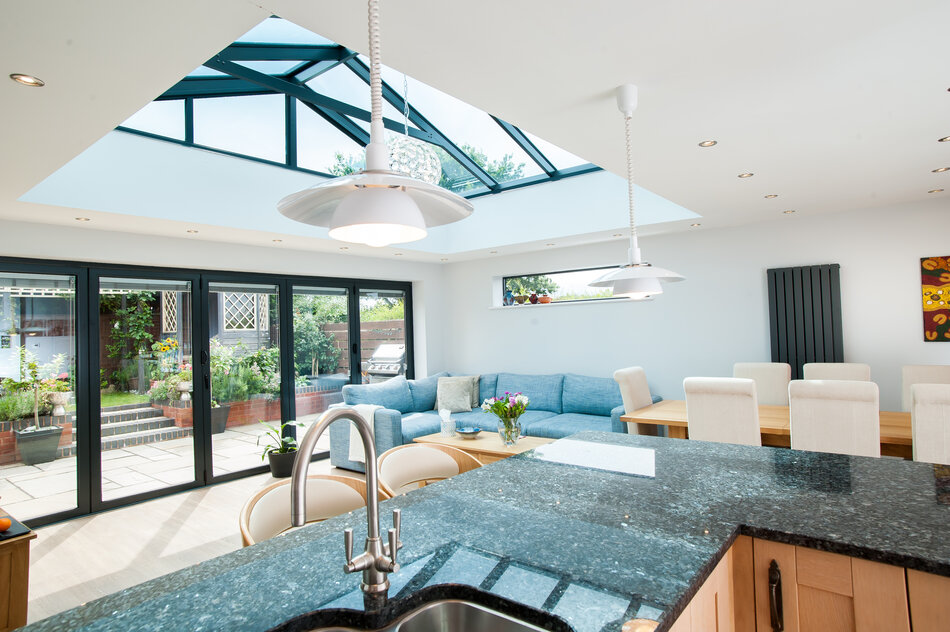
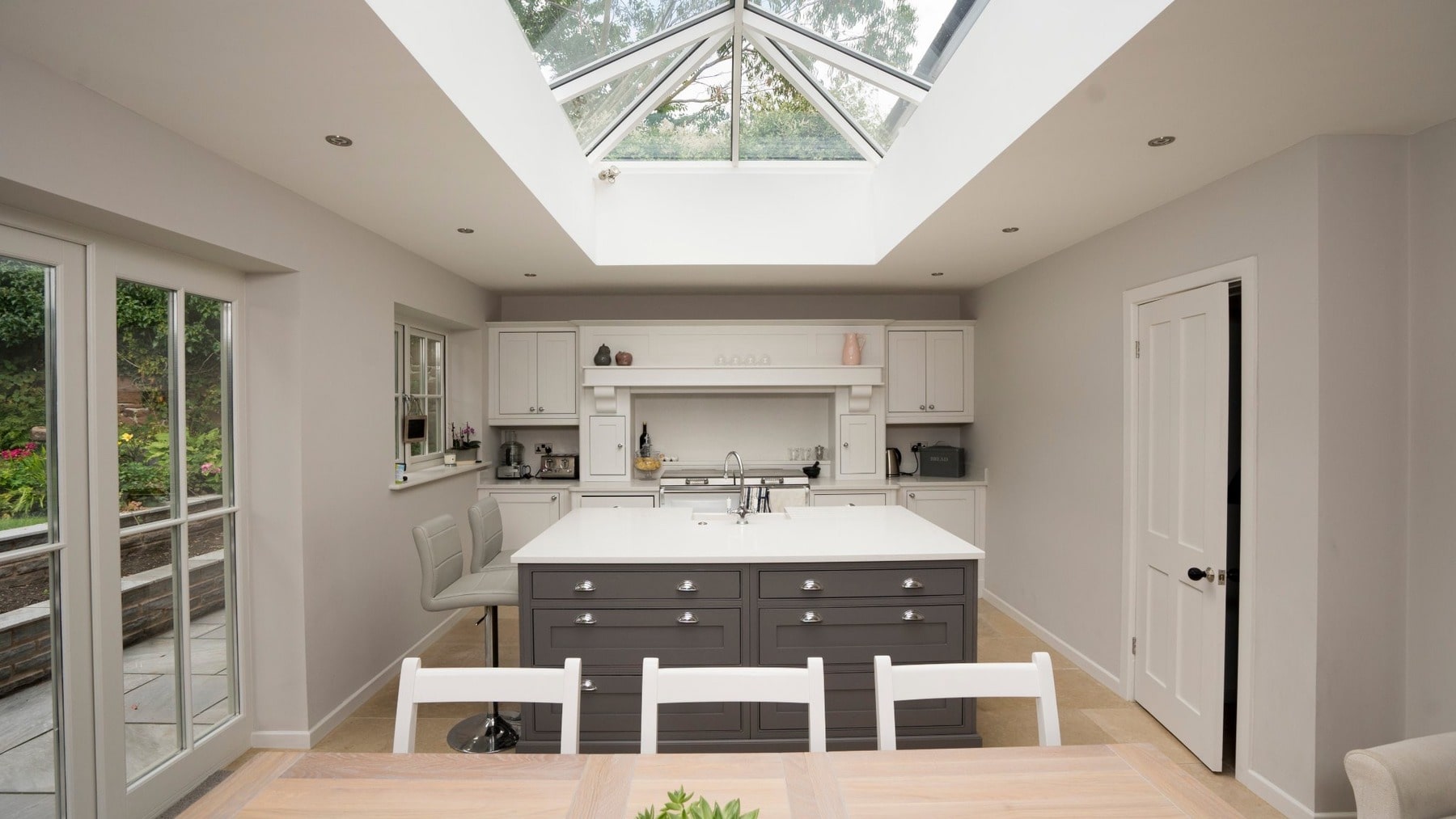
First, let’s start with a classic. One of the most popular ways of placing a roof lantern is to have it sit centrally within an extension.
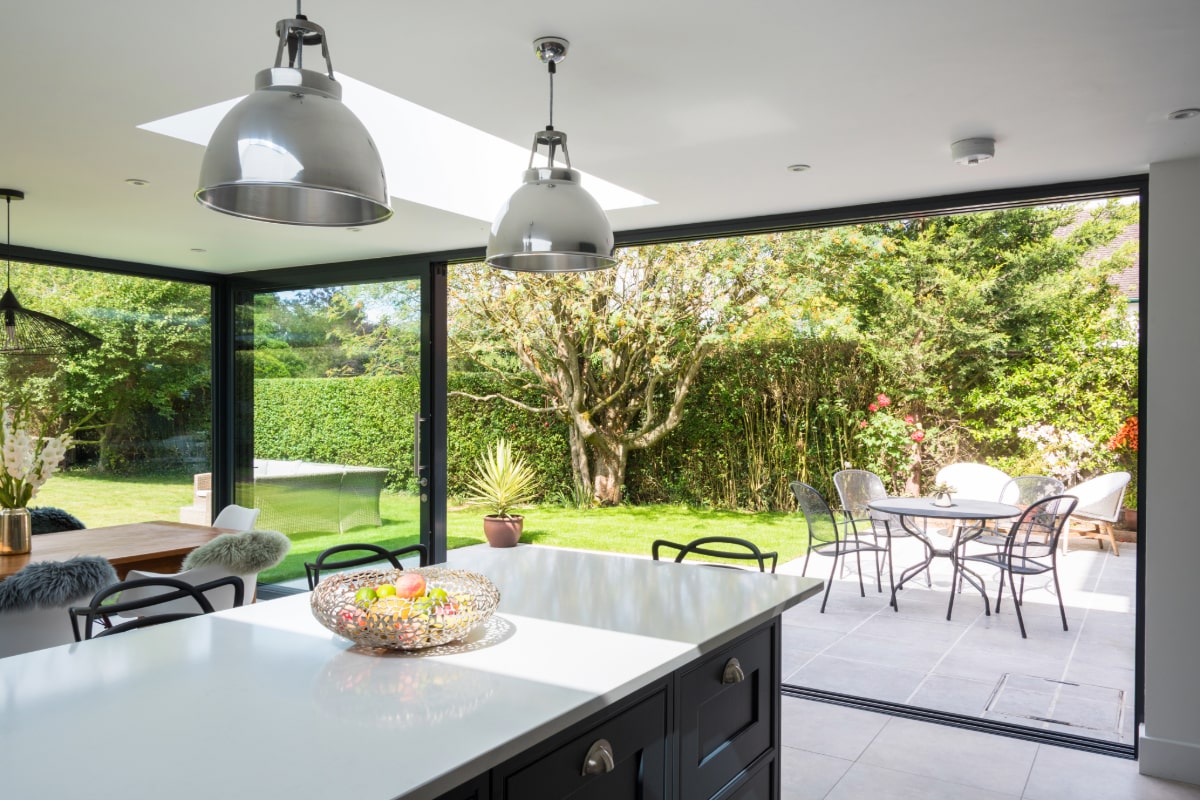
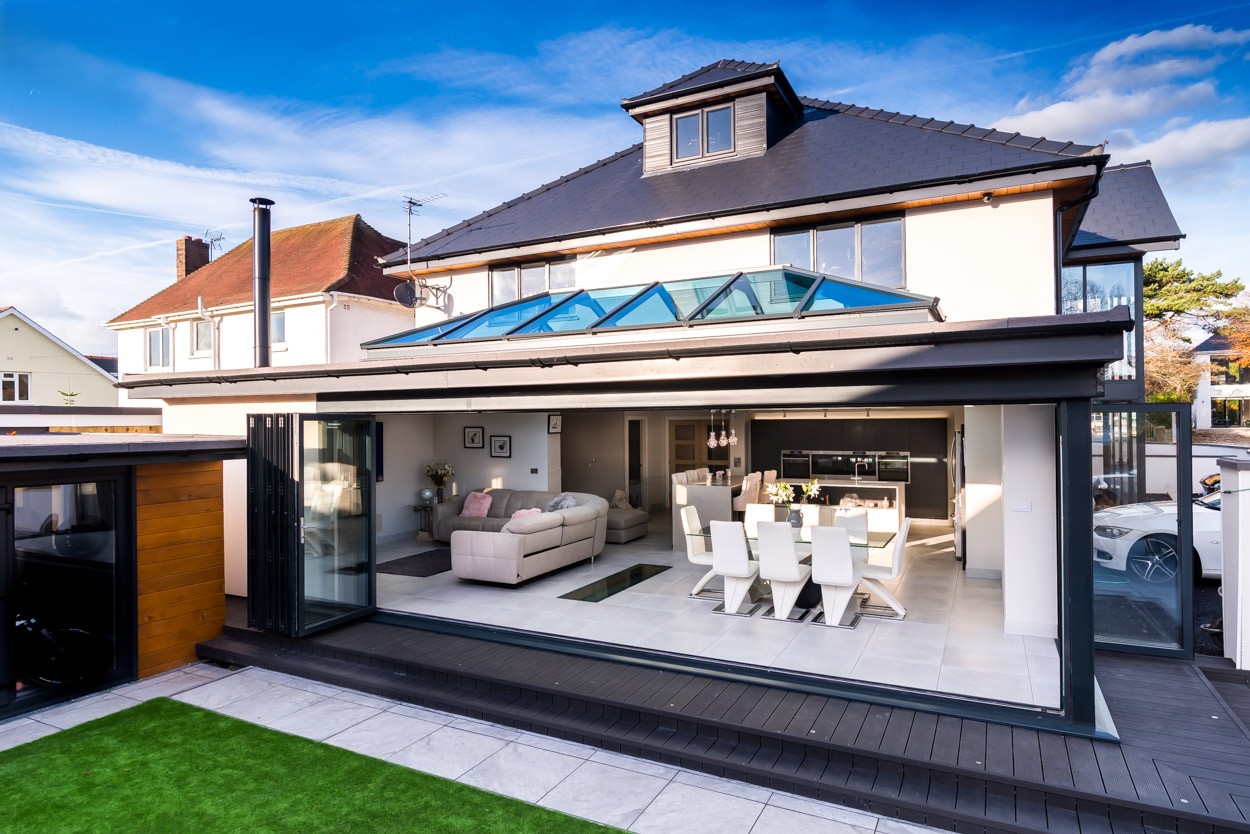
In a kitchen-diner, the lantern often sits above a dining table or kitchen island. This lets you flood daylight evenly across the room while also creating a natural focal point inside. We often pair this with indoor pendant lighting beneath the lantern, creating a warm atmosphere for evening-time dining or entertaining.
2. Multiple Lantern Roofs for Large Extensions
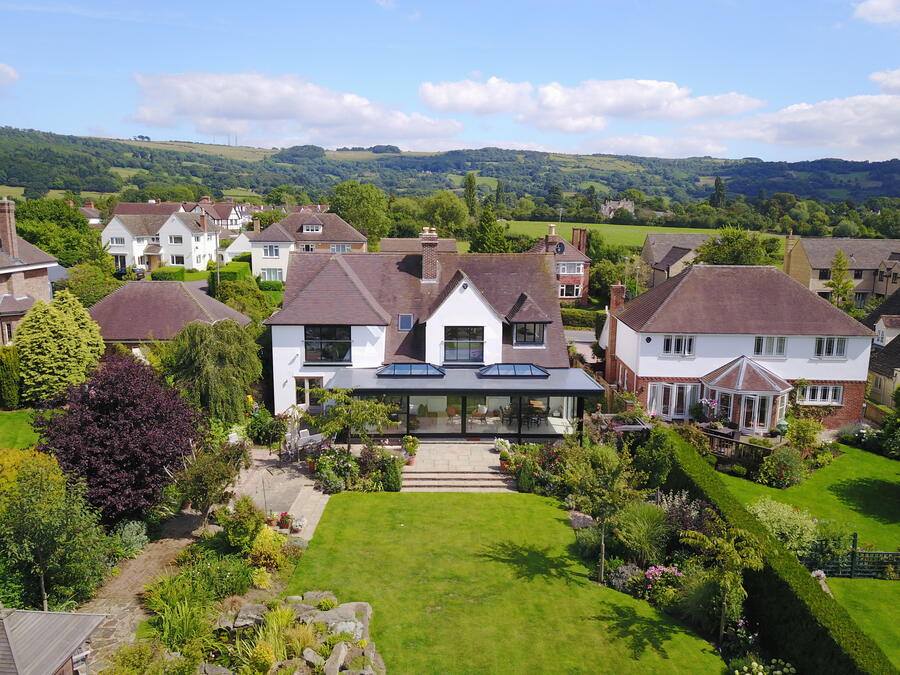
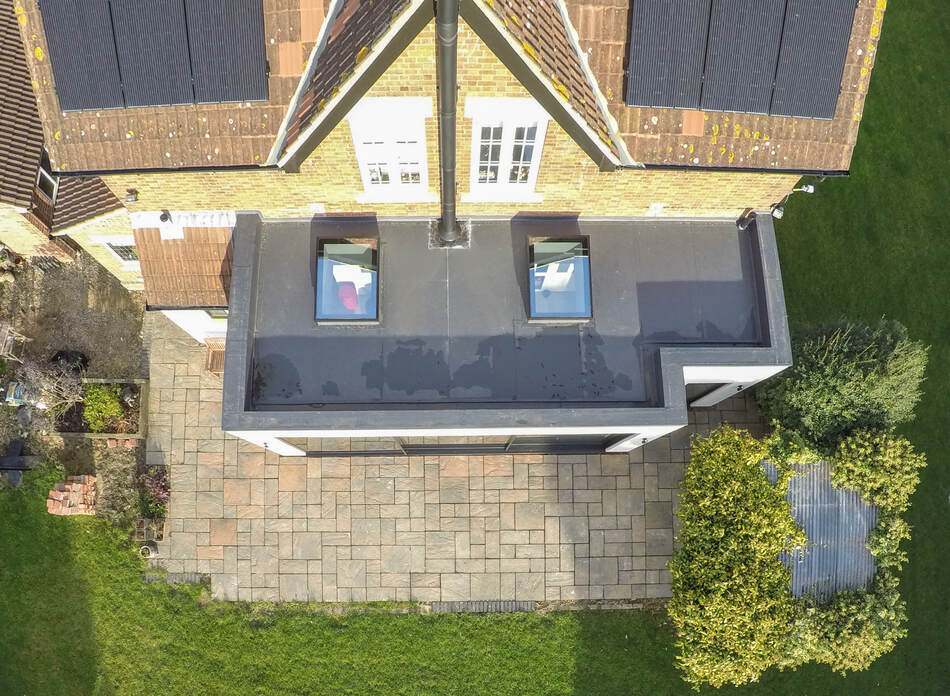
Designing a larger feature? Bigger home extensions sometimes benefit from more than one roof lantern. One idea is to have two or three smaller lanterns instead of one oversized piece. This can spread daylight more evenly inside and avoids darker corners within open-plan rooms.
This design also lets you add architectural symmetry to the roof design, placing individual lanterns over your kitchen, dining and seating areas.
3. Lantern Roofs in Side-Return Extensions
Are you looking to add daylight to a narrow space along the side of your property? These areas can feel darker because they sit close to neighbouring buildings.
In this situation, a roof lantern helps by introducing vertical daylight. Light enters from above, rather than relying solely on windows. Even a smaller roof lantern can lead to big improvements inside this type of area.
4. Lantern Roofs Paired with Bi-Fold or Sliding Doors
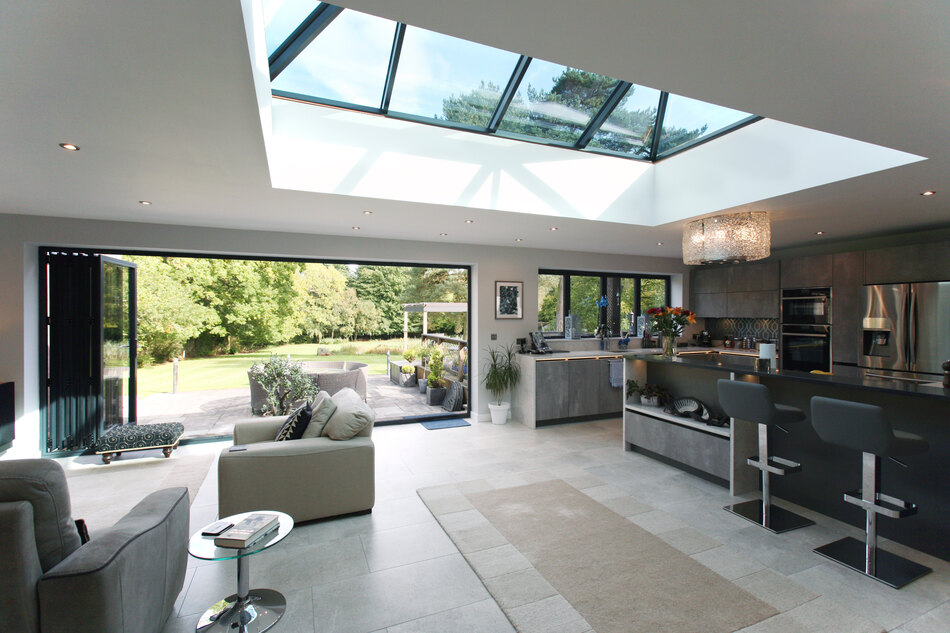
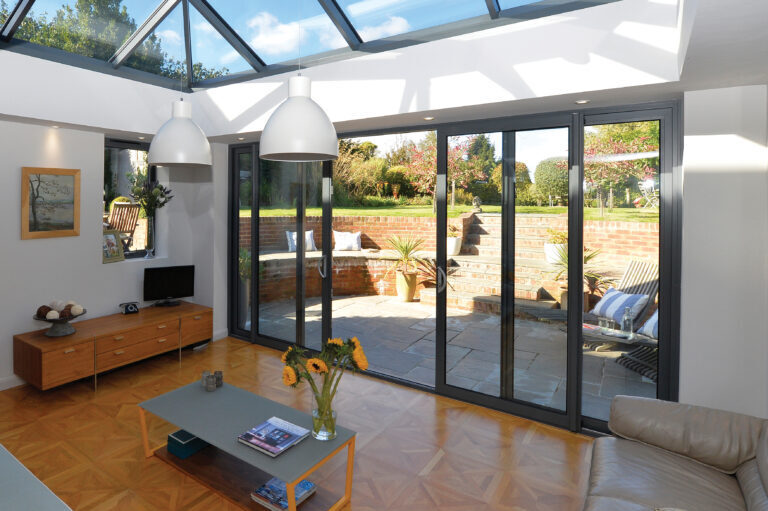
Next, we see how your roof lantern can work with other glazed installations for maximum effect. One way is to combine overhead glazing with doors to create a bright, cohesive extension design.
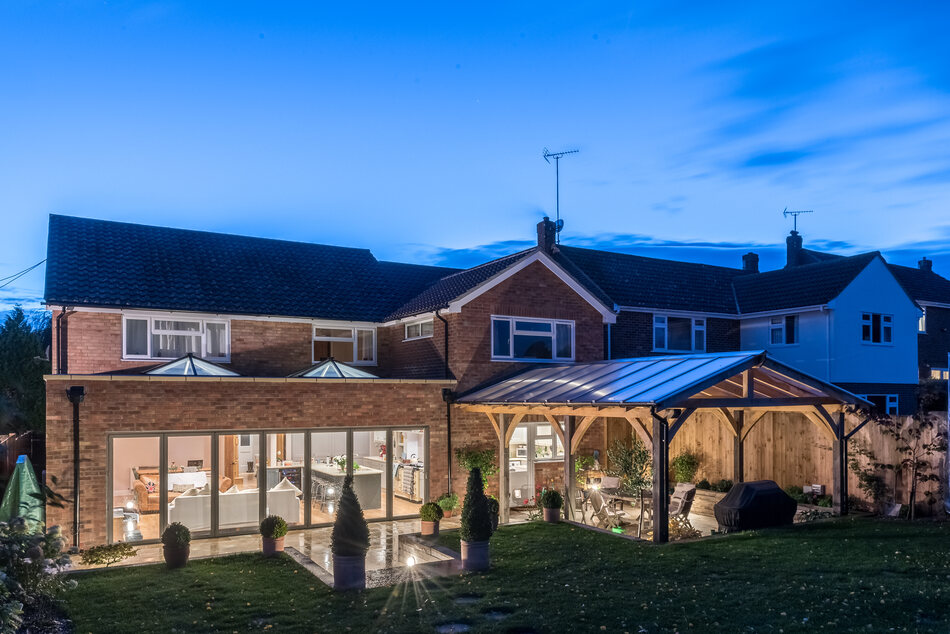
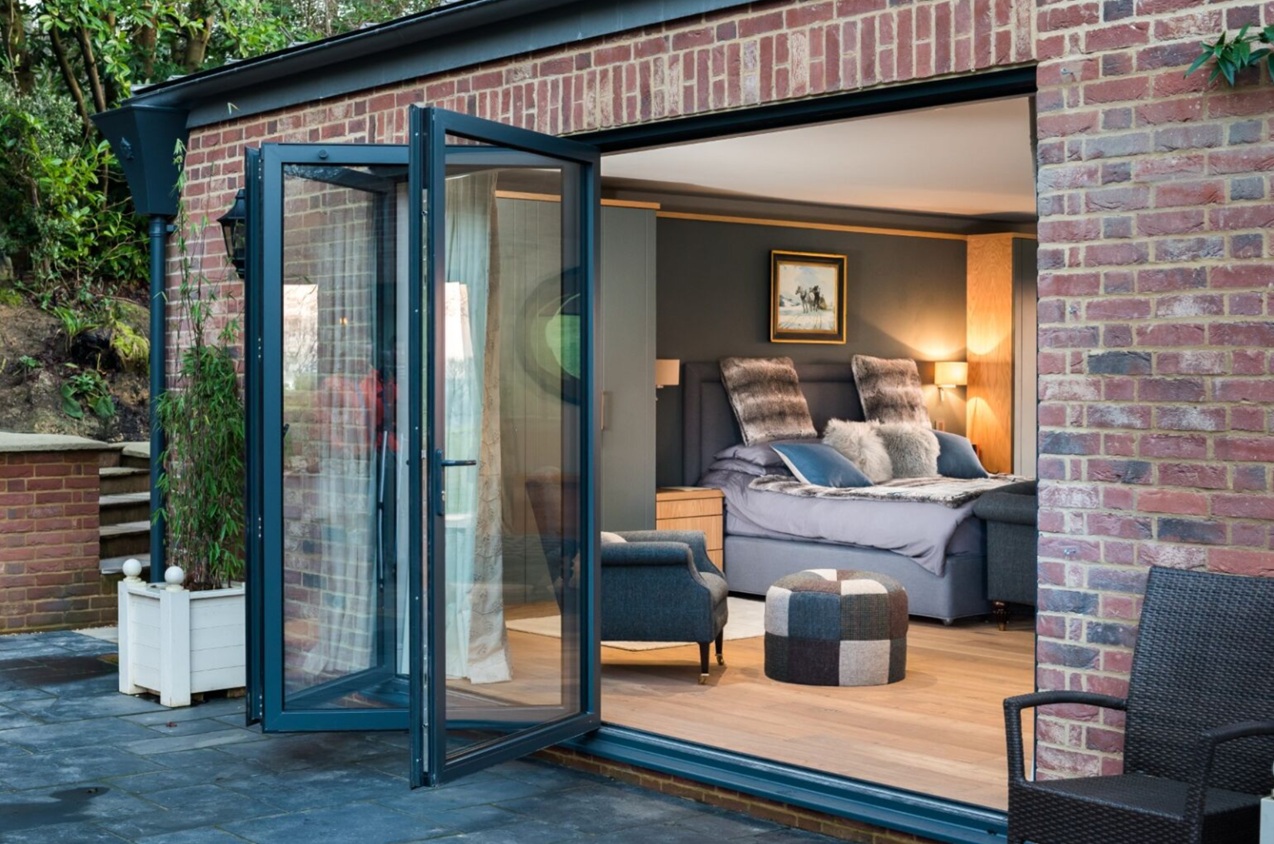
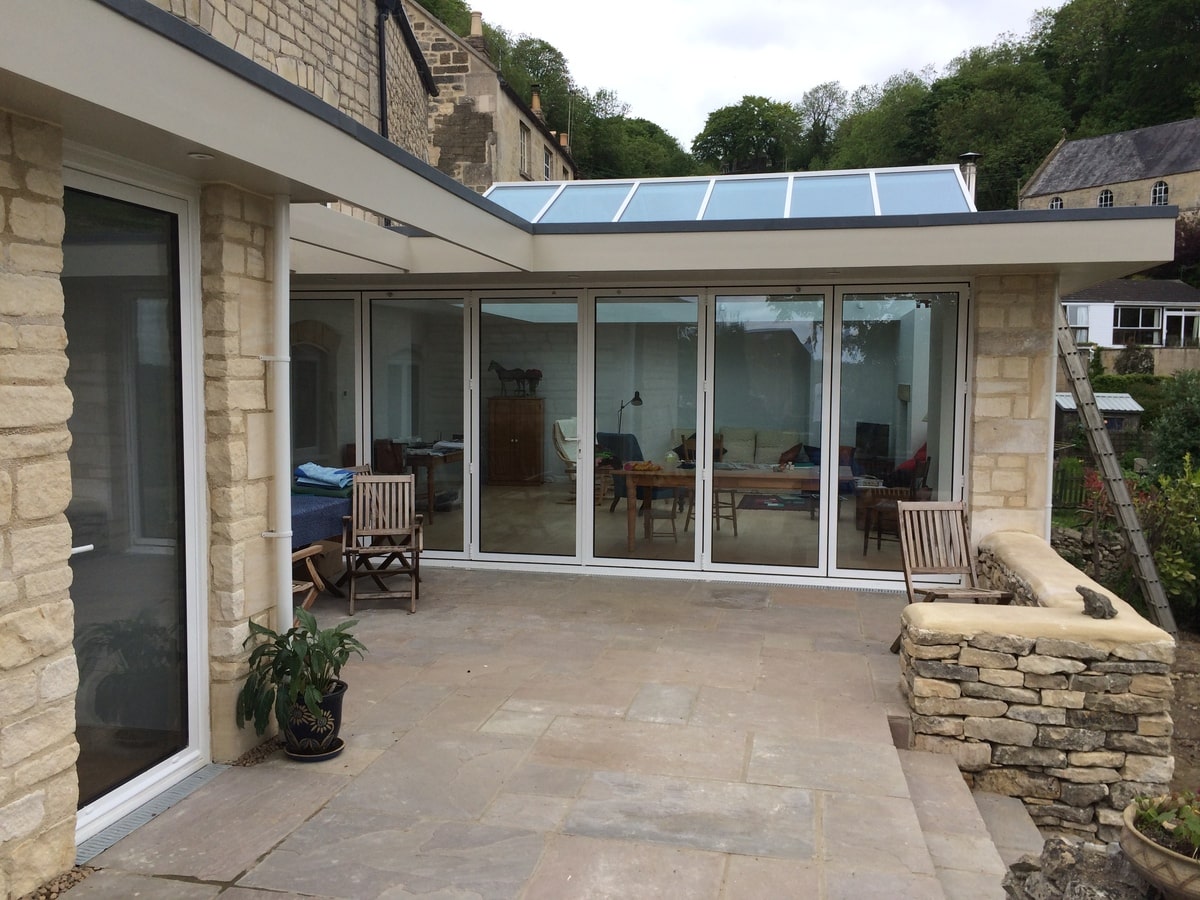
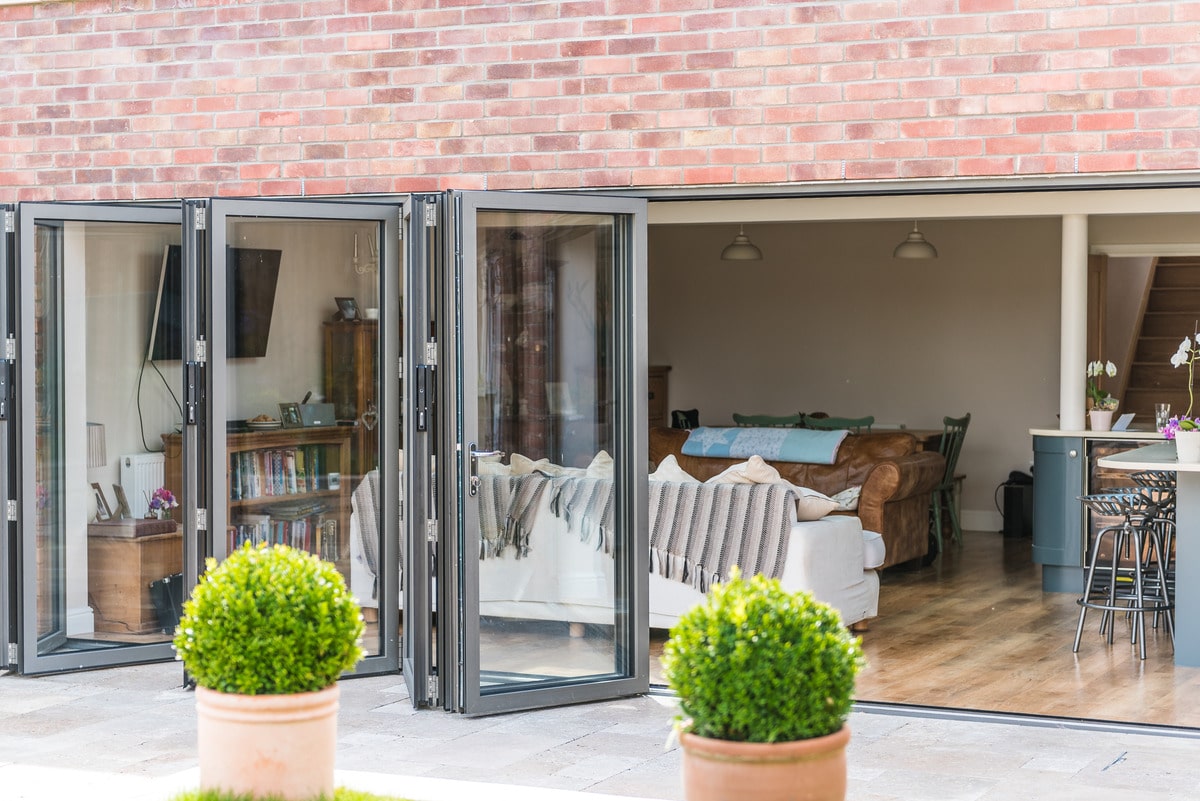
In this design, roof lanterns bring daylight from above. Meanwhile, aluminium bifold doors or sliding doors connect your indoor space with the garden. This combination works particularly well in kitchen-diner extensions, giving you everyday access with lots of added daylight.
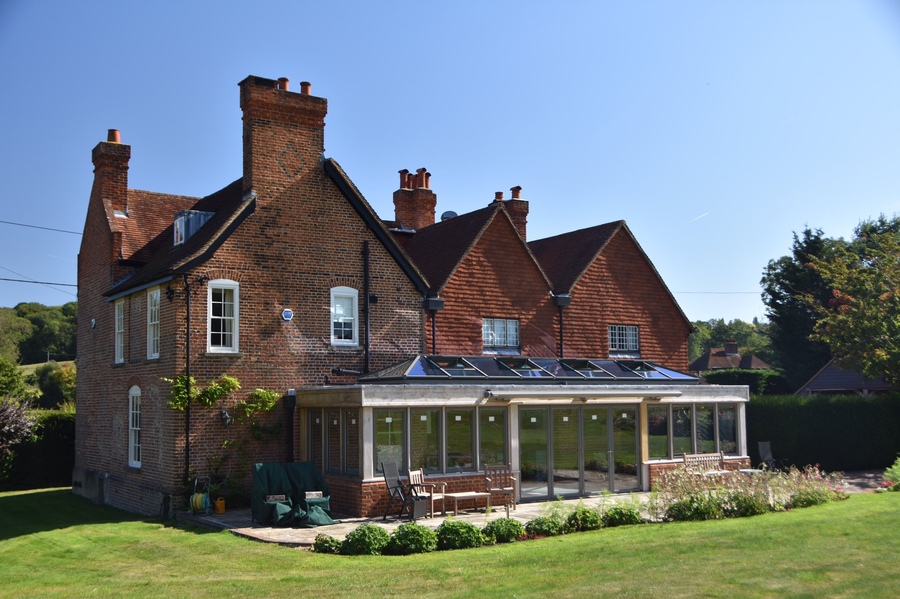
5. Lantern Roofs in Orangery-Style Extensions
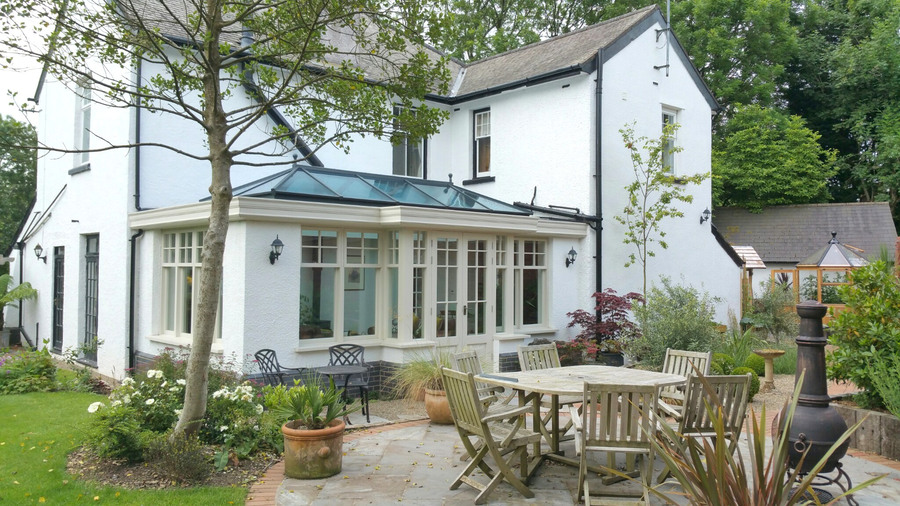
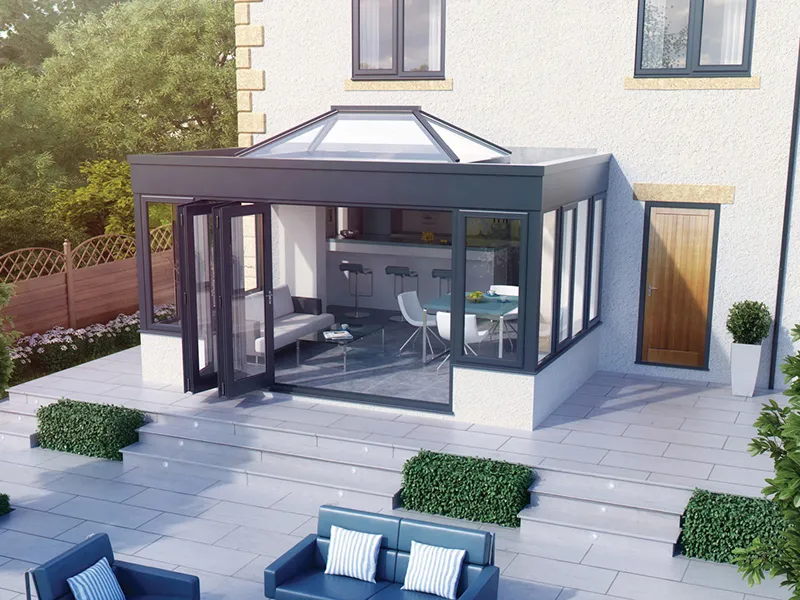
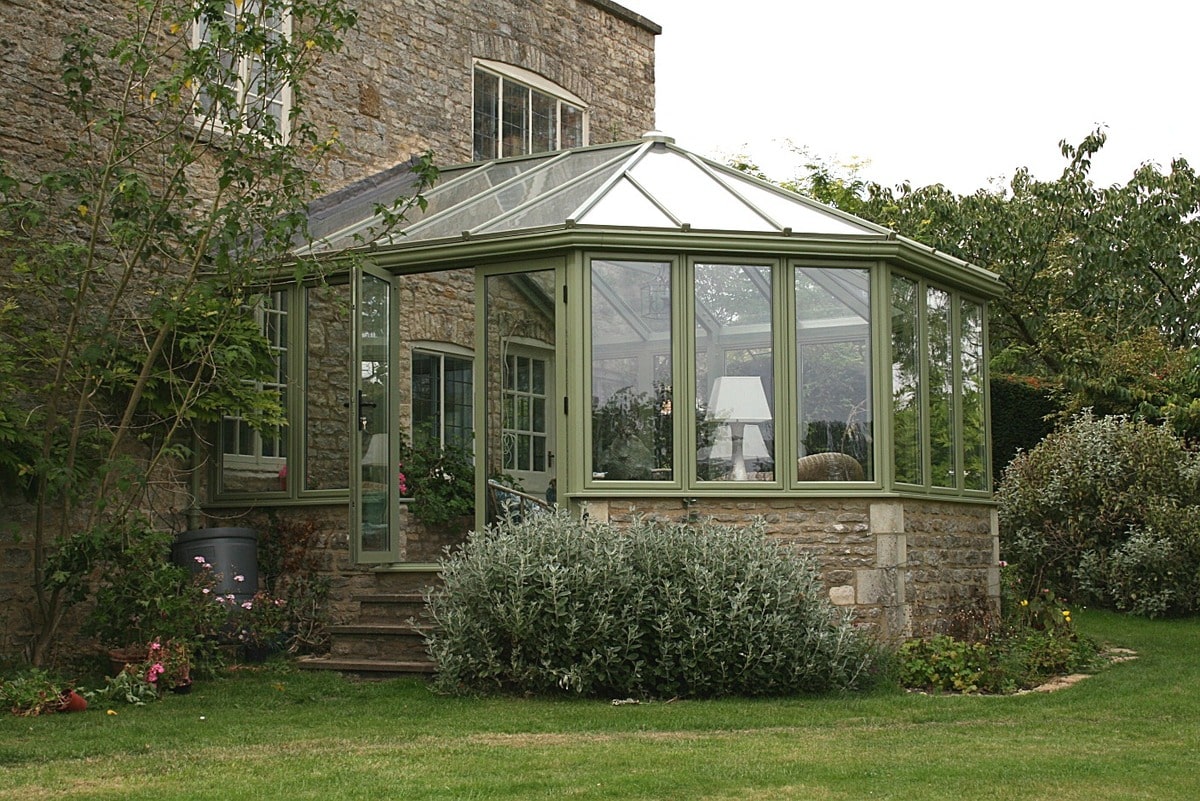
Do you like the idea of a conservatory but want a more “indoor” feel? Orangeries offer the best of both worlds, with a solid roof perimeter and a roof lantern in the middle.
In practical terms, the solid edges provide insulation and a room-like feel. But the lantern also introduces dramatic overhead light without making the entire roof glass. This could be a good choice if you want both comfort and visual impact.
6. Contemporary Minimalist Extensions with Slim Lanterns
If you’re looking to build a contemporary extension or new build, it’s a good idea to involve simple shapes and clean lines. Slim roof lanterns complement this approach well.
With aluminium, you can use minimal framework. This keeps the emphasis on light rather than decoration, using dark finishes to contrast with your lighter ceilings or walls.
7. Traditional Homes with Classic Lantern Roof Designs
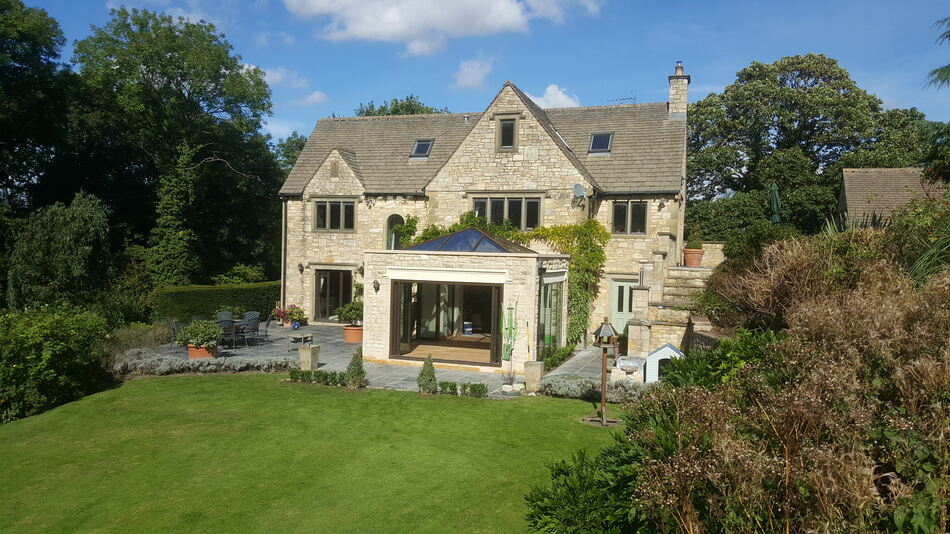
While roof lanterns suit modern designs, they can also be a fantastic choice in traditional homes. In fact, many period-style homes use lanterns inspired by historic orangery designs.
Features like decorative ridge details and slightly more pronounced framing can all help match traditional themes. And with aluminium frames, you’ll also get all the modern thermal efficiency and security benefits.
8. Lantern Roofs Over Staircases or Transition Spaces
An extension isn’t the only place you can install a roof lantern. Many homeowners add a glazed roof area to open up a space inside the existing home.
One such idea is to place a roof lantern above a staircase or hallway. These are often quite dark areas that rely on artificial lighting. But instead, by installing a roof lantern directly above them, these areas can feel larger and more welcoming.
9. Statement Lantern Roofs in Double-Height Extensions
Our final roof lantern idea is to make the roof itself the star of the show. In large, double-height spaces especially, larger lanterns help emphasise the scale of the room. You can also place them tactically so that the focus is on a specific area inside your home. This makes a statement while opening up a huge space full of daylight.
Styling Your Lantern Roof Extension
Once you’ve planned the type of roof lantern and how you’ll position it, here are some styling ideas to increase the impact.
Pendant Lighting
First, you can use lights inside to maximise the physical attributes of your roof lantern. Hanging lighting beneath the lantern, for example, helps draw attention to the height of the space. This can create a nice visual balance between the roof and the room below.
Blinds
Blinds can help manage light levels and improve privacy. They’re particularly useful in south-facing extensions. Coordinating colours and styles with the rest of your interior decoration will keep things on theme.
Interior Colours
It’s also important to plan interior colours. At the most basic level, light colour palettes help reflect natural daylight throughout the room. Neutral tones often work well beneath roof lanterns while darker colours create a cosier feel. Think about your plans for the room and choose one that matches.
Furniture Placement
Depending on the size and shape of your roof lantern, light may fall in specific areas. Placing furniture accordingly helps define zones with your space. Things like dining tables, seating areas, quiet corners or kitchen islands are all good candidates.
Coordinated Frame Colours
Finally, you should think about your existing or future home style. For instance, if you’ve already got aluminium windows, you can match your roof lantern frames to create one flowing, cohesive design.
Choosing The Right Lantern Size and Position
Now you’re at the point where you can start planning the size and position of your roof lantern. A key rule is that the lantern should be in proportion to your extension. A lantern that is too small may be drowned out. Too big and it could dominate everything else. Look for that “just right” sizing for maximum impact and cohesion.
Placement is the next thing to think about. Want to distribute light evenly? Then a central position will be best. On the other hand, you can place an offset lantern to highlight one particular area of the room, like a dining table or kitchen island.
There are also practical considerations to make. The need for structural beams, for instance, influences where the lantern can sit within your roof. You also need to work with any doors, windows and large pieces of furniture, not compete with them.
Common Mistakes to Avoid with Roof Lanterns
During your planning phase, there are some common mistakes to avoid, including:
- Not accounting for the direction of the sun in relation to your extension. This could lead to glare or overheating.
- Not thinking about ventilation or blinds. This can impact your comfort during warmer months.
- Not considering furniture layout. This can disrupt how the room is used if there are unintentional clashes.
Once you’ve noted these, you can start to plan exactly which type of roof lantern would suit your home best.
Why Aluminium Roof Lanterns Work Best For Extensions
If you’re looking to support large glazing panels, it’s a good idea to consider aluminium frames.
Unlike other materials, aluminium frames are slim while supporting heavy loads. This means more daylight and less visual clutter in your extension. Aluminium is also a very durable material, resisting corrosion and weathering to give you excellent return on investment.
In terms of design, you can choose from a wide range of powder-coated finishes to match any theme you have in mind. With styles from contemporary to heritage, you can find the ideal roof lantern for your property. Browse the Atlas Aluminium range of roof lanterns to bring your home design ambitions to life.