When making a substantial investment in our homes, there’s a lot to think about. Appearance, security, energy efficiency and lifespan should all be at the top of our list – and the raw materials make all the difference.
In this guide, we’ll look at uPVC vs aluminium doors, and how the right materials can impact all these things. As a specialist provider of high-performance aluminium door systems, we’ll guide you on the right choice for cost, durability and everything in between.
What’s the difference between PVC and aluminium doors?
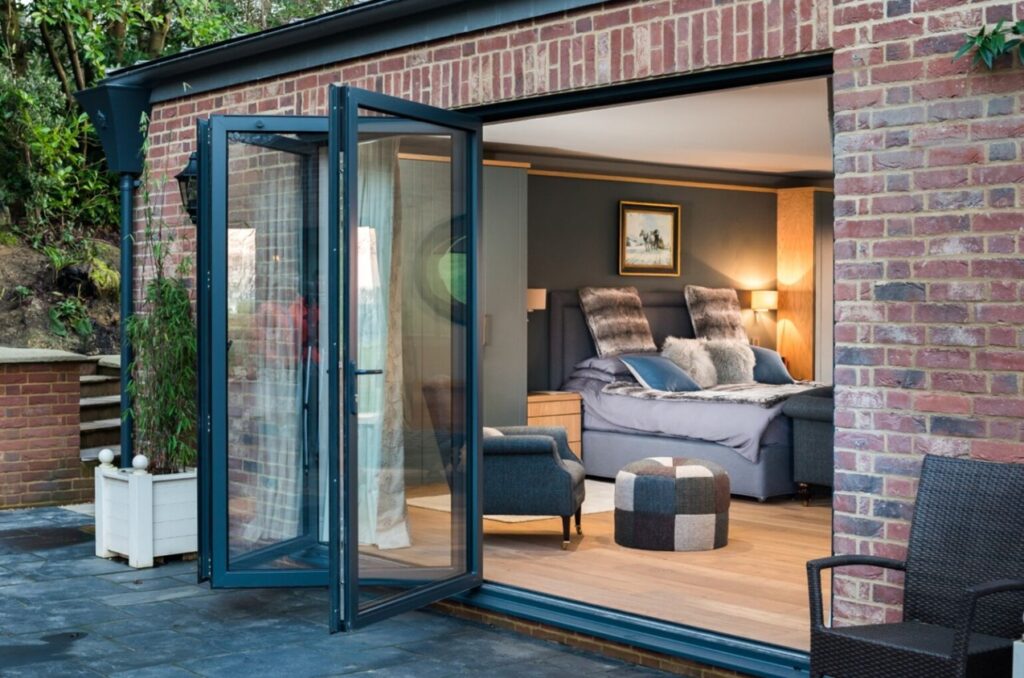
Historically, aluminium doors have been associated with commercial properties, and PVC homes. So, if you were comparing something like PVC vs aluminium patio doors, you might have gone for the former.
Before today’s technological advances, this made sense. PVC or uPVC (unplasticised poly vinyl chloride) windows are made from plastic-based frames, ideal for their insulating properties. With thicker profiles, they offered lower upfront costs and energy efficiency.
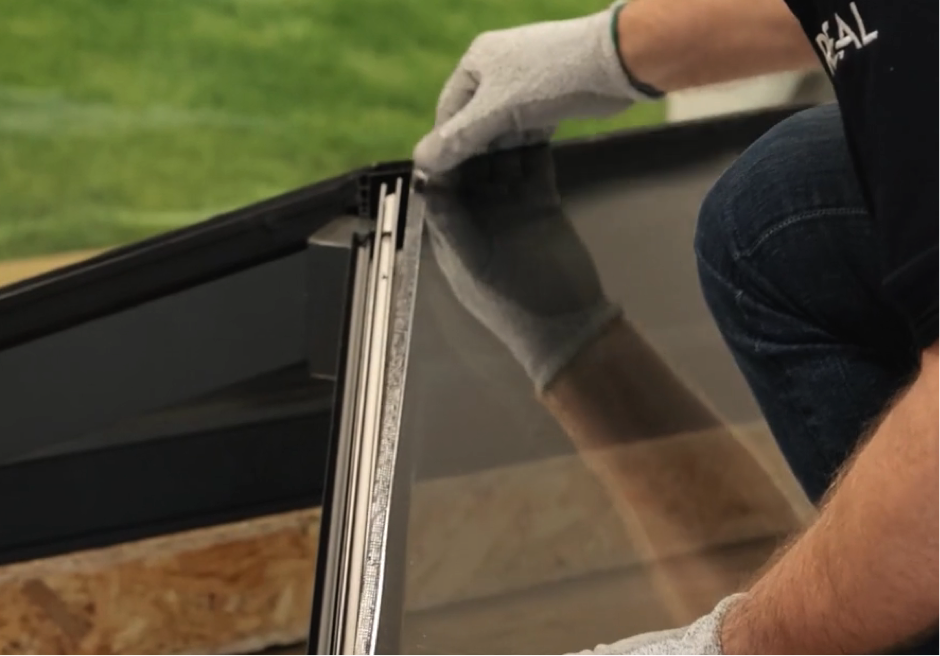
Aluminium is traditionally associated with being a conductor, but today that is not the case. Aluminium doors use metal frames with ‘thermal breaks’, which help to trap warm air. They also have slimmer sightlines, offering seamless integration with the rest of the property and a premium finish.
Materials influence many factors, including your doors’ overall strength, aesthetics and lifespan. It’s important to consider all of these alongside cost.
Design and aesthetics
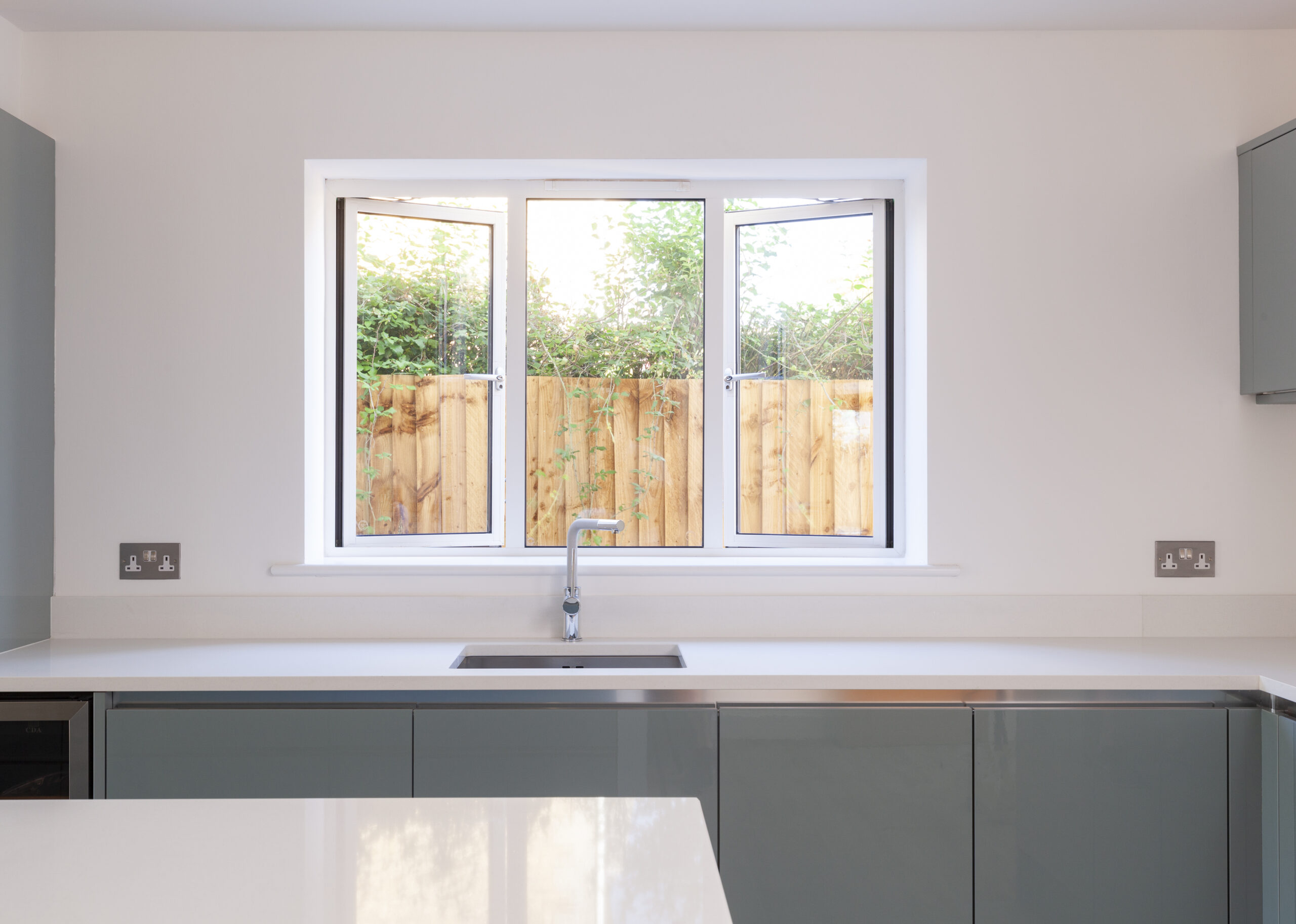
If yours is more of a traditional home, PVC doors offer a cost-effective option with some limitations. Frames are bulkier, resulting in a smaller surface area for the glass. Meanwhile, if you’re not after anything unique where colour is concerned, they’re ideal. Choose PVC if your colour palette is limited and you don’t have extra requirements like matching with woodgrain foils.
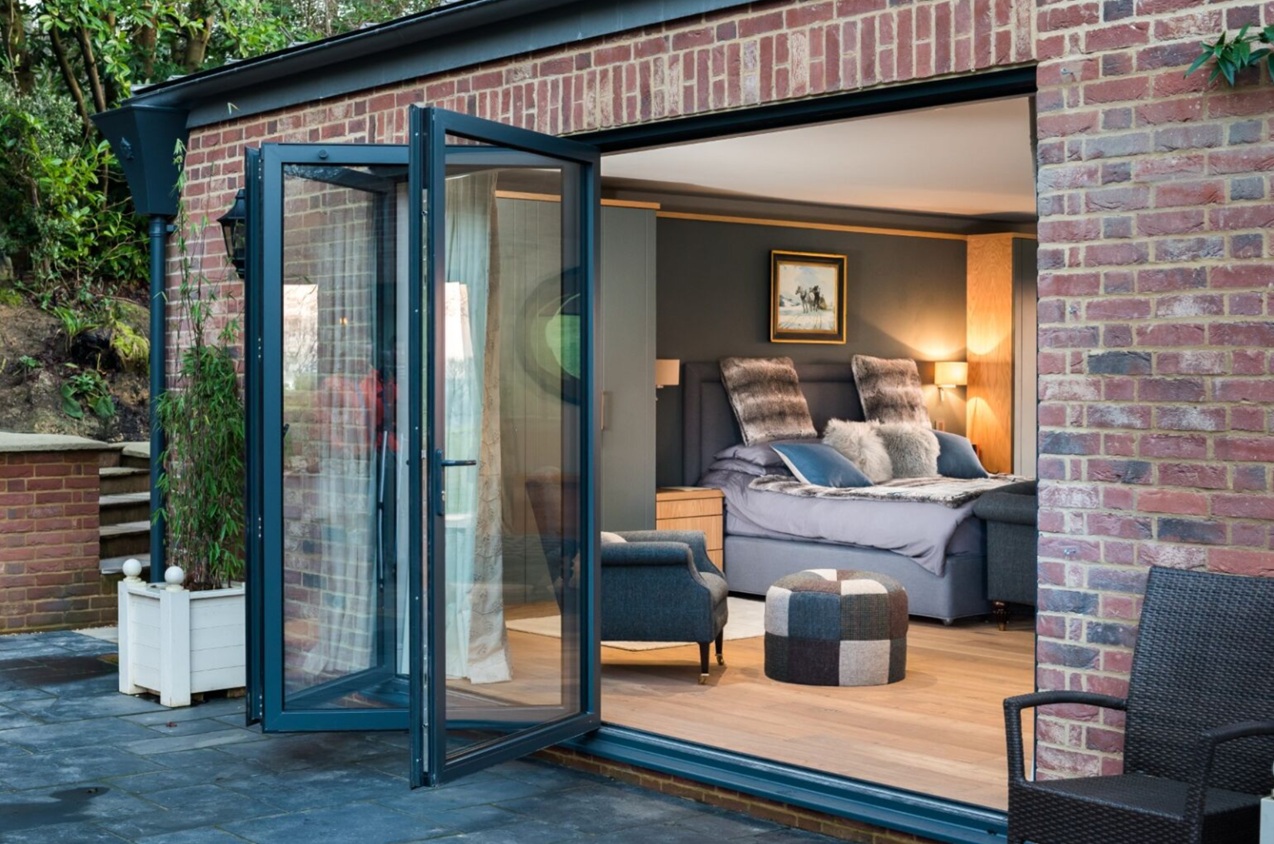
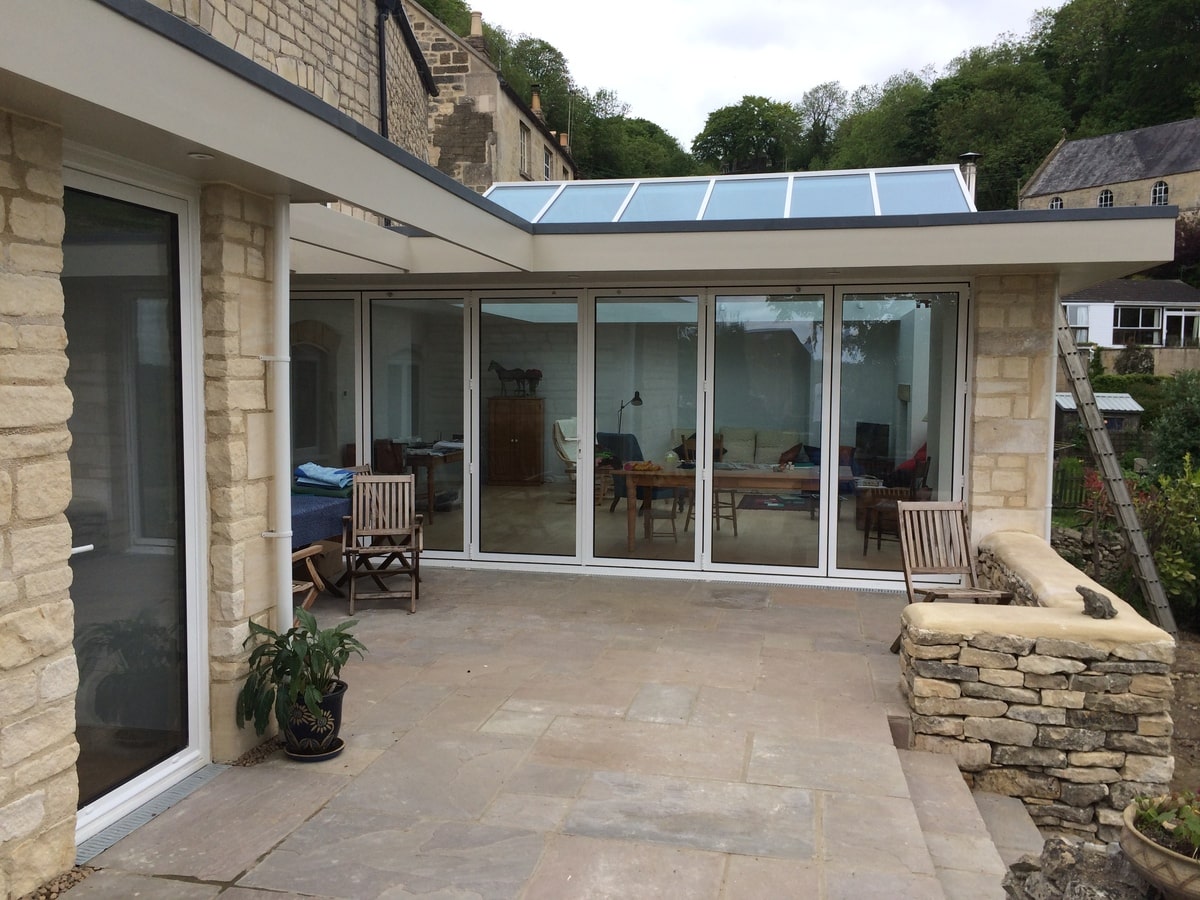
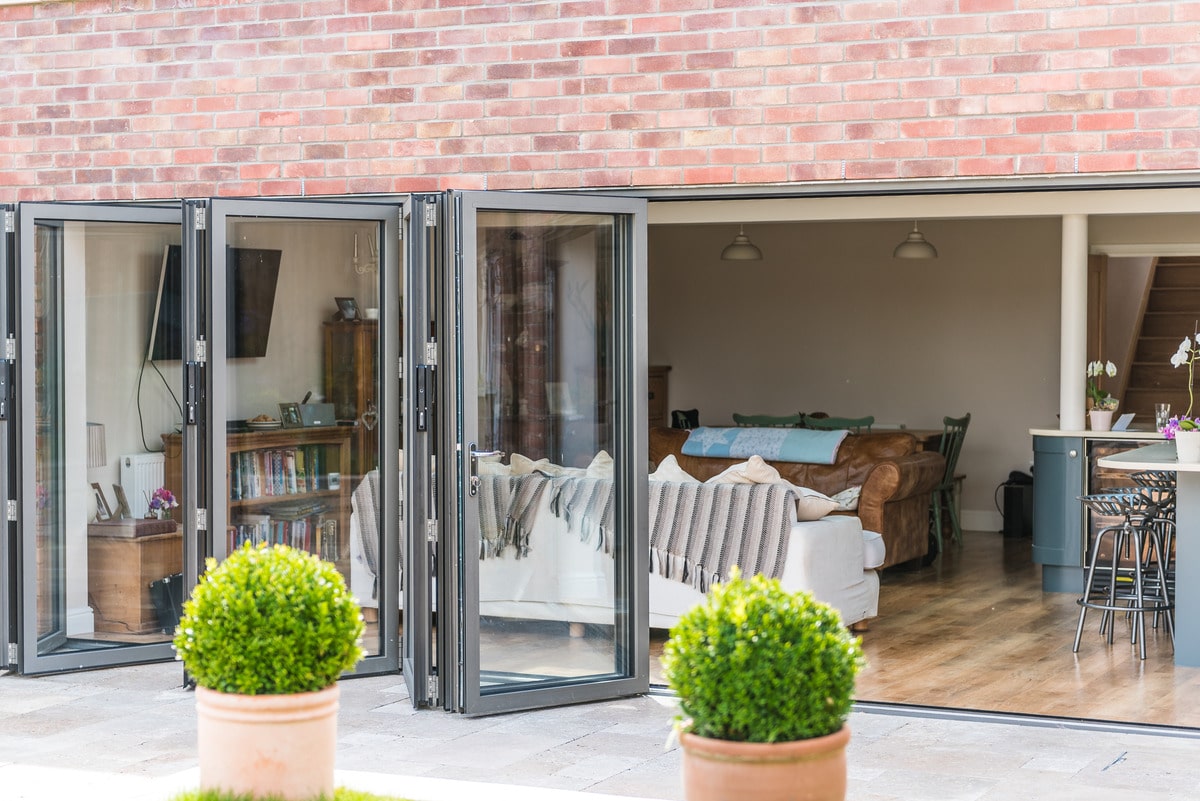
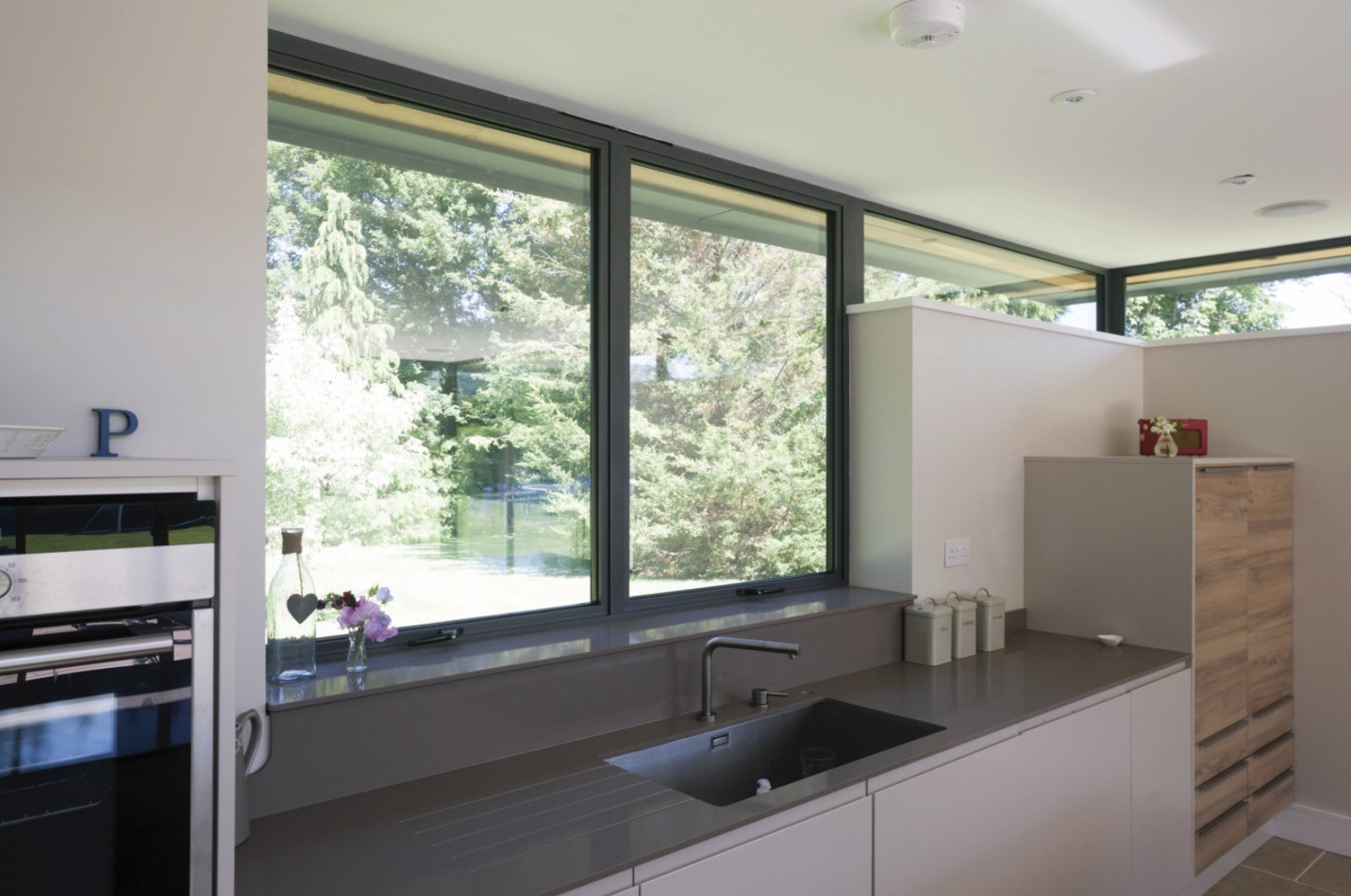
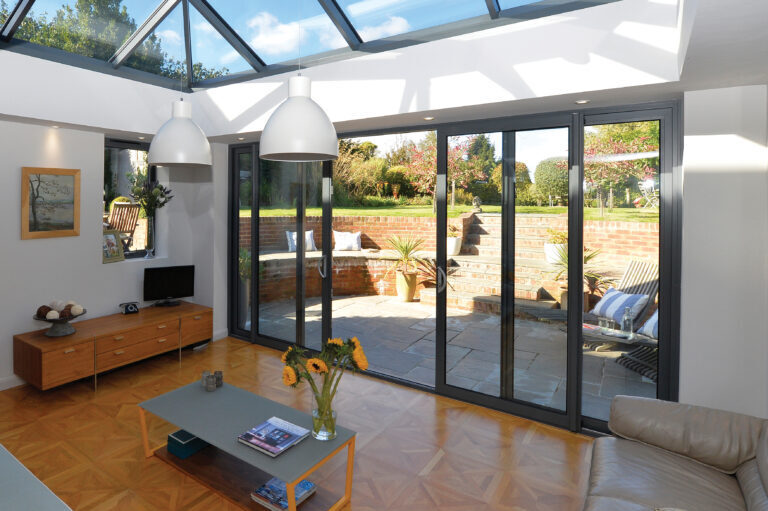
Aluminium frames are perfect for contemporary and traditional homes. With a range of polyester powder coatings, colours are almost limitless – great for blending exterior and interior walls, plus the option for added effects. Thanks to their slimmer profiles, lines appear cleaner and glazed areas are larger, letting in more natural light.
Strength, durability and lifespan
Where lifespan is less of a concern, PVC typically lasts around 20 to 30 years. In this time, it’s susceptible to warping or discoloration, or could even become brittle. For large or heavy door panels, it’s advisable to choose a more durable product – particularly if you live somewhere that’s prone to inclement weather.
Aluminium, meanwhile, offers superior strength. Each Atlas system has been rigorously tested for wind and water resistance, fighting against rusting, warping and fading. This means you’ll get a better return on investment, lasting anywhere from 30 to 50 years. It’s great for large doors, wide openings, or areas of high footfall such as exterior residential doors.
Energy efficiency and thermal performance
Both materials offer high thermal performance, as PVC is a natural insulator. As a cost-effective alternative, it’s ideal for double glazed doors.
For extra protection, aluminium doors use thermal break technology to trap warm air. They can be fitted with triple glazing up to 66mm, perfect for lower energy bills in harsh winters. To maintain optimum temperatures year-round, our designer doors have U-values as low as 1.3 W/m²K, and our Signature doors as low as 1.4 W/m²K.
U-value is a measure of heat transfer through a wall. Lower readings may even add value to your home!
Security and safety
For standard security, PVC doors offer multi-point locking. It’s important to be mindful of larger doors, as the lower frame strength of the PVC may require a stronger lock.
With aluminium frames, the stronger material is more resistant to forced entry. This is complemented by industry-leading hinge guards and 10-point locking systems with adjustable hinges, conforming to BS 4873 standards. For extra assurance, Atlas offers PAS 24:2012 and PAS 24:2022 security upgrades. These are designed to resist forced entry with specialist tools.
Weather resistance and performance testing
Though perfectly acceptable in moderate weather conditions, PVC doors can be susceptible to warping. Ultraviolet rays from the sun may cause discolouration, and doors with high footfall or near coastal properties may become brittle.
For longer-lasting frames in all weather conditions, aluminium is the premium choice. Its polyester powder coating resists water and wind, combined with the overall strength of the metal. All Atlas systems are rigorously tested for air, water and wind performance.
Maintenance and upkeep
If you’re looking for low maintenance, aluminium or PVC doors are ideal. Their natural water resistance means they do not need regular upkeep, as opposed to wood or other organic materials.
However, PVC can be vulnerable to fading or staining over many years. Aluminium will maintain its appearance, without the need to repaint, for up to five decades.
Cost differences
Where price is the key driver in the aluminium vs PVC debate, PVC wins. While it’s not a long-term return on investment, PVC does have a lower upfront cost, making it ideal for short-term projects where budget is limited.
Aluminium, however, will provide long-term returns on a larger upfront cost. This is thanks to superior durability and weather performance, lasting up to 50 years without the need for a replacement.
Which is best for different scenarios?
Your decision on PVC vs aluminium doors will come down to the use case. While some residential doors may have high footfall, others might be a short-term investment with lower security needs.
Budget replacements
Where budget is a limit, PVC offers an insulative, cost-effective option. It may not last as long, but can serve a purpose if durability and aesthetics are not your first concern.
Best for budget replacements: PVC
Modern homes and extensions
Modern homes and extensions have bigger energy efficiency requirements, and may be bound by building regulations. For a contemporary aesthetic that complies with all regulations, aluminium doors are the best way to go.
Best for modern homes and extensions: Aluminium
Large patios or sliding doors
Sliding doors tend to be more susceptible to wear and tear, while large patios require durable frames. In this case, it’s best to choose a hardwearing aluminium finish that’s versatile for many applications.
Best for large patios or sliding doors: Aluminium
High-security requirements
Simple locking systems with PVC are ideal for domestic environments where intrusion is unlikely. However, if your home is vulnerable to attack, has high-value items or needs extra weather resistance, aluminium is best. With Atlas, you can access additional security upgrades to prevent break-ins.
High-security requirements: Aluminium
Long-term investments
While a PVC investment is great for 20 to 30 years, aluminium can last up to 50 years with virtually no maintenance. In that time, it also improves your home’s energy efficiency and will blend seamlessly with your aesthetic, reducing the need for a replacement.
Best for long-term investments: Aluminium
Is aluminium worth it?
While aluminium door frames have a higher upfront cost, the investment is worth it thanks to:
- Flexible customisation
- Durable materials
- Wind, air and water testing
- High security
- Energy efficiency
- Suitability for modern and traditional homes.
Why homeowners choose aluminium doors from Atlas
At Atlas, every aluminium door is an investment in your home. Each frame has been rigorously tested to the latest security standards, with PAS 24 upgrades available to put your mind at ease.
All our products are accredited with the BSI Kitemark for quality, durability and security. That means an extensive range of colour and design options with full customisability. You’ll also gain greater energy efficiency with thermally broken frames and double or triple glazing.
Tested against wind, water and air, our aluminium doors are designed to stand the test of time.
FAQs
PVC vs aluminium doors: why quality is best
|
Aluminium |
PVC |
|
|---|---|---|
|
Design |
Range of colours, slimmer profiles |
Limited to whites and greys, better for traditional homes, bulkier sightlines |
|
Lifespan |
Up to 50 years |
Up to 30 years |
|
Energy efficiency |
U-values as low as 1.3 W/m²K |
U-values ranging from 1.2 to 1.4 W/m²K |
|
Security |
Durable material and 10-point locking system with optional upgrades |
Multi-point locking system with no optional upgrades |
|
Weather testing |
Air, wind and water tested |
Weatherproof in moderate conditions |
|
Maintenance |
Minimal maintenance for 50 years |
Low maintenance but may warp, stain or fade |
|
Cost |
Up to 40% higher |
Up to 40% lower |
If you’re looking for a high-quality return on investment, aluminium doors offer a premium, safe and energy-efficient option. From durable materials to low maintenance, high security and low U-values, the benefits of choosing aluminium far outweigh the upfront cost.
For low-budget projects, PVC provides a cost-effective option, but is limited in terms of design and lifespan. Atlas Aluminium can help you explore a range of high-performance door systems and connect you with a trusted installer.