Choosing a new door for your home is about a lot more than style. Of course, getting the right aesthetic is incredibly important. But your choice of door will also influence things like:
- How much natural light comes into your property
- How much maintenance will be required of you
- How thermally efficient your household is
- How secure your home is against intruders
- How soon you might have to replace the door
…and many more. One of the most common choices UK homeowners face today is between composite aluminium doors. Both are popular choices, offering a range of designs, energy efficiency and security. But which is the best choice for your home?
In this article, we’ll go over the differences between composite and aluminium doors, look at their defining features – and see when one might be a better choice for you over the other.
Key Differences Between Composite and Aluminium Doors
Both composite and aluminium doors are excellent choices in different scenarios. Here are the differences between the two.
1. Material and Construction
The difference in material and construction influences everything when it comes to composite and aluminium doors.
Composite doors are made from multiple materials. Typically, they include:
- A timber, foam or mixed core
- Outer skins made from glass-reinforced plastic or uPVC
- Added internal reinforcements for strength
They’re usually designed to mimic the appearance of timber while offering better durability and insulation.
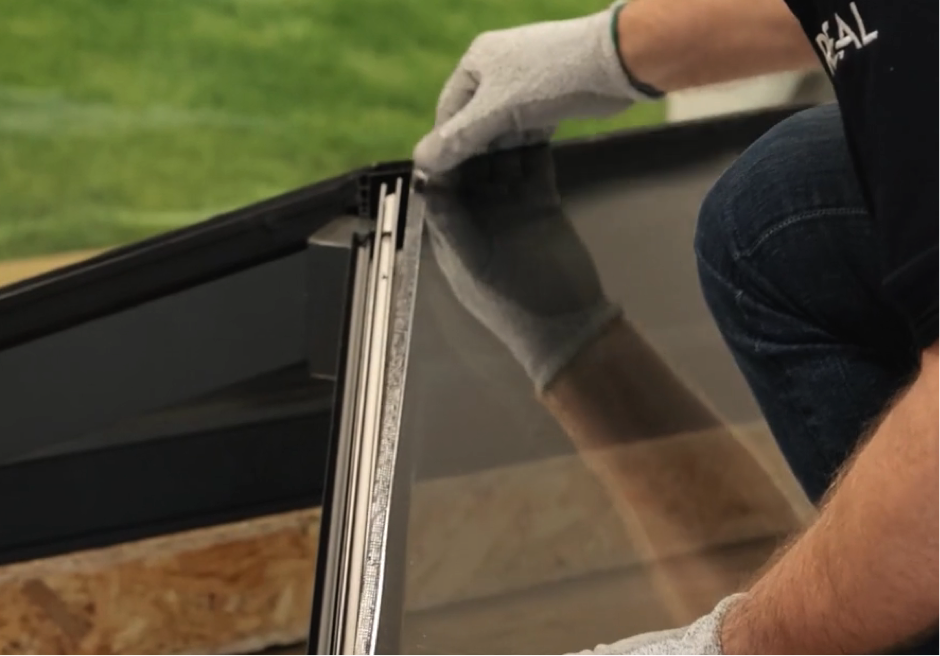
Aluminium doors, on the other hand, are made from a full aluminium metal system. Most models use a thermal break – a non-metallic internal barrier that prevents heat transfer and keeps your home warmer. Modern aluminium doors may also have insulated panels, multi-chambered profiles and precision-engineered components for added performance and peace of mind.
2. Size, Thickness and Frame
Another clear difference between aluminium and composite doors is the bulkiness of each material. This makes a big difference not only to performance – but also to how the door looks in your house.
Composite doors are usually thicker than aluminium. They’re generally quite heavily built, partly due to the core and need for reinforcing layers. This often means:
- Chunkier frames
- Smaller glazed areas
- Limitations on maximum width or height, potentially limiting where you can place one
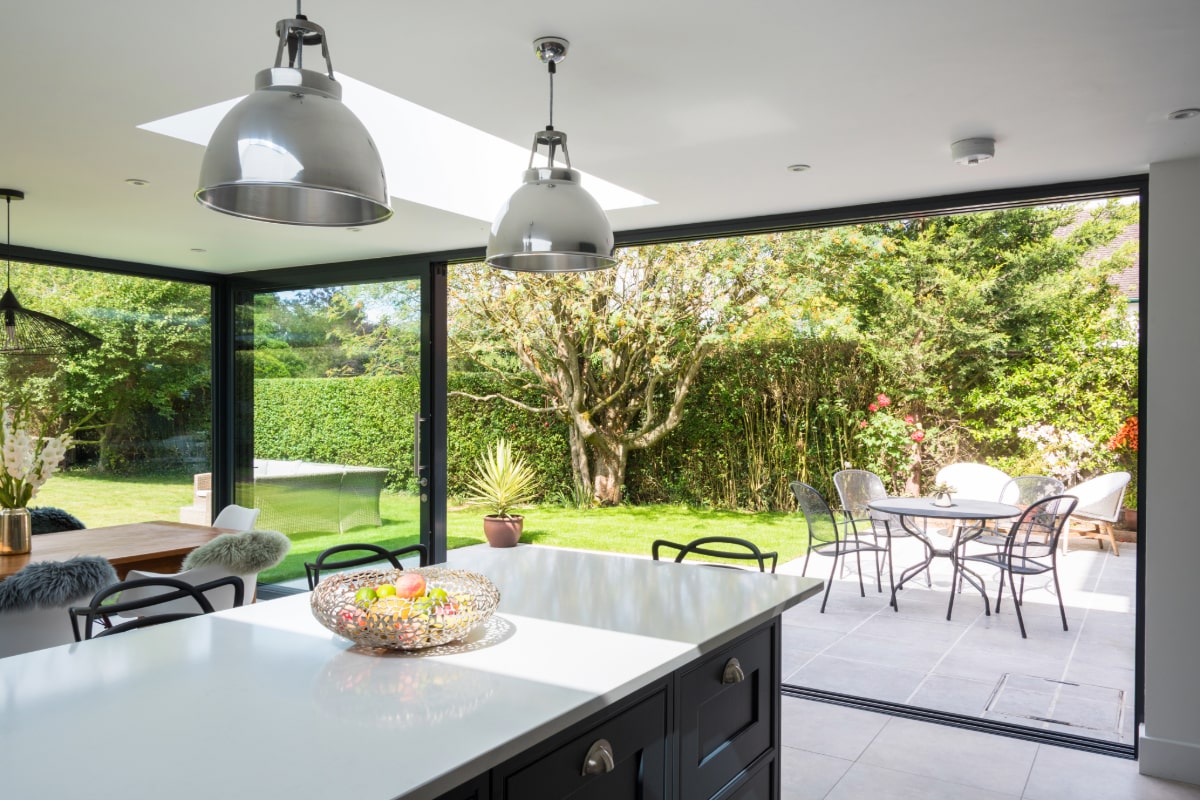
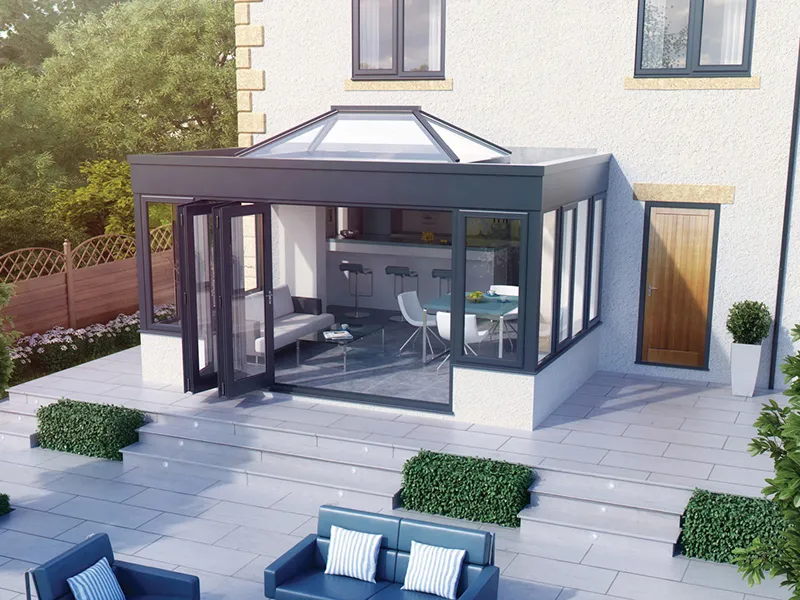
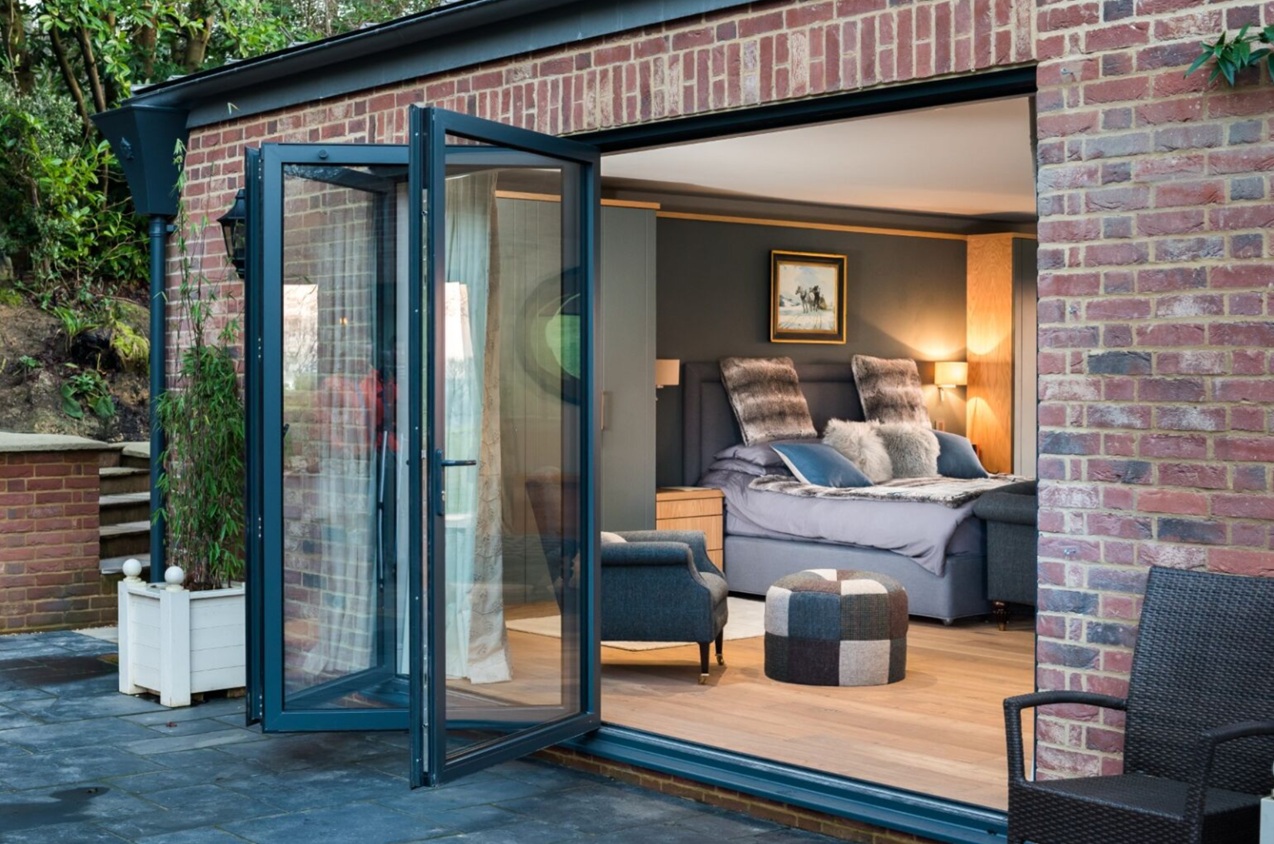
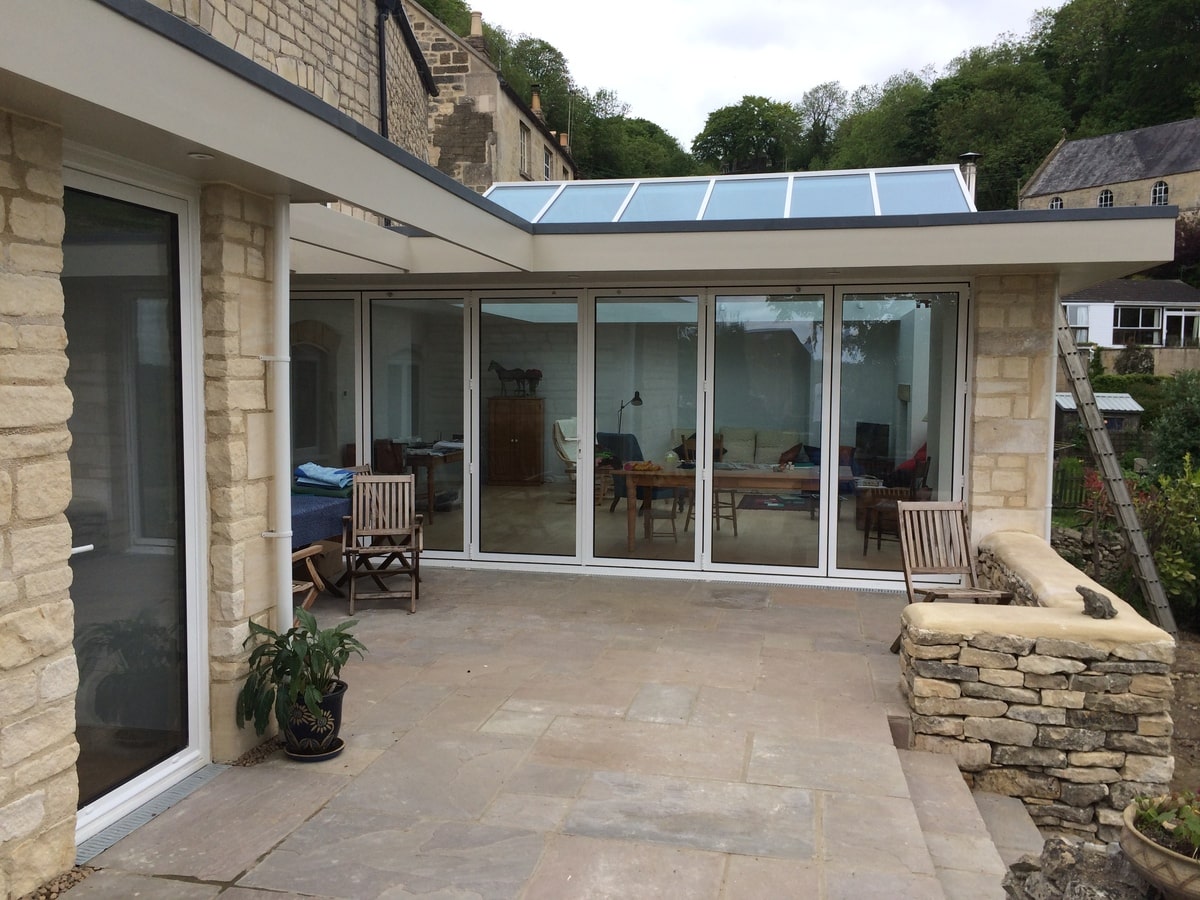
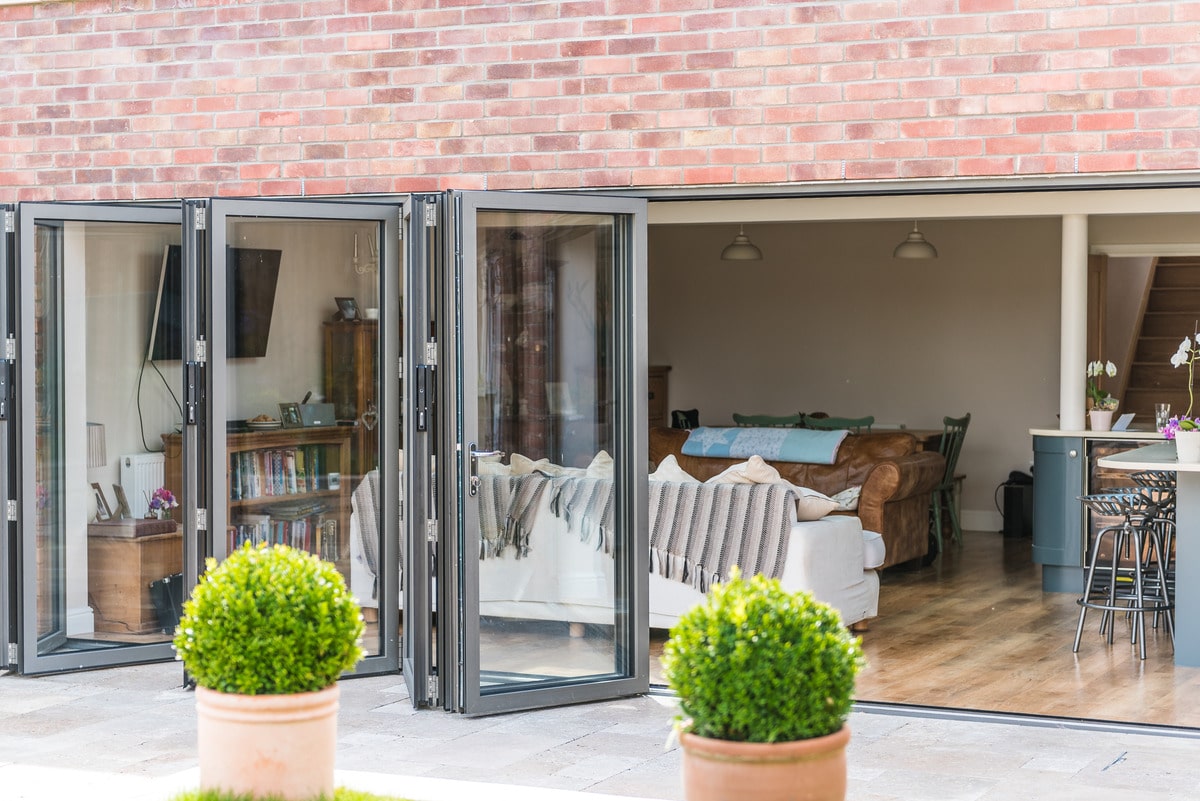
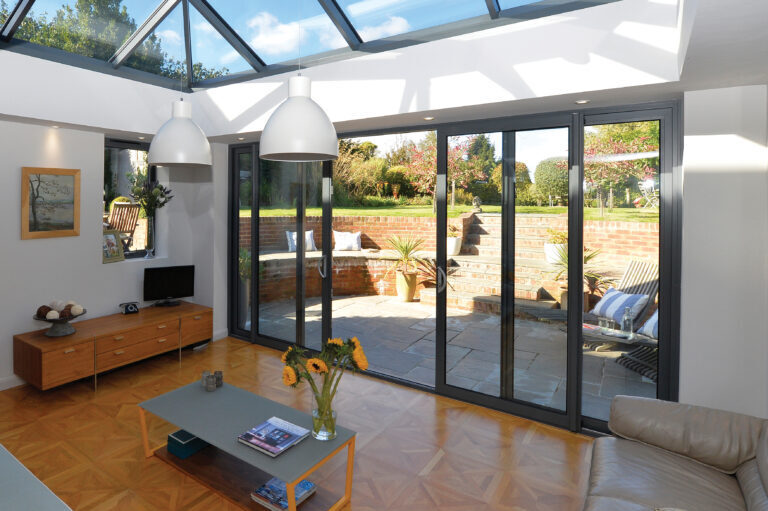
Aluminium is a very strong yet lightweight metal. This allows homeowners the freedom to have slimmer frames and larger glazed panels that let in plenty of natural daylight. They’re also great in wider or taller settings, such as aluminium bifold and sliding doors.
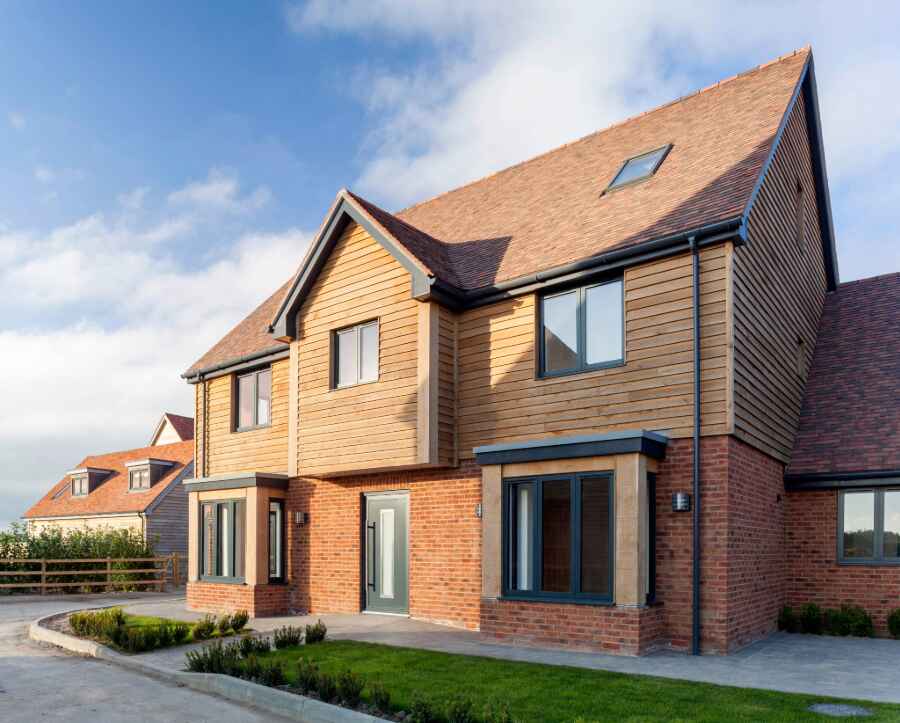
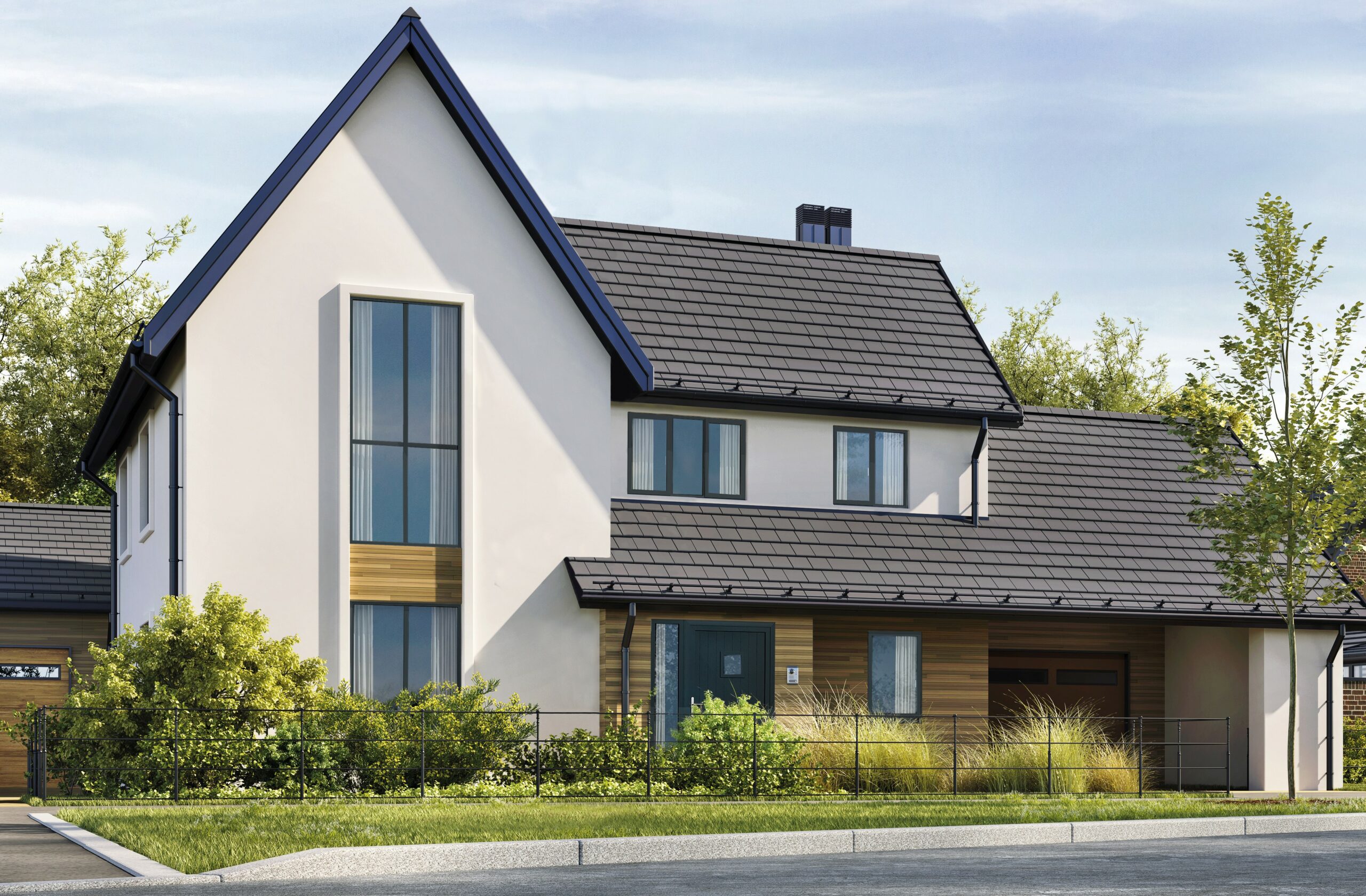
Aluminium is also flexible enough to create contemporary entrance ways into your home. For this reason, it’s often a good choice for premium entrances to modern homes and extensions.
3. Design and Finish Options
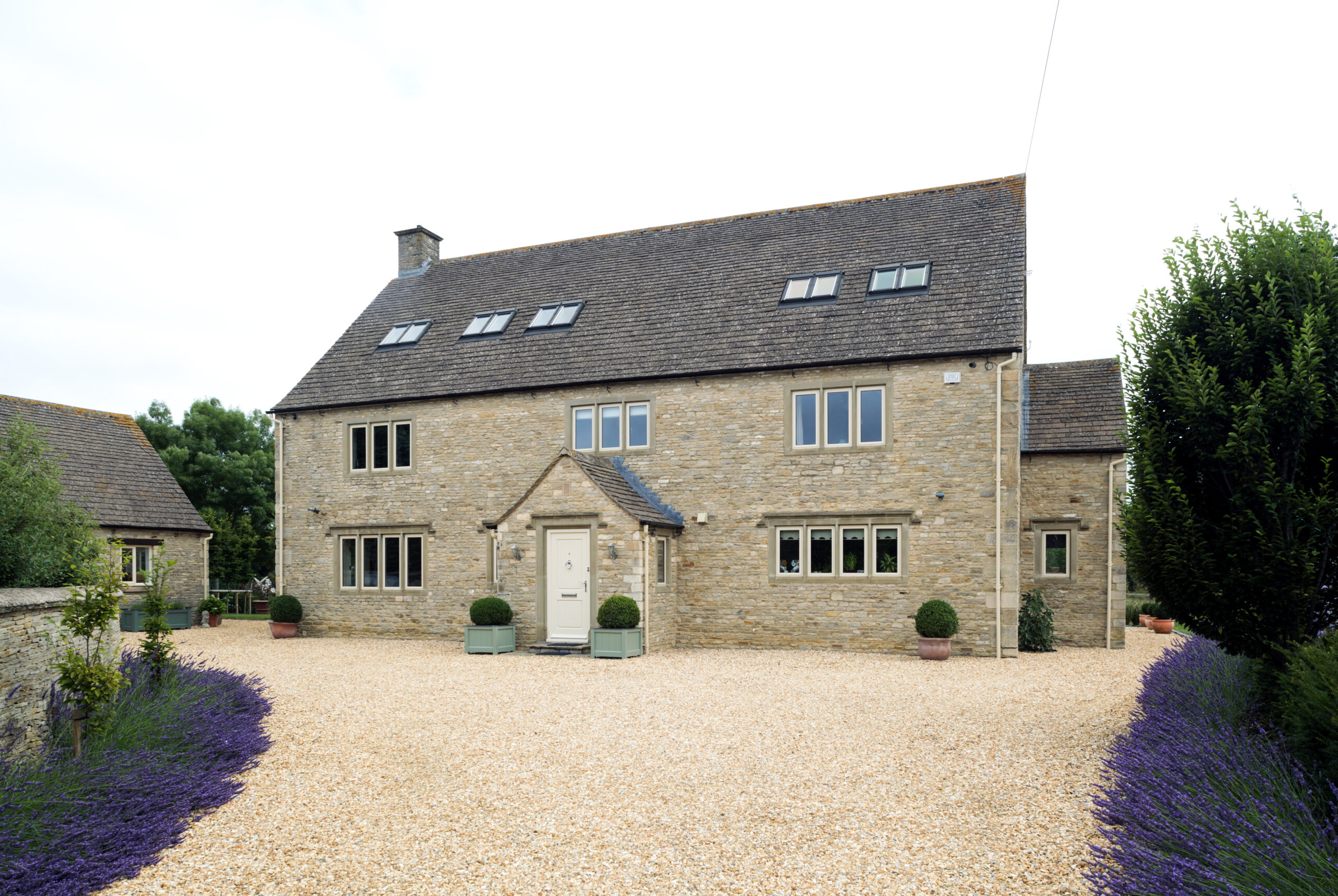
The aesthetics of each material are also very different. Composite doors are usually made to replicate traditional timber designs. They can feature woodgrain, classic panel shapes and heritage hardware. So, while composite doors do come in modern styles, their appearance is usually best suited to more traditional homes.
Aluminium doors usually offer more slimline and modern designs. The metal’s natural strength allows for:
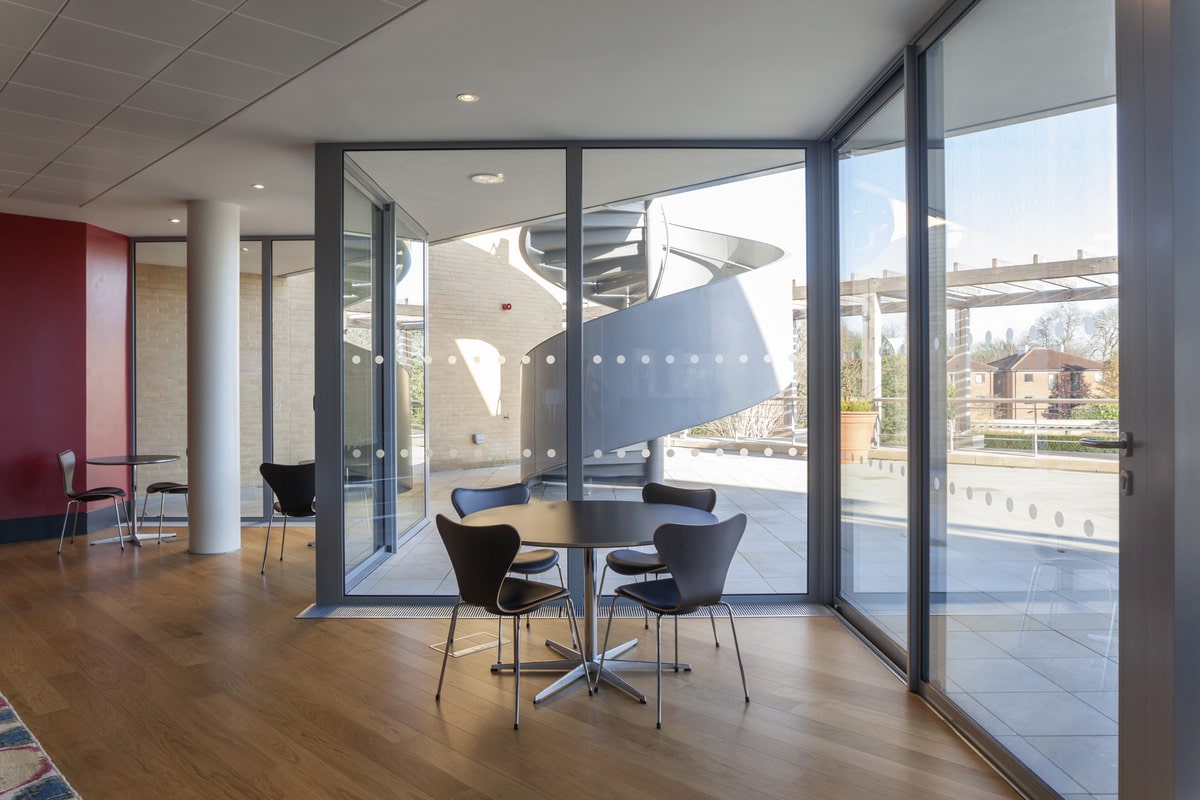
- Minimalist styles with slim sightlines
- Large panes of glass
- Clean edges
There’s also no lack of design freedom. The Atlas Aluminium range of aluminium doors has 200+ colours and premium powder-coated finishes, with options for textured, matte or metallic effects. This makes them a great choice for design-led, contemporary homes.
4. Durability and Stability
Design aside, you also need your doors to be strong and durable. Composite doors offer good levels of both. However, they can sometimes warp or expand in certain conditions. Examples include during prolonged heat exposure or when moisture penetrates parts of the structure.
Over time, this can cause issues such as:
- Sticking
- Swelling
- Hardware problems
- Fading
Aluminium doors are a much more durable option. The hardness of their metal means they resist warping and rotting, while also being unaffected by temperature extremes. They’re a solid choice in more challenging environments, such as coastal air. Plus, with a premium powder-coated finish, aluminium resists corrosion and needs only basic cleaning to maintain its finish.
5. Cost and Value
Finally, there is also a significant difference in cost.
- Composite doors usually cost less upfront, ranging from £900 to £1,500, depending on style, glazing and hardware
- Aluminium doors generally start higher, at around £1,400–£4,500 for typical installations, with bespoke or oversized designs costing more.
However, as we’ve seen, aluminium provides improved style, durability and functionality for your money. Aluminium doors can last up to twice as long as composite. They also maintain their appearance with minimal upkeep and offer better stability.
While an aluminium door will cost you more upfront, it may save you money in the long run. For this reason, it’s a good idea to think of aluminium doors as a wise long-term investment.
When to Choose Aluminium Doors

As we’ve seen, aluminium doors are more of a premium choice for modern homes and high-quality renovations. As such, they might be the right choice for you if you have:
- A modern home with design-led features, such as striking entrances
- A bespoke or oversized opening, like large French doors leading out onto a patio
- Tall or wide doors that could benefit from the slimline strength of aluminium.
Away from architectural choices, you might also choose aluminium doors for the following features:
- You value long-term durability and return on investment over a cheaper initial price
- You’re looking for a sturdy option with minimal maintenance
- You live in an exposed or coastal location that won’t rot, rust or fade as much as composite
- You want consistent styling with your existing aluminium windows and glass roof systems.
Looking for inspiration? Explore our range of premium aluminium doors, with contemporary designs, oversized options and a wide selection of designs.
When to Choose Composite Doors
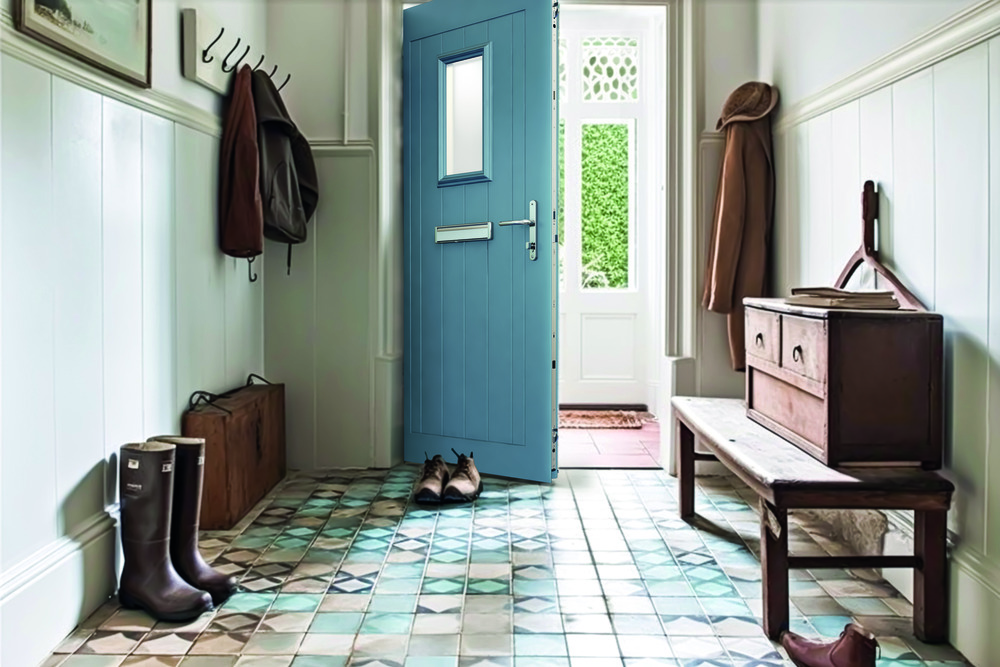
There are also certain scenarios where composite doors may make a better choice. They’re a solid choice in certain situations and for specific homeowner priorities, such as if:
- You’re working within a tighter budget and require a lower upfront cost
- You live in a traditional property and want a timber-style aesthetic to match your home’s existing theme
- Your property has a smaller doorway or no need for the additional strength of aluminium
- You’re renting the home and want to keep things cost effective.
The main benefit of choosing composite is that it keeps initial costs lower. However, bear in mind that your composite door may need to be replaced much sooner than aluminium would.
Lifespan of Both Materials
The choice of aluminium vs composite doors often comes down to lifespan. While composite is usually cheaper, it is less durable and will typically require a replacement well before aluminium.
Composite doors often last around 30 years. However, this can vary depending on things like maintenance quality and the property’s environment. Common issues with composite doors include:
- Warping
- Fading
- Degraded material
- Reduced energy efficiency
If you experience any of these, it may mean that your composite door would require replacement sooner than anticipated.
On the other hand, aluminium doors can last up to 60 years or more – especially when they’re manufactured and installed to a high standard. The metal has excellent resistance to weathering and structural movement. They remain stable for decades, requiring only basic cleaning and occasional adjustments, offering owners an excellent lifespan compared to composite doors.
Energy Efficiencies
Energy performance is another crucial factor when deciding between aluminium and composite. Doors are rated using U-values, which measure heat loss. Lower numbers mean better insulation.
- Composite doors typically achieve strong thermal performance in compliance with current UK regulations. They usually achieve a U-value between 1.0-1.3
- Aluminium doors include sophisticated thermal breaks and insulated profiles. High-quality modern systems can achieve U-values similar to those of composite – with some even achieving below 1.0. This puts them equal to, or even ahead of, alternative materials
Other factors, like installation quality and glazing type, also have an effect. But no matter which material door you choose, make sure it has:
- Verified U-values that meet your thermal performance needs
- PAS 24 certification
- Secured by Design accreditation
These will make sure the door meets UK security and performance standards.
Cost Differences
The simple rule of thumb here is that composite will usually be cheaper than aluminium:
- A standard composite front door can cost between £900 and £1,500, depending on things like style, glazing, colour and installation
- An aluminium front door will cost from £1,400 to £4,500+, with bespoke designs potentially costing more.
Other factors, like upgrading to triple glazing or premium hardware and finishes, may also increase the final cost.
The final consideration is that a cheaper upfront price doesn’t always mean better value. A composite door may cost less now – but you might also have to replace it sooner. If you value premium quality, low maintenance and a much longer lifespan, aluminium doors are an excellent option.
Are Aluminium Doors Better than Composite?
Aluminium doors are a more durable and long-lasting option than composite. However, both have their place, and both suit different scenarios well. You might consider composite doors for budget reasons, for example, whereas aluminium doors are a more premium option that will remain high-quality for decades.
Browse the Atlas Aluminium range of aluminium doors today to see which one is right for your home.
FAQs
Is aluminium stronger than composite?
Aluminium is stronger than composite. This means aluminium doors have a longer lifespan than composite doors – often up to 30 years longer – without the need for replacement.
Is composite lighter than aluminium?
Composite material is usually lighter than aluminium, depending on its exact design. However, aluminium is a much stronger material.
Are aluminium or composite doors better for large or bespoke openings?
Aluminium doors are much stronger and slimmer than composite. For this reason, they are often the better option when designing large or bespoke door openings.