When it comes to bifold door configurations, many homeowners think in terms of the basics. But to get the perfect match for your home, you need to think about more than just the right size, design or colour.
In fact, one of the most important and, frankly, overlooked decisions is configuration. This means thinking about how many panels you choose and factors like how they fold and where they stack.
Even simple decisions like which direction your bifold doors open all have a huge impact on how they look and function. This is where impartial, expert advice can help you make an informed decision without losing track.
In this guide, we’ll explain the most common bifold door design styles. Then, we’ll cover different opening configurations and how to choose the right option for your property, layout, budget and lifestyle. Combined, this will help you make the best possible choice for your home.
What Is a Bifold Door Configuration?
First, it’s best to cover the basics: What exactly is a bifold door configuration? In this case, the word ‘bifold’ describes how the door system is designed and how it opens, rather than just how wide it is.
This covers many layout factors, including:
- The number of panels
- How the panels fold and stack
- Where the panels stack when you open them
- Whether the doors open inwards or outwards
- Whether a traffic door is included.
When you combine these things, you can create anything from simple configurations to complex, unique pieces. It can be helpful to think of this in terms of two different decisions:
- Design style: This means how many panes or panels the door has
- Configuration: This means how those panels actually move and function.
As each home is unique – and all homeowners have their own tastes – there’s no single best configuration. This means the right options for you will depend on your layout, furniture, how often you use the doors, how much space you have, and more.
Common Bifold Door Design Styles
To help you narrow down your options, we can look at some of the most important bifold door details. They vary based on the number of panels used.
2 Pane Bifold Doors
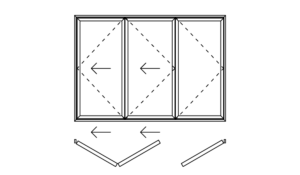
Let’s start simple. Two-pane bifold doors are usually made up of one folding panel and one hinged traffic door. As the smallest bifold door option, they’re a good choice for smaller openings and areas like balconies or terraces. Think of situations where everyday access matters more than dramatic full-width openings.
Two pane bifold door configuration options are limited compared to larger systems. However, their usability is fantastic. It’s like having the convenience of a normal door but with the option to fold the second panel back when needed.
3 Pane Bifold Door Configurations

Next, three-panel bifolds are another popular choice. They work well for layouts like compact extensions and smaller rear openings.
When designing, you can configure them in a few ways. For example, with:
- All panels folding to one side
- A split layout with a single traffic door
- Folding away from a main access leaf.
A three pane setup is often chosen as it’s a good balance between openness and practicality. You get a nice, wide opening in summer without losing the convenience of easy daily access.
4 Panel Bifold Door Configurations

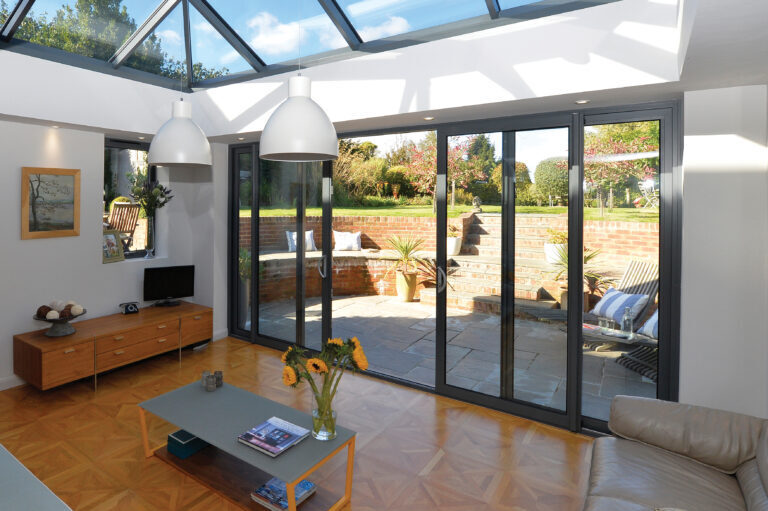
Four pane bifold doors are one of the most popular choices for UK homes. They strike a strong balance between visual impact, flexibility and everyday usability.
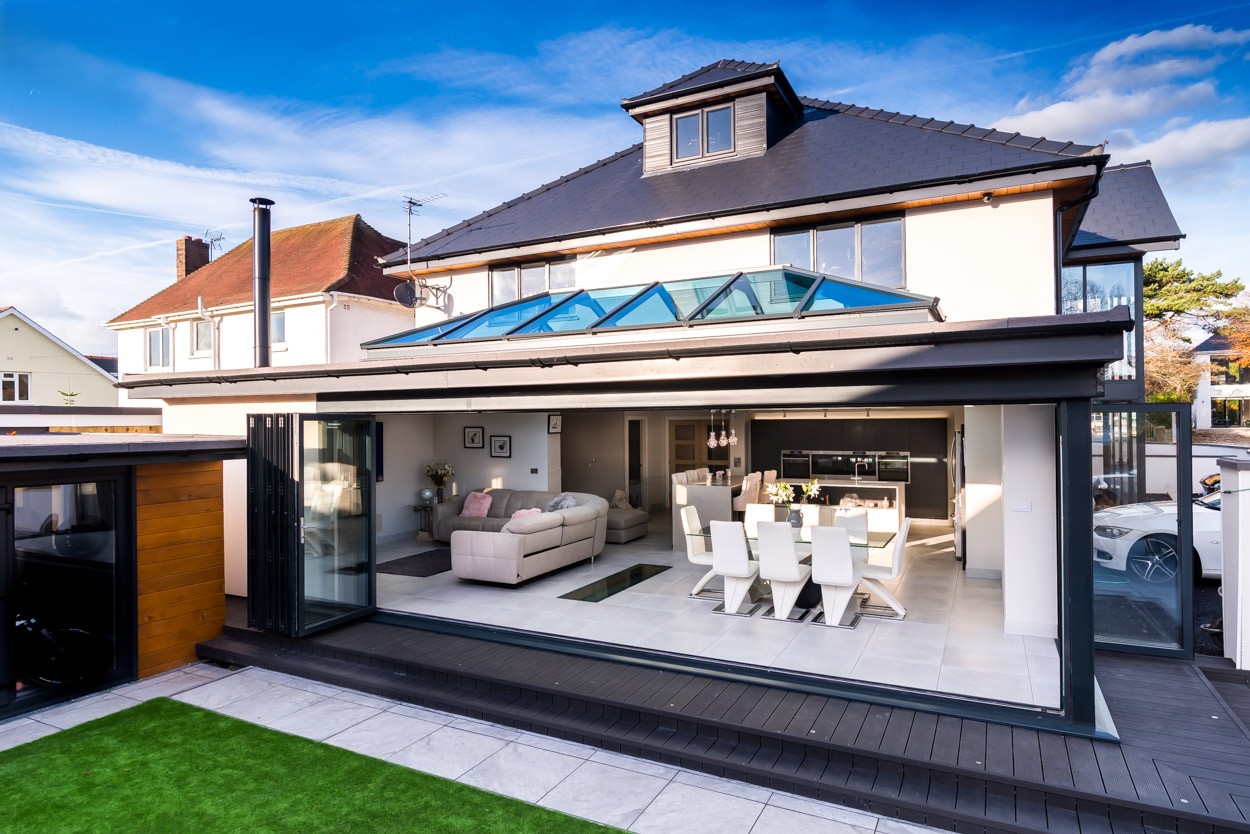
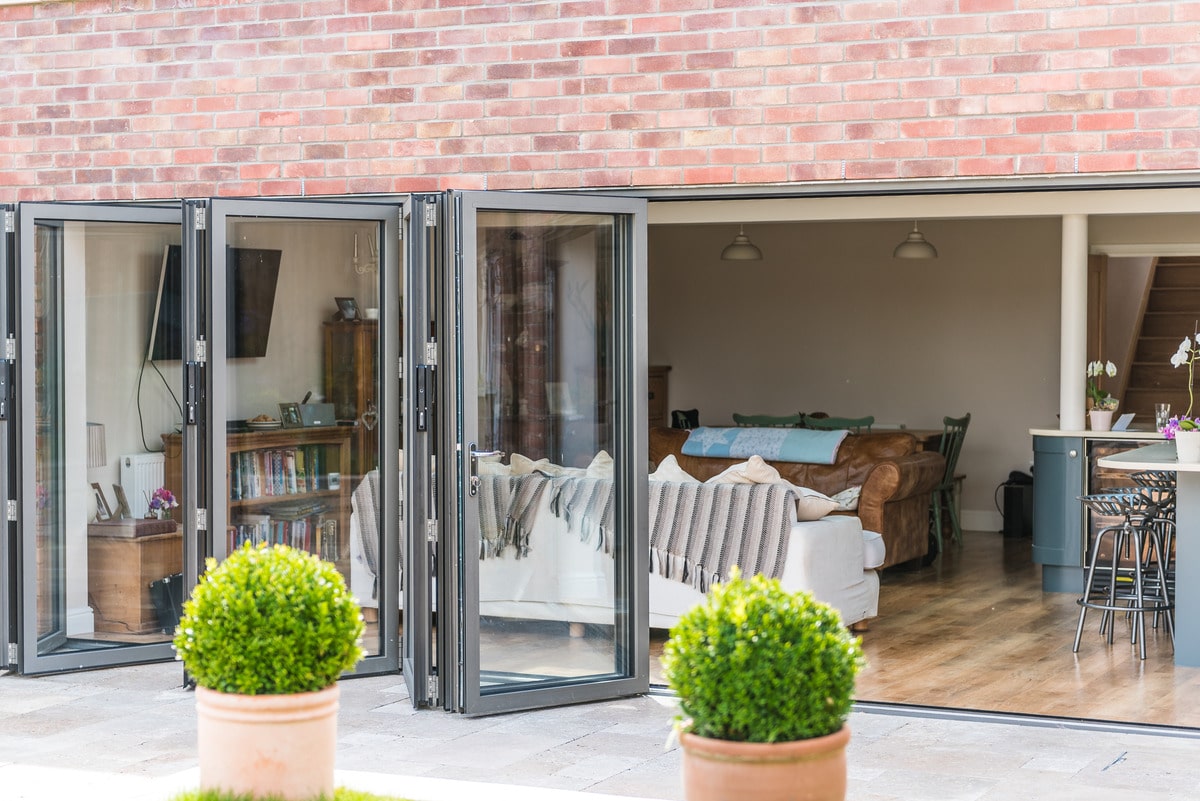
For these reasons, we often see four panel bifold doors in rear extensions, kitchen diners and garden-facing living spaces. One popular layout option is for all four panels to fold and stack to one side of the opening. This creates a wide, clear opening and works well where there is enough wall space to accommodate the stacked panels.
Another popular option is a centre split configuration. Here, two panels fold to the left and two to the right. This lets you prioritise symmetry, maximise opening width or balance access and layout depending on how the room is used.
Aluminium bifold door frames are particularly well suited here, keeping sightlines slim even across multiple panels.
5 Panel Bifold Door Configurations
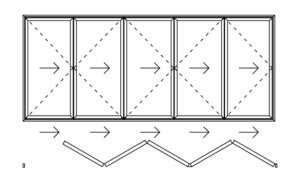
Need more flexibility? Five panel bifold doors allow for more creative layouts while still offering solid day-to-day use. A common configuration is a three and two split, with three panels to one side and the remaining two to the other. This keeps one side of the opening more accessible – useful if furniture or walkways need to stay clear.
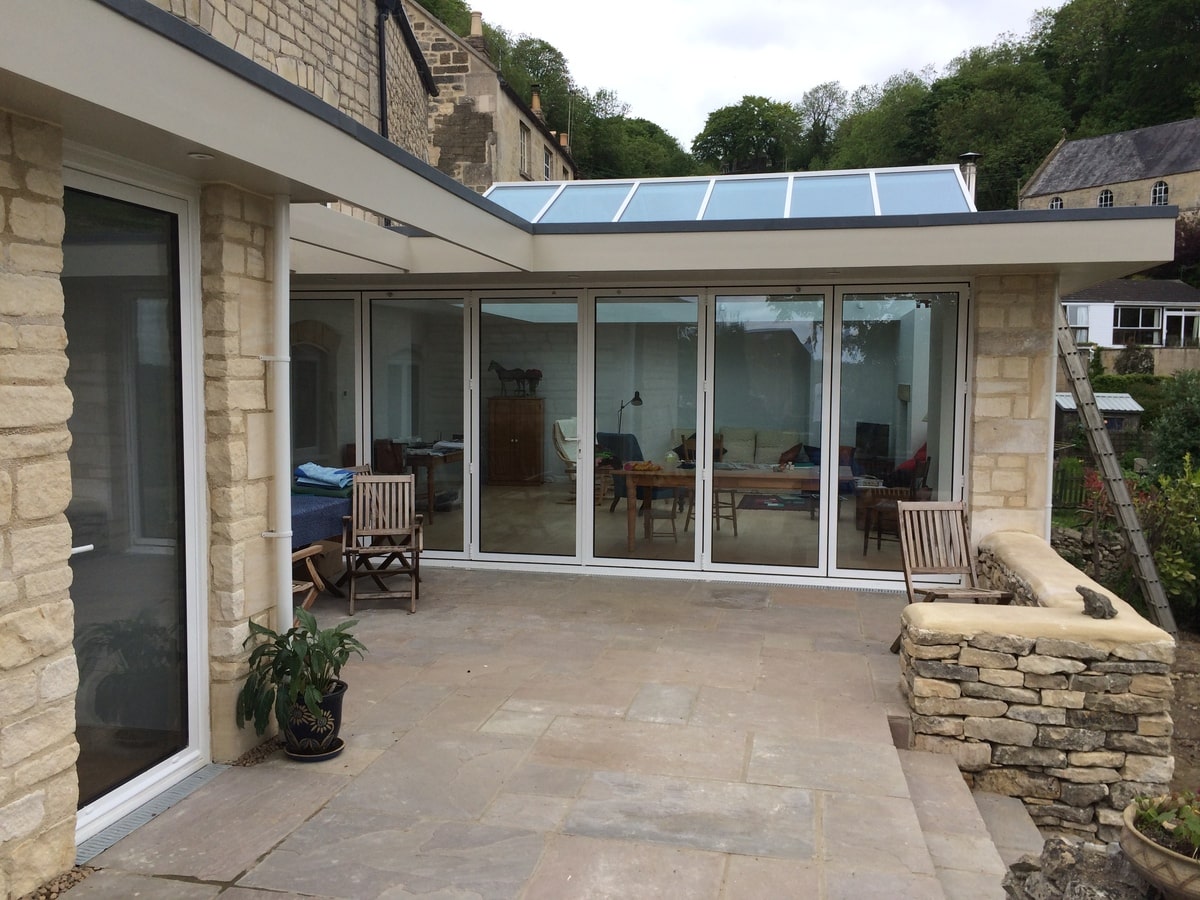
You might also choose for all five panels to stack to one side. This creates a large open space, though it does require room for all the stacked panels. Many homeowners include a traffic door within a five-panel system, allowing for everyday access without needing to fold all five panels each time.
6 Panel Bifold Door Configurations

Are maximum light and expansive views your priorities? Then six panel bifold configurations are best suited to homes where the opening itself is a key feature. You’ll often find them used for large glazed openings, such as in open-plan kitchen diners, garden rooms and modern extensions.
And with six panels, you have many different configuration options. Looking for a symmetrical wide opening? Choose three folding to each side. Asymmetrical splits are also possible, depending on layout and access needs.
At this size, material choice becomes even more important. Aluminium doors are an excellent choice for six panel systems, supporting the weight of the glass while maintaining sleek design and smooth operation.
Bifold Door Opening Options Explained
Now, we’ll explain how you can configure your bifold door openings.
All Panels Folding to One Side
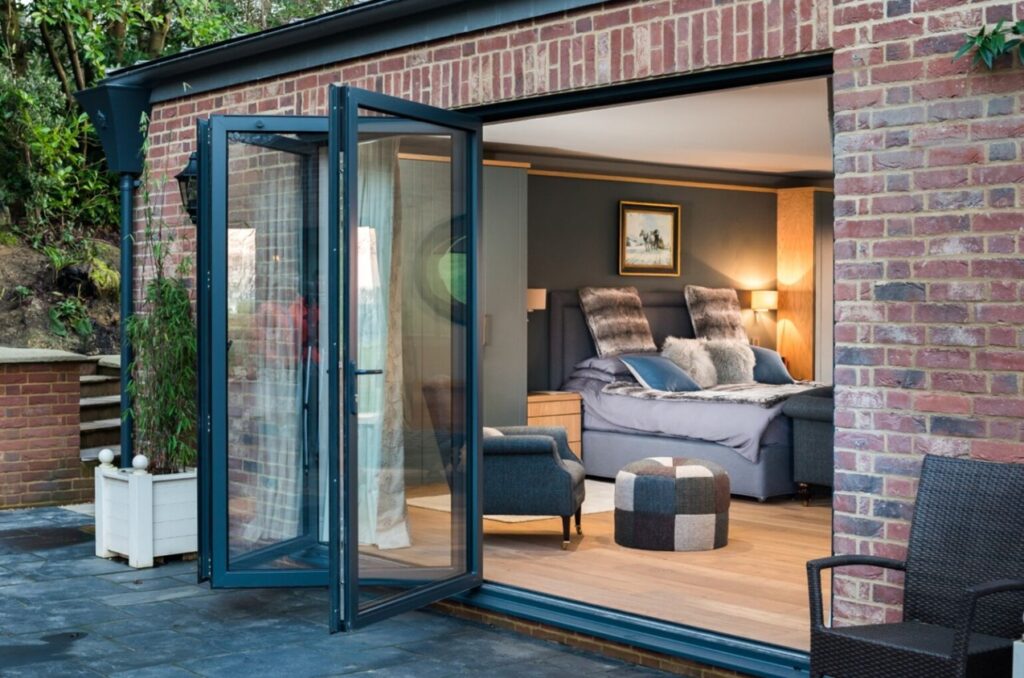
First, you might design all panels to fold and stack to one side. The result is one single clear, uninterrupted opening.
This works well where one side of the opening is free from obstructions. An example is with garden-facing walls where homeowners want to open up the entire width in warmer months. Bear in mind, you need to consider where the stacked panels will sit and how they affect access when they’re fully open.
Split Opening (Centre Opening)
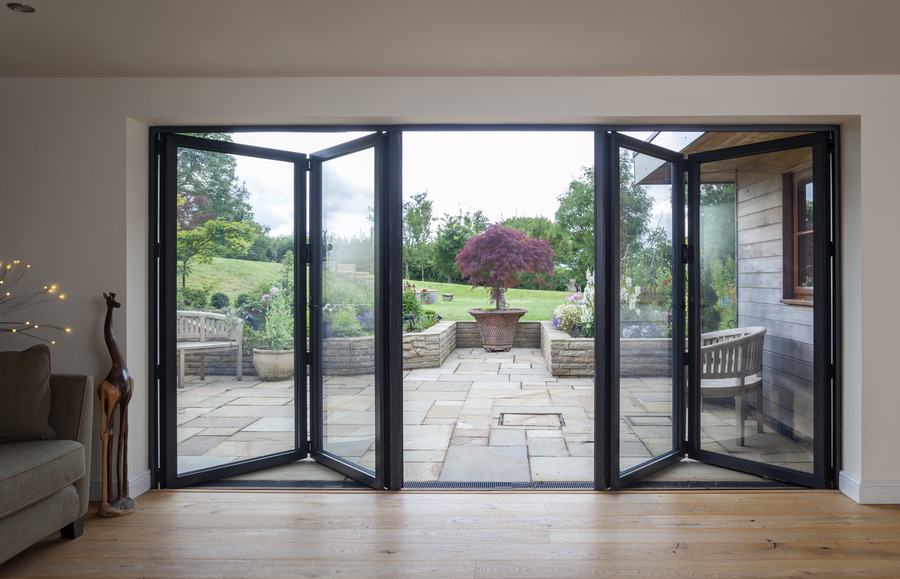
Next, split opening configurations see panels folding away from the centre to both sides. This creates a sense of balance and symmetry.
This option suits wider openings and social spaces. With it, people can move freely in and out from the centre without needing to open the entire system. Many homeowners also like the way this layout frames the view when the doors are closed, especially with elegant aluminium frames.
Asymmetrical Splits
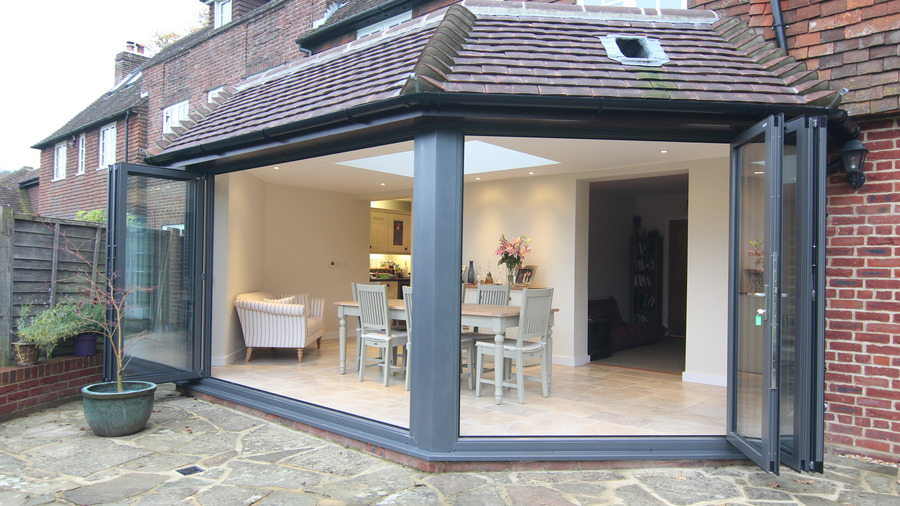
Are you working with an unusual space or looking for a more unique design? Asymmetrical splits involve uneven panel groups, often for practical reasons rather than just appearances.
Above all, we often see this type of design when working with a home’s real day-to-day use in mind. Examples include maintaining access on one side of the opening while keeping the other closed, or to work around larger pieces of furniture.
Inward vs Outward Opening Bifold Doors
Next, you’ll choose which way your doors open.
Outward Opening Bifold Doors
Outward opening bifolds are the most common choice. In this configuration, panels fold away from the interior bringing several important benefits:
- It keeps your indoor floor space clear
- It makes furniture placement easier
- It helps the room feel less restricted when the doors are open.
For most homes, this option feels more natural and practical.
Inward Opening Bifold Doors
Inward opening bifolds are less common. However, they work really well in specific situations, such as where patio or garden space is limited.
As inward opening panels will occupy internal space when open, they suit layouts where interior space is flexible and external space is at a premium.
Traffic Doors and Everyday Access
For many homeowners, the aesthetics and functionality of bifold doors are a balancing act. You need to keep access free flowing – but you might not want to fully open all doors every day. Traffic doors are a great way to solve this issue.
A traffic door is a single hinged door built into your bifold system. It opens like a standard door, but the panels don’t have to be folded entirely back.
In three panel or larger systems, it can improve usability – especially in colder months. Traffic doors are also useful for ventilation, quick garden access and daily routines. In aluminium bifold systems, they are integrated neatly without disrupting the overall look of the doors.
Choosing the Right Configuration for Your Home
Choosing the right bifold configuration may feel confusing at first. But, as we’ve seen, focusing on how the space will be used makes deciding easier. We always advise clients to consider:
- The width of the opening
- How the room is laid out
- Where furniture will sit
- How often the doors will be used
- The amount of patio or garden space available
- Whether symmetry or flexibility matters more to you.
With these answers, you’ll naturally narrow down your options.
Why Aluminium Is Best for Flexible Bifold Door Configurations
Aluminium bifold door frames bring strength and reliability, allowing for wider panels and larger openings. At the same time, the slim frames help you maximise glass area and natural light in your home.
Aluminium bifold doors also perform well over time. They only require minimal regular maintenance to perform at their best for decades. Aluminium frames are also seen as a premium design option, helping increase property value and matching your aluminium windows and glass roof systems’ design aesthetics.
Common Mistakes to Avoid When Choosing Bifold Configurations
When planning bifold door configurations, we see some issues pop up regularly:
- One is prioritising symmetry over practicality. A balanced layout may look good on paper – but it needs to allow for real life daily use.
- Another is forgetting to plan for stacked panels. Remember, when your bifold doors open, those panels need somewhere to go.
- Finally, choosing a material that limits your configuration options can restrict your design. Aluminium brings both flexibility and design benefits for all types of layouts.
Choosing the Right Bifold Door Configuration
Each property is different. For this reason, there is no single right answer when it comes to bifold door configurations. The best option depends on your space, your layout and how you live in your home.
The secret is in careful planning. By understanding things like panel layouts, opening options and practical considerations, you can make a choice that works long term. Explore the Atlas Aluminium range of aluminium bifold doors to see what’s possible for your space.
FAQs
What is the most popular bifold door configuration?
Four-panel systems with a centre split or all panels to one side are among the most common.
Can bifold doors open inwards and outwards?
Yes, most bifold doors open outwards, but inward-opening systems work well in some spaces.
How many panels should a bifold door have?
More panels mean more flexibility, but also more planning. If you have a larger space or want a statement piece, go for more panels.
Are centre-opening bifold doors better?
Centre openings bring symmetry to your home, but they’re not always the most practical option. Think about how you’ll use the area each day.
Do aluminium bifold doors offer more configuration options than uPVC?
Aluminium’s strength allows wider panels, more layouts and better long-term performance in most cases.
What’s the best bifold configuration for a kitchen extension?
Kitchen extensions are usually large and airy. For this reason, a four- or five-panel system with a traffic door works well.